A used excavator part offered from the UK may be worth considering for a US machine, but distance makes careful verification important. Confirm the machine and component identifiers first, review the actual part’s condition, and document what is included and how any fitment issue will be handled. Do not rely on a listing title or a photo of a similar part.
Identify the machine and component
Write down the excavator manufacturer, complete model designation, and full serial number from the machine identification plate. Photograph the plate clearly and copy each character exactly. A model name alone may not identify production changes or optional configurations.
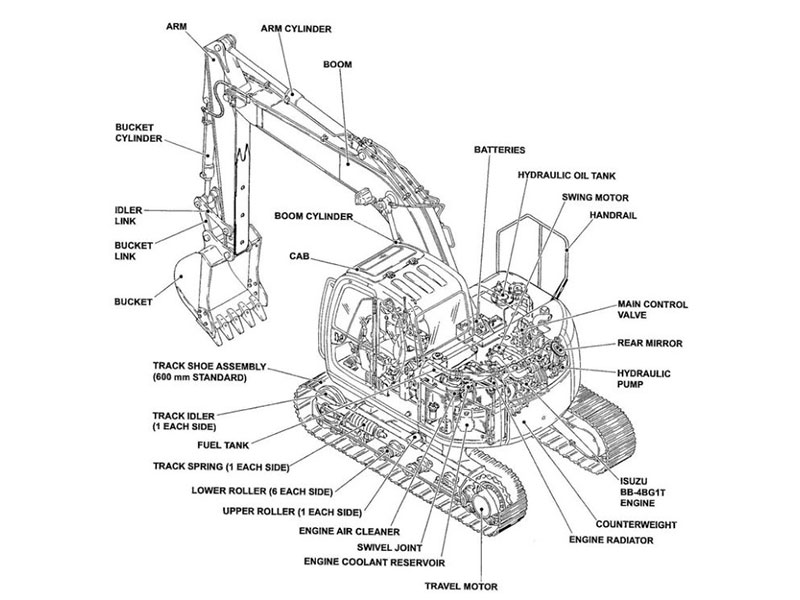
Identify the component by its name, location, and function. Photograph the actual part from several sides, including its label, casting marks, connections, and mounting points. Record every legible number. Some marks identify castings or batches instead of the orderable assembly, so do not treat an unfamiliar number as confirmed fitment.
Confirm part number and machine fitment
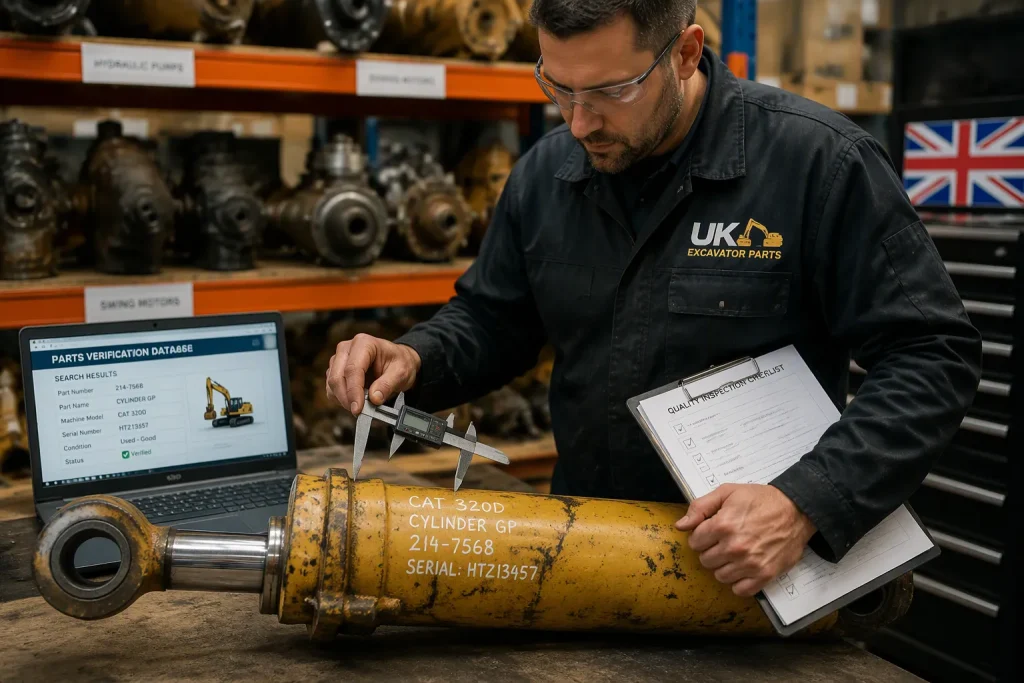
Compare the component’s part number with the parts information for the excavator’s exact model and serial range. Ask whether the number has been replaced by a newer number and whether that change requires associated parts or configuration details. Request a written answer that identifies the machine and the part number being offered.
Check the connection details that apply to the component, such as mounting points, dimensions, shaft or spline specifications, electrical plugs, and hydraulic ports. Use the relevant parts documentation and compare measurements taken from the same reference points. A visual match or a general model match cannot confirm that every variant will fit.
If the old part is available, share clear photographs and its markings with the parts team. When a number is missing or unclear, describe the component’s location and function and ask for a documented cross-reference. Pause the purchase if the serial range or an important measurement is unresolved.
Review condition evidence
Request recent photographs of the actual component, not a representative image. Look for cracks, deformation, damaged threads, corrosion on working surfaces, worn mounting faces, missing connectors, and signs of leakage. Ask for close-ups of areas that affect installation. A clean exterior does not prove the internal condition of a pump, motor, engine part, or other enclosed assembly.
Ask what inspection or testing was performed and request any available report. Confirm whether the part was removed from a working machine, repaired, or stored. Treat an operating-condition statement as a description that should be backed by evidence, not as a guarantee. For a critical assembly, consider an independent inspection or suitable bench test before installation.
Confirm scope and written terms
Ask for a written list of everything included. Brackets, sensors, harnesses, hoses, seals, fasteners, and other attachments can affect installation and cost. Compare that list with the photographs and quote.
Before payment, get the part number, machine fitment, condition description, available inspection records, included items, warranty coverage, return window, and responsibility for freight or damage in writing. For an international shipment, confirm the agreed carrier, packaging, tracking information, and process for reporting transit damage. Do not assume a return will be simple or inexpensive; clarify the steps and who arranges it before ordering.
Compare the overall purchase cost with the repair schedule. Include the quoted part, freight, handling, inspection, installation, and any related components. Avoid estimating taxes or border charges from a general online statement; obtain current, transaction-specific information from the appropriate shipping or trade professional if needed.
Check the part on arrival
Before installation, compare the delivered component with the written confirmation, part number, photographs, and list of included items. Check the connection points and relevant dimensions. If the item differs from the documented configuration, stop and resolve the discrepancy before fitting or operating it. Follow the machine service information for installation and commissioning.
Used excavator parts checklist
1) Record the excavator make, model, and full serial number.
2) Photograph the actual component, markings, connections, and mounting points.
3) Confirm the part number and serial-range application in writing.
4) Review current condition photos and available inspection or test records.
5) Confirm included items, packaging, shipment tracking, and damage reporting steps.
6) Agree on warranty and return terms before payment.
7) Compare the delivered item with the records before installation.
Frequently asked questions
What should I send when checking a UK-listed part for my US machine?
Provide the machine make, full model designation, serial number, part number if readable, and clear photos of the old component and its connections. Include the component’s location and function if its name is uncertain.
Can a photo confirm that a used part will fit?
A photo can help identify markings and visible features, but it cannot confirm every dimension or the part’s internal condition. Match the part number and relevant specifications against the machine’s model and serial range.
What should I agree before an international shipment?
Confirm the actual part, fitment, included items, packaging, carrier and tracking details, damage-reporting process, and return terms in writing. Ask for current transaction-specific shipping or trade information when it is needed.
For help reviewing excavator part identifiers and fitment details, contact YNF Machinery.