How to Match Used Hyundai Excavator Parts to Your Machine Model and Serial Number
A used component is a possible match only after you verify it against the machine that needs repair. Start with the full model and serial or PIN, identify the exact component number, and check the application in documentation for that machine configuration. Appearance by itself cannot confirm fit.
The steps below help you organize the information before ordering. They apply across different component types, but the condition checks should always fit the part you are evaluating.
Key Takeaways
Copy the complete model and serial/PIN from your machine records or identification plate.
Use the parts documentation for that serial range to confirm the component number and application.
Compare the used part’s configuration and interfaces with a reliable reference for your machine.
Document condition, included items, test records, and agreed terms in writing.
1. Identify the Machine Precisely
Record the full machine model and serial number or PIN exactly as shown on the identification plate or in the equipment records. Include every letter, digit, and suffix. Keep a copy with your repair notes so you can refer to the same information throughout the part search.
A model family can include different configurations. The serial number helps determine which documentation applies to your machine. If the plate is unreadable, use the machine’s records and confirm the identification through documentation that matches the equipment. Avoid relying on a shortened model description or a photo with missing characters.
If the part has been removed already, write down where it was installed and any markings that remain visible. If the donor machine is known, record its model and serial as supporting information. This can help explain the component’s origin, but compatibility still needs to be checked against the machine receiving the part.
2. Find the Exact Component Reference
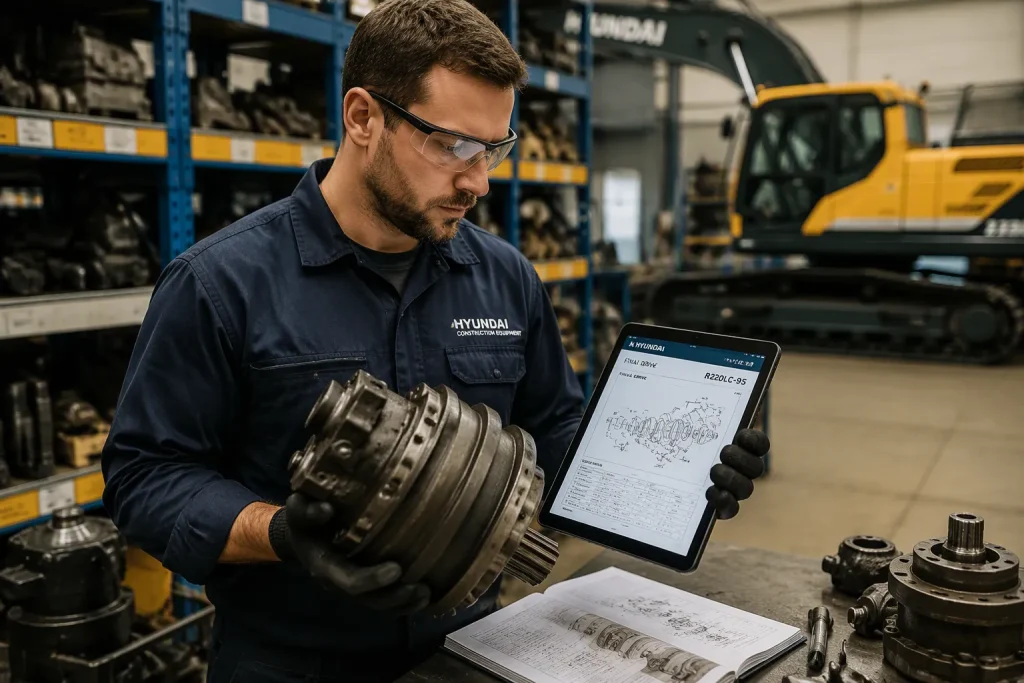
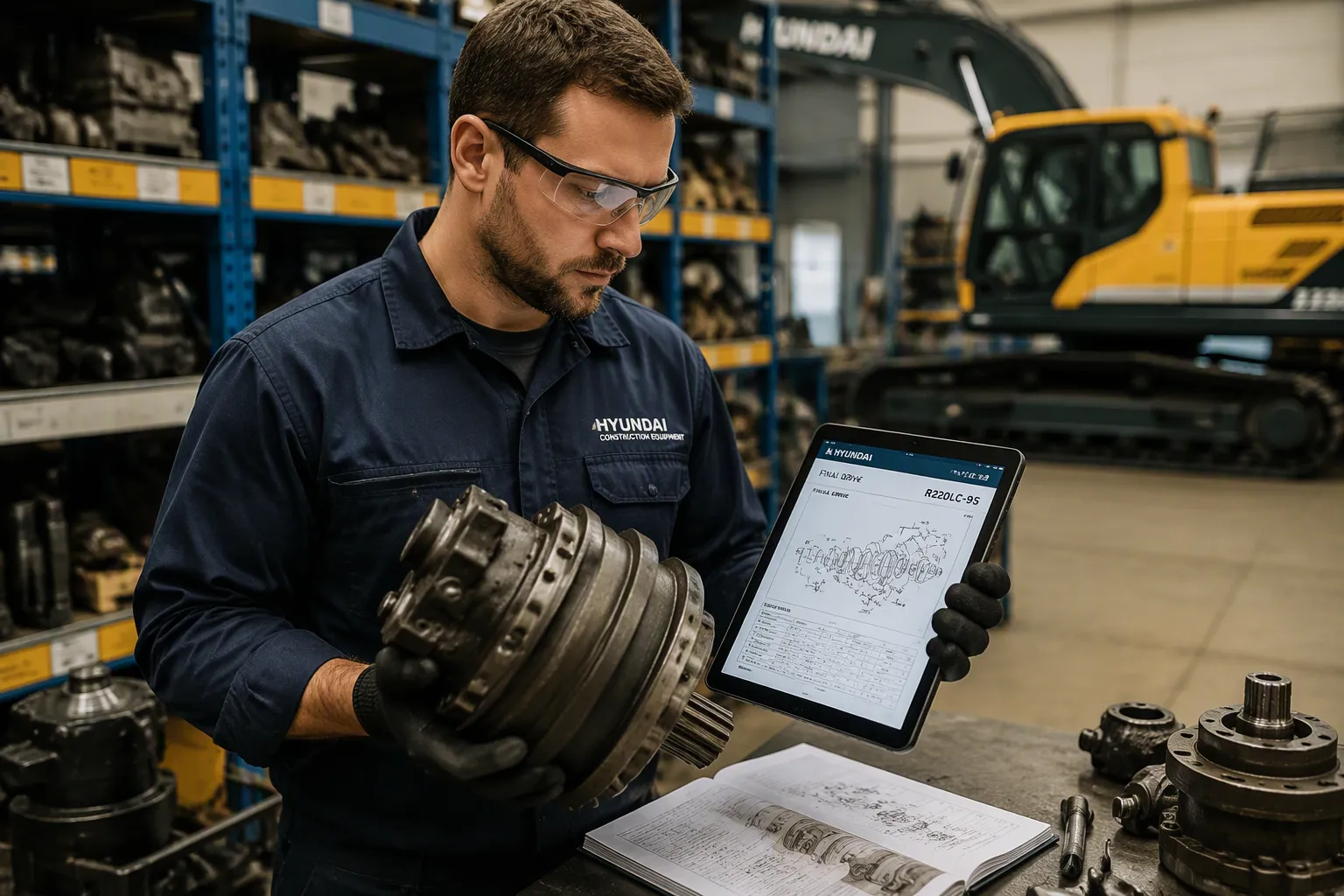
Open the applicable parts list or illustrated documentation for your machine and serial range. Find the assembly that contains the component, then compare the item description and reference number with the part you need. Record the full number exactly, including punctuation and suffixes.
A partial number, similar description, or shared brand does not prove interchange. If the number on a used component differs from the reference in your documentation, look for a reliable document that connects the two numbers and confirms the applicable models and serial range. Do not assume a cross-reference is valid because the numbers look alike.
When a label is damaged or missing, gather other identifying details such as casting marks, connector type, mounting layout, dimensions, orientation, and location in the assembly. These clues may help identify the component, but they are not a final fitment check. Confirm the identification through the parts reference before moving forward.
3. Compare Configuration and Interfaces
Once you have the reference number, compare the used part with the configuration listed for your machine. Check the features that connect or control the component: mounting points, bolt pattern, port positions, shaft or spline form, electrical connectors, orientation, and included subcomponents as relevant.
Use measurements only when you have reliable specifications for the exact application. Compare like surfaces and record the units. For a pin or bushing, note diameter, length, and locating features. For a hydraulic component, compare its mounting face and documented port layout. For an electrical item, check connector shape and listed specifications. Approximate measurements or a photograph cannot establish compatibility on their own.
If the part reference, configuration, or interface details conflict, stop and resolve the difference. A component may look similar while using a different connection or revision. Do not force an installation or assume a mismatch can be corrected without proper documentation.
4. Check the Actual Part and Its Records
Make the condition review specific to the component category. Look for visible cracks, corrosion, deformation, damaged threads, worn connection surfaces, missing fittings, or evidence of repair where these checks apply. For components that need functional testing, request the relevant test record and confirm that it refers to the actual part being considered.
Ask for current images of the component from useful angles, including the identification mark and connection points. Images can help show external details, but they do not prove internal condition or performance. An operating donor machine also does not establish the history of a component that has been removed.
Confirm exactly what is included. Brackets, sensors, fasteners, seals, hoses, and wiring may be separate items. Write down the stated condition, known repairs, test information, missing pieces, and any limits in the available records. Keep the information together with the part number and machine application.
5. Confirm the Details Before Ordering
Before completing an order, compare your checklist one last time: full model, serial/PIN, component number, supporting application reference, configuration, condition, and included items. Ask for written confirmation of any replacement number or cross-reference, with the documentation that supports it. Keep the response with your repair records.
If an essential detail is missing or conflicts with the parts documentation, resolve it first. A broad statement such as “fits Hyundai excavators” does not identify the specific machine or serial range. Tie the decision to the exact component evidence and agreed details. This process helps prevent a similar-looking part from being mistaken for a confirmed match.
FAQ
What details do I need to identify a used Hyundai excavator part?
Start with the complete machine model and serial/PIN, then find the component number in documentation that applies to that serial range. Record the part’s visible markings and configuration as additional checks.
Can I use the number from a different Hyundai model?
Only if reliable documentation confirms that the number applies to your exact model and serial range. Similar model names or matching appearances are not enough to establish interchange.
What if the old part’s label is missing?
Use the assembly documentation along with remaining casting marks, connector type, mounting arrangement, dimensions, and component location to narrow the identification. Verify the final reference before ordering.
What should I ask about a used hydraulic or electrical component?
Confirm its exact part number and configuration, ask what condition checks or tests were performed, and request records tied to that actual component. Also confirm the connections and any included pieces in writing.
Do photos confirm that a used part will fit?
No. Photos can show visible markings and external interfaces, but they cannot confirm every specification or internal condition. Compare the part with the documented application for your machine.
For help identifying used Hyundai excavator parts and confirming the component details for your machine, contact YNF Machinery.