
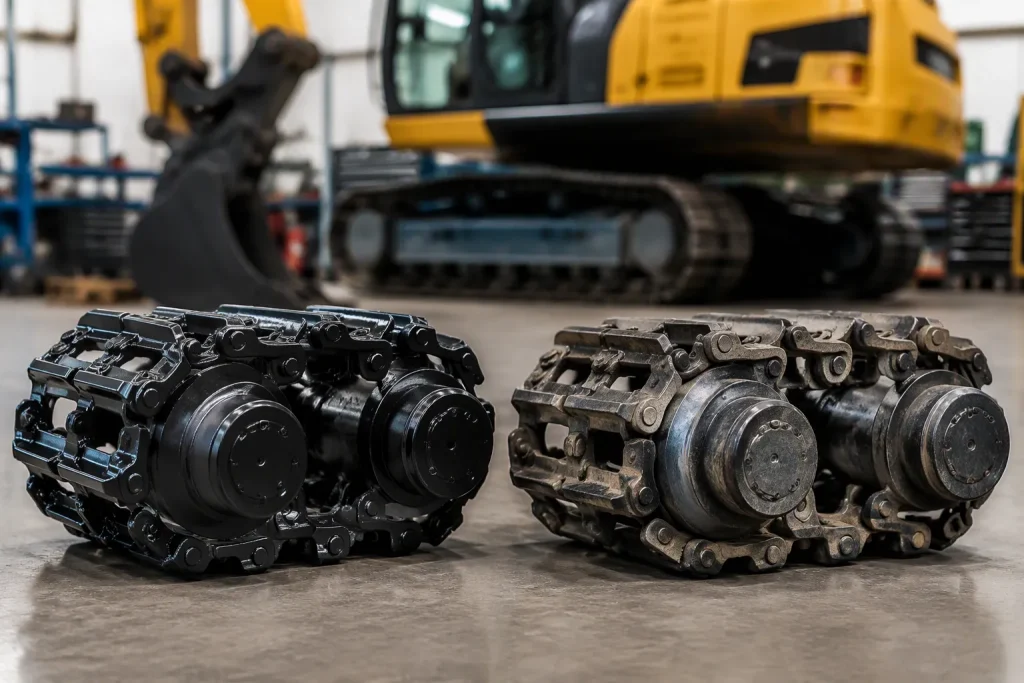
Choosing between OEM and aftermarket excavator undercarriage parts starts with the machine, the component, and the documentation available for each option. Neither category guarantees fit or performance by itself. A careful comparison checks the exact part reference, machine serial range, applicable specifications, and terms supplied with the part.
Key Takeaways
• OEM identifies a part associated with the original equipment manufacturer; aftermarket describes replacement parts made outside that manufacturer’s parts program.
• Verify every option against the machine model, serial number or PIN, component location, and applicable parts catalog.
• Compare written specifications, traceability, inspection information, price, availability, and applicable warranty terms instead of relying on labels alone.
• Similar appearance or a broad model listing does not confirm fitment.
Understand the Two Part Categories
OEM parts are supplied through the original equipment manufacturer’s parts program. The exact meaning of OEM can vary in sales materials, so confirm who made and supplied the component and which part number applies. An aftermarket part is produced for replacement use outside that program. Aftermarket parts can differ by design, materials, dimensions, and documentation; the category name alone does not establish whether a particular part is suitable.
This distinction matters when comparing excavator parts because undercarriage components must match their installation position and machine configuration. Track chains, shoes or pads, rollers, idlers, sprockets, and adjuster components each have their own references and interfaces. A replacement may look similar but still differ in a dimension, mounting arrangement, or configuration detail. Use the equipment parts catalog and the component’s identifying information as the starting point.
Confirm Fitment Before Comparing Offers
Record the equipment make, full model designation, and serial number or PIN. Include suffixes and any serial-range information shown in the parts documentation. Identify the component by its catalog name, position, side, and quantity. Then compare the listed part number with the number on the installed component when readable.
If the old number is missing, damaged, or superseded, do not infer a replacement from photographs alone. Check the model-specific parts catalog and any notes about serial breaks or configuration changes. Measurements and clear photographs can help resolve uncertainty, but they are supporting details rather than a substitute for a machine-specific reference. If the catalog and installed component do not agree, pause and verify whether the equipment has been modified or uses a different configuration.
Compare Documentation and Supply Details
Ask for the exact part number and written dimensions or specifications relevant to the component. Confirm which machine models and serial ranges the listing covers, and whether the part is intended for the position you need. For a component with material or inspection requirements, request the available documentation for that specific part or production lot. Do not treat a general company certificate as proof that a particular component has passed a particular test or fits a specific machine.
Review traceability and packaging details where they are provided. Record the manufacturer or source identified for the component, its part number, lot or batch reference if available, and any inspection documents received. Compare these details across offers using the same questions. A label such as OEM or aftermarket does not replace checking the underlying information.
Price and availability are specific to the quoted part, quantity, delivery terms, and date. Compare complete written offers on the same basis, including freight, lead time, return conditions, and warranty terms. Avoid assuming that one category is always less expensive or more available. A price difference is meaningful only when the part reference and included terms are comparable.
Consider the Machine’s Work and Service Plan
Think about the machine’s application, operating conditions, maintenance plan, and the consequences of downtime. These factors help define which documentation and supply details matter most for the purchase. They do not establish that an OEM or aftermarket component is automatically the better choice. Use the applicable service information and procurement requirements when setting acceptance criteria.
Check the warranty terms that apply to the equipment and to the replacement component before ordering. Coverage depends on the relevant written terms and circumstances. Do not assume that installing an aftermarket part automatically changes all equipment coverage, or that any part carries a particular warranty. Keep the quote, invoice, part number, fitment confirmation, and supporting documents with the service record.
A Practical Comparison Checklist
Before you choose, confirm these items for each quoted option:
• Machine make, exact model, serial number or PIN, and relevant configuration notes.
• Component name, installation position, side, quantity, and catalog part number.
• Written dimensions or specifications needed to establish the match.
• Identified manufacturer or source and any available lot or inspection records.
• Price, quantity, availability, delivery terms, returns, and written warranty conditions.
• Any unresolved differences between the catalog, installed part, and proposed replacement.
If a key detail is missing, ask for it in writing before placing the order. Save the response with the machine’s maintenance records. This process makes the comparison easier to review later and helps prevent a category label or photograph from being mistaken for fitment proof.
FAQ
Are aftermarket excavator parts automatically lower quality?
No. “Aftermarket” describes a supply category, not a result for every part. Review the exact specifications, fitment information, traceability, and documentation for the component being considered.
How do I confirm an undercarriage part fits my excavator?
Match its part number and catalog listing to the machine’s full model and serial number or PIN. Confirm the component position and check any serial-range or configuration notes. Use measurements or photos only as supporting evidence.
Does OEM mean the part is guaranteed to fit?
No label by itself confirms compatibility. Verify that the listed part reference applies to the machine configuration and serial range.
Should I compare warranty terms?
Yes. Read the written terms that apply to the equipment and the replacement component. Keep the documents with the purchase and service records.
What should I do when the catalog and installed part differ?
Pause the order. Record the installed part number, location, and relevant measurements, then verify the machine configuration and any prior changes against the parts documentation.
Conclusion
Compare OEM and aftermarket excavator undercarriage parts using the same machine-specific checks: catalog reference, serial range, specifications, supporting documents, and written commercial terms. Confirm unresolved fitment details before ordering and retain the records for future service. For help reviewing an excavator parts requirement, contact YNF Machinery with the machine model, serial number or PIN, and part reference.



