A part can be described as “for a 490E” and still differ from the configuration installed on your machine. When evaluating used John Deere 490E excavator parts, verify the machine identity, the exact component reference, the item’s condition, and the terms of the transaction. The model name provides a starting point; it does not establish interchange by itself.
Use these checks for the specific component you need. Inspection points differ for a pump, cylinder, control component, undercarriage item, electrical part, or structural assembly. Follow the applicable service and parts information for the machine serial range. If information is unavailable, record the uncertainty and resolve it before ordering.
Key takeaways
• Record the full machine model and serial number, then identify the exact number on the component.
• Match the offered item to parts documentation for the machine’s serial range.
• Request current photos and component-specific condition or test evidence.
• Get the included items, fitment basis, condition, warranty, and return process in writing.
1. Record the Machine and Component Details
Start with the complete model designation and machine serial or PIN as shown on its identification plate and records. Photograph the plate and check that the information is legible. Do not assume that an abbreviated model name or a number copied from an old listing contains enough detail to identify the correct application.
Next, record the part number from the component being replaced. Depending on the part, useful identifying details may also include a casting or tag number, connector style, mounting arrangement, dimensions specified in parts documentation, or the side and position of the component. Do not infer those details from a general product photo.
Write down where each number came from: the machine plate, the existing component, a parts catalog, or a prior order. This makes it easier to resolve conflicts. If the machine information, old part number, and proposed replacement do not agree, pause and ask for the discrepancy to be checked before purchase.
2. Verify the Exact 490E Application
Use the model and serial number to locate the applicable parts information for the machine. Compare the complete component number and any listed configuration notes with the offered part. Production changes and component revisions can affect fitment, so a broad “fits 490E” statement is not enough by itself.
If the offered number differs from the number on the removed component, request the documented reason. It may be a replacement reference or an interchange, but that relationship should be confirmed in applicable parts records or by qualified technical support for the specific serial range. Do not rely on a similar appearance, a brand name, or an unverified cross-reference as proof.
Confirm what the offer includes. An assembly may be supplied with brackets, sensors, fittings, seals, or hardware, while another may be a bare component. Ask for an itemized description and compare it with the installation scope you need. Keep a record of the part number and the fitment evidence used to approve the order.
3. Inspect the Item and Request Useful Photos
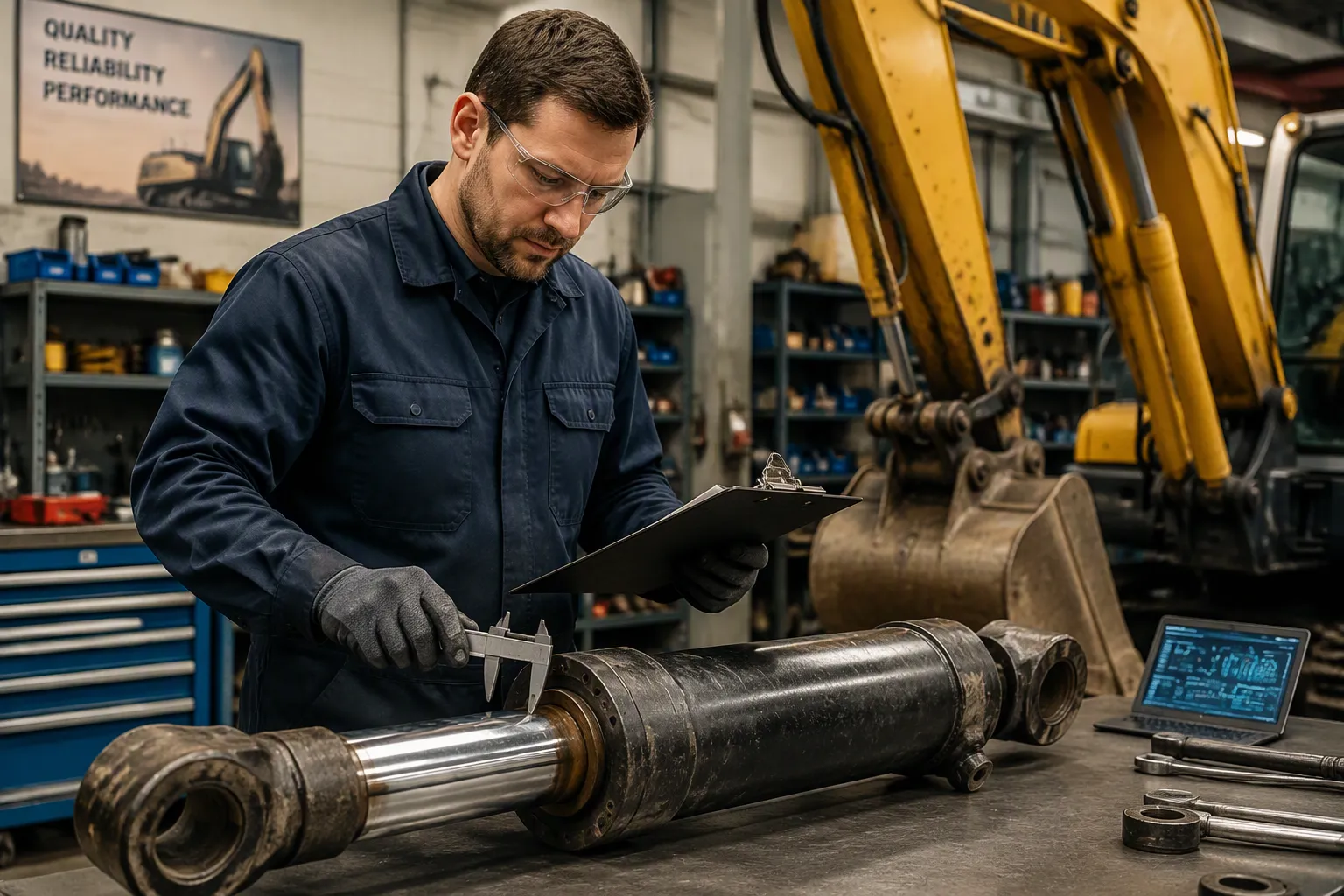
Inspect the actual component in good light where possible. Look for cracks, deformation, deep corrosion, impact damage, damaged threads, worn or gouged mating surfaces, missing fasteners, leakage, and signs of repair. Check connection points, seals, ports, mounting faces, and wear areas that apply to that component. A clean exterior or fresh coating does not establish internal condition.
For any repair, ask what was repaired, how it was done, and whether records or an inspection are available. The acceptability of a repair depends on its location, method, and the component’s service requirements. Have a qualified technician assess structural damage or an unverified repair before purchase or installation.
If you cannot inspect the item in person, request recent photos of the exact part from multiple angles. Ask for close-ups of identification marks, mating surfaces, ports, visible wear, and any repaired area. A photo of a similar unit or a generic catalog image does not show the condition of the item being offered. Note what a photograph cannot confirm, such as internal wear or performance under operating conditions.
4. Review Available History and Test Evidence
Ask what is known about the component’s removal, prior application, service, repair, storage, and testing. The record may be incomplete. Missing history is not proof that a part is defective, but it leaves an open question to weigh before you decide.
Donor-machine hours can provide context, but they do not tell you how long a specific component operated or how it was maintained. Review the meter information alongside service records, inspection findings, and any component-specific test evidence. Do not treat a single reading as a condition guarantee.
When a functional test is appropriate, ask what procedure was used, what conditions were recorded, and what the results can and cannot establish. Tests involving pressure, rotating assemblies, suspended loads, or other hazards should be handled by qualified personnel using appropriate procedures. Do not operate damaged or uninstalled equipment simply to obtain a demonstration.
5. Agree on Scope and Purchase Terms
Before paying, get the transaction details in writing. Confirm the exact part number, condition description, quantity, included fittings or attachments, price, shipping responsibility, expected dispatch, and delivery timing. Review warranty coverage, exclusions, claim requirements, return period, return shipping, and the process for resolving a mismatch.
Ask the parts supplier to state the basis for the fitment confirmation, including the machine model, serial number, and references checked. Ensure the written description matches the physical item and the photos. Compare quotations only when they cover the same component, condition, included items, delivery scope, and terms; a price alone does not show that two offers are equivalent.
Keep copies of the identification details, messages, photos, test information, quotation, and final terms. If an important fitment or condition question remains unanswered, pause and resolve it before placing the order.
FAQ
What information should I provide when asking about a used 490E part?
Provide the complete machine model and serial number, the exact number from the existing component, the component type, and clear photos of identification marks and connection or mounting points.
Does the 490E model name alone confirm that a part will fit?
No. Serial range, configuration, component revision, and included fittings may matter. Check the proposed number against applicable parts information for the machine.
What photos are useful for a remote inspection?
Request recent images of the exact item from several angles, including its identification marks, mounting faces, ports, visible wear, and any repair. Photos cannot confirm every internal condition or operating result.
Can donor-machine hours prove the condition of a used component?
No. Meter hours describe the machine reading, not the full operating or service history of an individual part. Consider them with inspection findings, available records, and suitable test evidence.
For help with replacement excavator components, consider YNF Machinery. Share the machine model, serial number, and exact component number so the fitment information can be reviewed.