
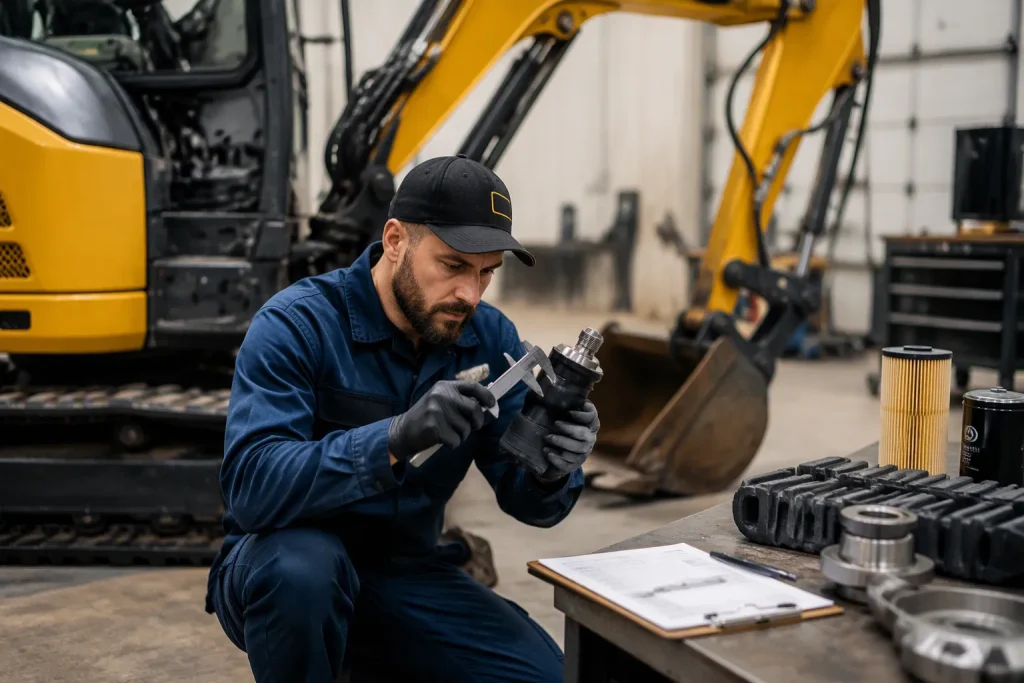
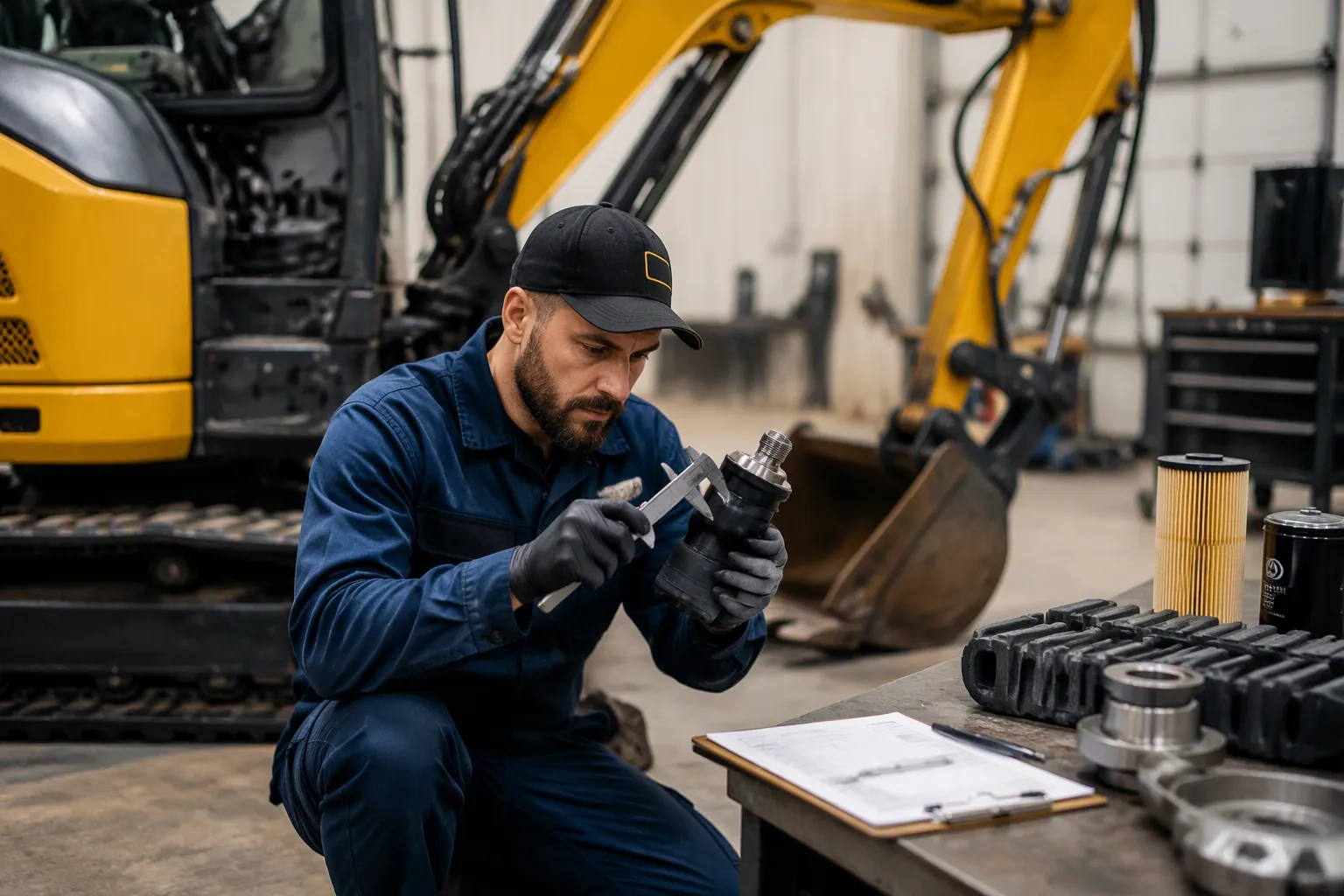
Verification means three things. Make sure the base machine is in good shape. Match the part to the listed specifications. Get the terms in writing. A “performance” label does none of this for you. Treat every performance claim as a question to look into, not a benefit to assume. That rule applies to any used mini excavator aftermarket performance parts 1 ton purchase, where labels are marketing and documents are evidence. This guide shows you how to check baseline condition, specification and hydraulic compatibility, application fit, compliance, cost against proven benefit, and the practical verification steps that put findings and terms in writing.
Key Takeaways
Check the base machine first. A worn machine hides problems that a new part cannot fix.
Match the part number to your model and serial number. Use the manufacturer’s written specs.
Treat performance labels as claims to check. Compare claims to your work cycle and duty needs.
Ask for written documents. Get the supply scope, return terms, and warranty in writing.
Include verification costs in your budget. Verification protects you from buying a part that does not fit.
Start with Used Mini Excavator Aftermarket Performance Parts 1 Ton Basics
Confirm the Base Machine First
Start with the actual machine identity, relevant configuration and a qualified diagnosis of the replacement need. A one ton size-class label does not identify an exact machine or establish compatibility.
Use applicable manufacturer information and qualified findings to establish the relevant machine requirements. Nominal size class, history or a generic illustration cannot prove the suitability of an offered part.
Set the Part’s Real Job
Define what the part must do before you read any performance claim. Start with the work cycle. Note the tasks the machine runs, the attachments it carries, and the duty the part must meet. A part that fits the documented need is useful. A part that promises more than the machine can deliver is a claim to look into.
This step also protects your budget. A used mini excavator aftermarket performance parts 1 ton purchase makes sense only when the part restores or maintains a documented function. List the required function in plain terms. Then compare every candidate part against that list. A used excavator with a clear service history gives you a stronger starting point for this comparison. The part’s job comes from your work, not from a label.
Prioritize Used Excavator Inspection and Pre-Purchase Inspection
A useful used excavator inspection looks at overall condition, hours, maintenance history, and wear items. It does not depend on aftermarket performance part claims. This step decides whether buying any aftermarket part makes sense at all. A pre-purchase inspection gives you the evidence to answer that question before money changes hands.
Review Hours and Maintenance History
Start with the hour meter and the paperwork that backs it up. Ask for hours and service records together, then check that the two match. A used excavator with a clear service history tells you how the machine was treated. A machine with gaps in its records tells you less, and you should treat those gaps as open questions.
Missing history limits what is known, but does not make every replacement decision impossible. Ask qualified personnel to assess the actual fault, proposed component and relevant records.
Inspecting the Undercarriage and Wear Items
Inspecting the undercarriage deserves its own separate pass. Track rollers, idlers, and sprockets carry the machine’s weight and take constant abuse. Record what you find as documented condition findings, not guesses. Note undercarriage wear as you observe it, and let a qualified service provider confirm the details. Undercarriage checks belong in the written report, alongside notes on pins, bushings, and the structural inspection of the frame and boom.
Use a qualified assessment to clarify the replacement need and its scope. An independent inspection provides evidence within its limits rather than automatically settling every purchase question.
Match Specs and Attachment Compatibility
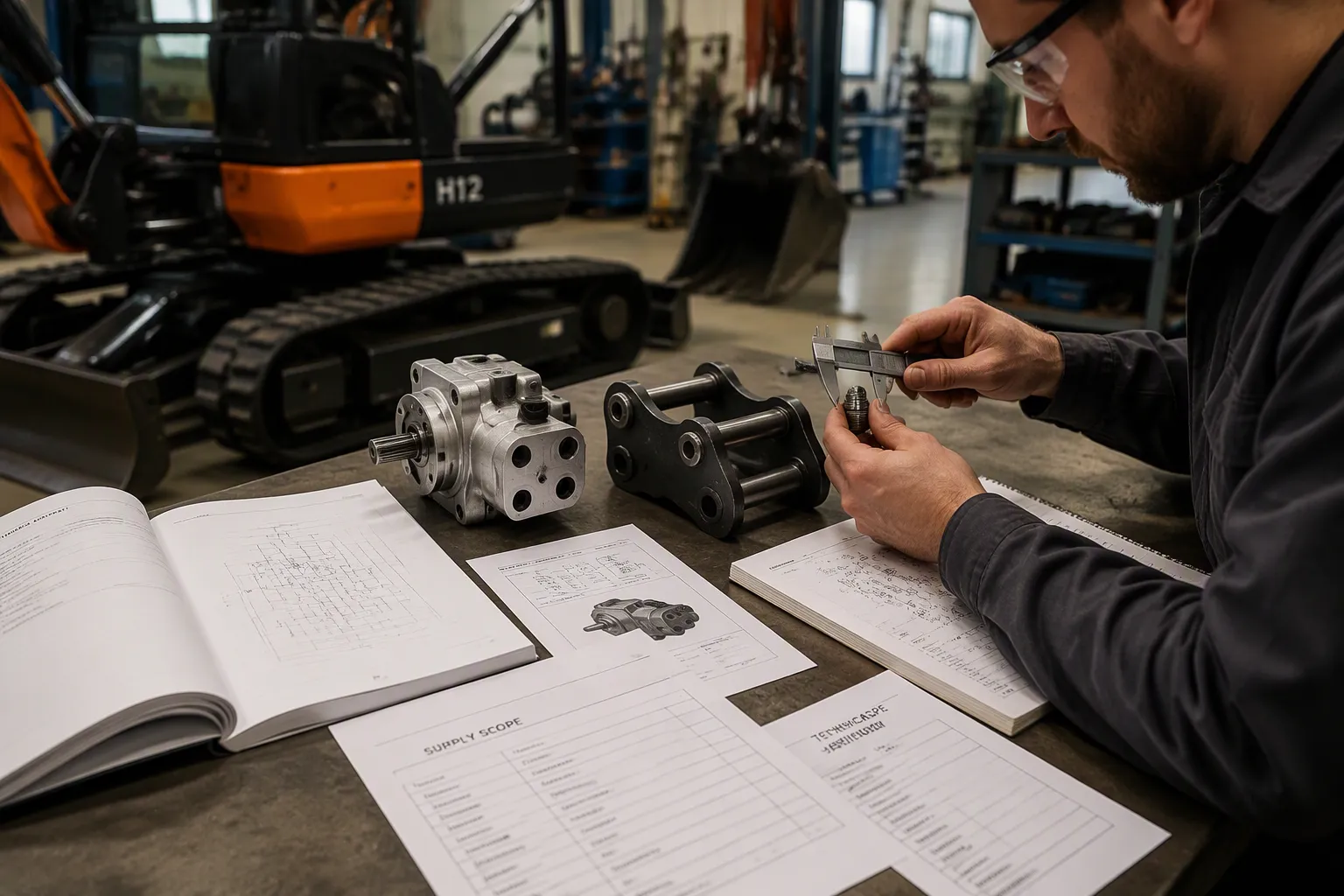
A part only works when it fits your exact model. Start with the model and serial number, then find the manufacturer’s written specs for that machine. Compare the part number on the part you’re thinking about buying against those documents. This is where compatibility and fitment checks really matter. A part listed for a one ton class machine may still miss your model’s interface details. Confirm the match on paper before you confirm it with money.
Checking the hydraulic system fit
Treat checking the hydraulic system as a paperwork review. You are comparing numbers on paper, not running a live test. Ask the supplier for the manufacturer’s stated flow and pressure ratings for your model. Then compare those numbers to the ratings the part is built for. The interface specs matter just as much. Port sizes, coupling types, and mounting patterns must line up with what your machine’s documents describe.
Confirm the relevant hydraulic circuit and supported application through applicable documentation and qualified assessment. Do not assume one pump rating or generic pressure-and-flow comparison establishes suitability for every component.
Verify Mounting and Written Scope
Mounting details decide whether a part bolts on or sits in a crate. Check the attachment mounting pattern against your machine’s documented interface. Confirm the pin sizes, bracket geometry, and hose routing as the manufacturer states them. Ask the supplier to confirm the part number crosses to your model and serial number. A verbal yes is not enough. Request the confirmation in writing.
Record supplied items, supported interfaces and written terms. These documents support the review, but agreement between paperwork alone does not prove the physical condition or suitability of the offered unit.
Judge Fit for Specific Tasks
Match the Part to the Work Cycle
A part earns its place by serving the tasks your machine actually runs. Write down the work cycle in plain terms. Note the digging, lifting, and travel phases, the attachments you swap, and how long each task lasts. Then check the part against that list. A component built for steady trenching may not suit a machine that mostly lifts and swings. The hydraulics on a one ton machine respond to load patterns, and a part must suit the pattern your job creates.
A short demonstration at the supplier’s yard is not a test operation of your work. It shows the part moves, not that it fits your duty. Ask instead for the manufacturer’s stated duty rating and compare it to your written cycle. A used excavator with a known task history gives you a fair benchmark for that comparison.
Separate Claims from Duty Needs
Split every performance statement into two columns. On one side, put the claim as the supplier words it. On the other, put the duty your work cycle requires. Then ask which document supports the claim. A label that promises faster cycles means nothing without a stated rating you can check against your machine’s specifications.
Keep your duty needs fixed while you shop. A used excavator buyer who chases labels ends up comparing marketing, not fit. Judge each part on the documented function it restores, the interfaces it mates to, and the conditions in the written scope. When a claim survives that review, you have a fit worth pricing. When it does not, you have a question for the supplier, not a reason to buy.
Confirm Compliance and Safety
Ask for Declarations and Markings
Ask qualified personnel to identify the technical and documentation requirements applicable to the actual item and intended use. Do not assume every used replacement part requires a declaration of conformity.
Read each declaration against the part in front of you. Check that the part number on the label matches the number on the paperwork. Confirm the marking describes the same component the supplier quoted. A quality management certificate tells you how a factory runs its processes. It does not prove that a specific part fits your machine or passed a product test. Keep those two ideas separate, and ask for product-specific evidence when the stakes are high.
Compare Condition Findings to Requirements
Your inspection notes give you the other half of the compliance picture. Line up the condition findings from your used excavator inspection against the requirements the documents state. Note where the machine’s current condition meets those requirements and where it falls short. A part that complies on paper still needs a sound platform beneath it.
Review application support, actual condition findings and relevant requirements separately. Matching documents and markings do not independently prove authenticity, safe operation or remaining life.
Weigh Cost Against Verified Benefit
Build a Like-for-Like Comparison
Compare each part’s price using the same baseline. List the part cost, the hardware and seals in the written scope, and the installation work a qualified provider quotes. Then compare that total to the documented function the part restores. A part that keeps your machine on its normal work cycle earns its price. A part that only carries a stronger label earns nothing you can measure.
Keep the machine’s condition in view during this comparison. A used excavator with heavy wear may need several parts at once, and the combined bill changes the math. Compare each option on the same terms, and note where a cheaper part leaves items out of its scope. A clear service history helps here too, because it tells you which parts already received attention.
Price the Verification Work
Include actual document-review, assessment, freight and qualified installation costs where relevant. Use quotations rather than assuming verification charges are always small relative to the part price.
Compare the actual supported alternatives and unresolved risks. A consistent file reduces uncertainty within its scope but cannot guarantee the purchase outcome or future service life.
Run Practical Verification Steps
Inspect and Compare Against Documents
Reconcile the actual offered item, supported application and written scope. Qualified personnel should determine any needed physical or operational assessment; do not conduct a buyer walkaround measurement procedure.
Keep the machine’s condition in mind during this pass. A sound platform supports a verified part. A worn platform hides problems that no document will show. Record what you see as findings, not opinions. When the stakes are high, book a third-party inspection to confirm your notes. An independent report gives you evidence you can act on.
Any operational or hydraulic tests must be selected and performed by qualified personnel using applicable procedures. Do not infer a specific internal fault from a drift result or conduct a test under your own work cycle as a buyer. Request relevant reports with conditions and limitations.
Put Terms and Evidence in Writing
Paper closes the loop. Ask the supplier to confirm in writing that the part number crosses to your model and serial number. Request the supply scope as a written list: what the price includes, which interfaces it mates to, and which conditions apply. Add the return terms and warranty coverage to the same document. Keep your inspection log, the service history, and the supplier’s confirmation in one file.
Line up the evidence before you pay. The documents, your condition findings, and the written terms must agree. When they do, you have a verified part. When they do not, ask the supplier to resolve the gap. A second third-party inspection may settle a disputed point. Run your technical checks against the written scope one final time. Operational checks on the machine come after installation, and a qualified provider should perform them. Written evidence protects you long after the part is installed.
Verification follows one chain: base-machine condition, specification and hydraulic fit, application need, compliance, cost, and written evidence. A performance label is a claim to check, not a gain to assume. A part counts as verified only when documents, condition findings, and written terms agree.
Apply that chain to any used mini excavator aftermarket performance parts 1 ton purchase. A used excavator with a clear service history gives you a stronger starting point. A used excavator without one leaves open questions you must resolve in writing.
Keep the purchase record complete and resolve essential application or condition questions before committing.
FAQ
What documents should I request before buying a replacement part?
Request applicable supported references, the actual supplied scope, qualified condition findings and written warranty and return terms. Ask qualified personnel which additional technical documents are required for the actual item.
How do I confirm a part fits my machine?
Match the part number to your model and serial number using the manufacturer’s published data. Compare mounting points, port sizes, and hydraulic ratings on paper. Ask the supplier to confirm the match in writing. A label that says “one ton class” does not prove it fits your specific machine.
Does a performance label prove the part will improve my machine?
No. A performance label is a claim, not a result. Check the stated rating against your machine’s documented specs and your work cycle. A part earns its place by restoring a documented function. Treat any promised gain as a question for the supplier.
Who should run hydraulic or operational checks?
Qualified personnel should decide which tests are appropriate and conduct them under applicable safety and service procedures. Do not open hydraulic systems or run your own tests.
Is a quality management certificate proof the part fits?
No. A quality management certificate describes how a factory runs its processes. It does not prove a specific part passed a product test or fits your machine. Ask for product-specific evidence and confirm fitment through the part number and your model details.
For excavator parts sourcing, consider YNF Machinery. Share full machine and component identification, applicable part references and quantities, and request supported compatibility information, an actual quotation, and written warranty and return terms before ordering.



