
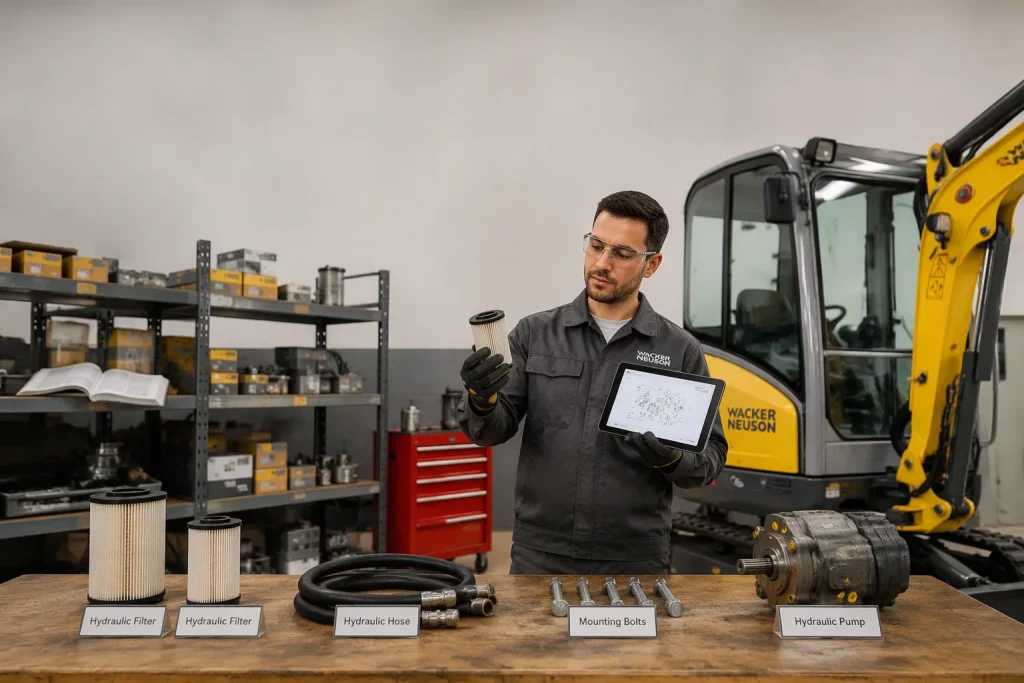
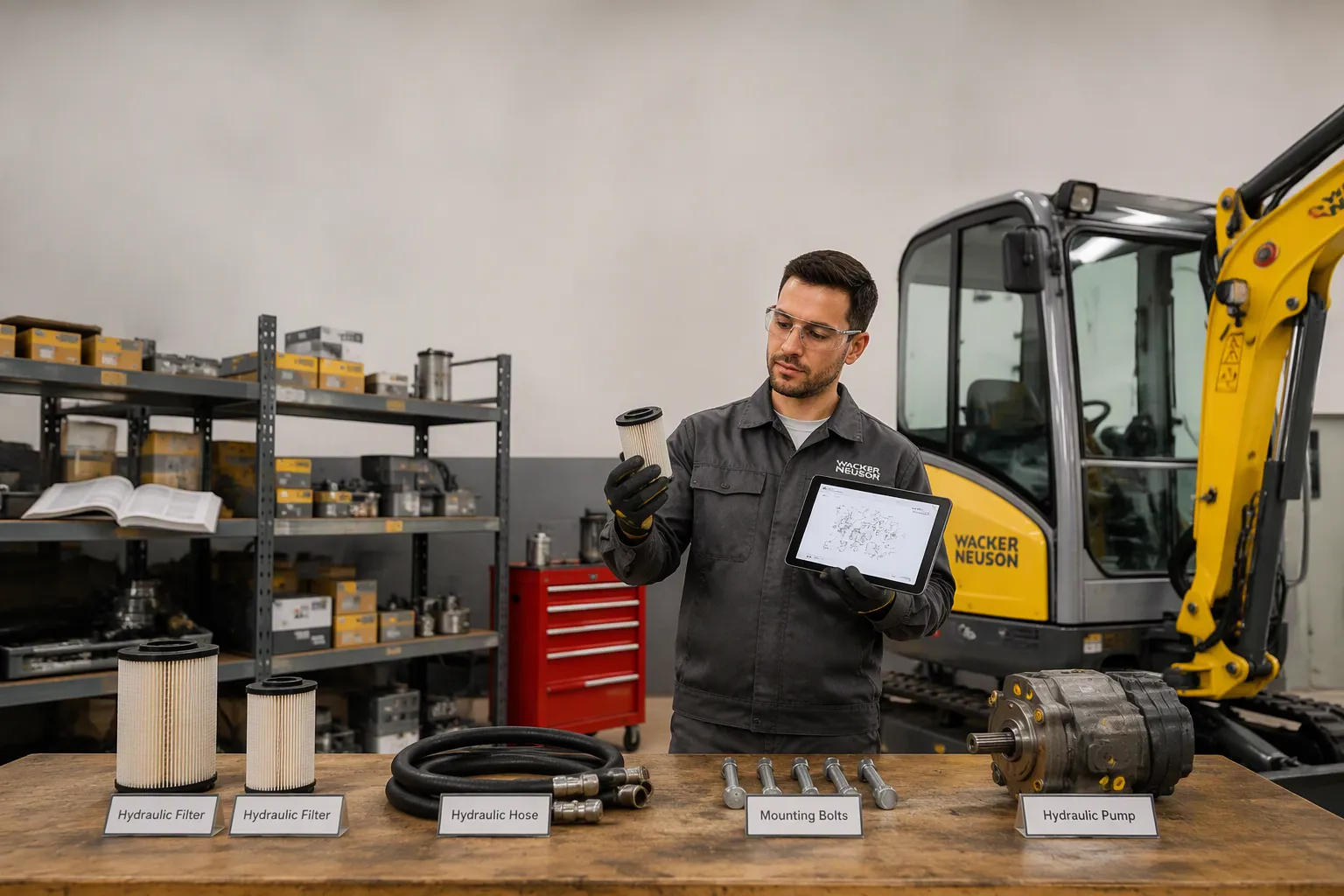
Before ordering Wacker Neuson excavator parts, record the machine model and full serial number, then confirm the applicable part number in the correct catalog. For engine or component parts, also record their own identification plates.
Wrong fitment, undocumented quality and unclear return terms can add downtime and expense. Verify each before paying.
For example, a part ordered without checking a serial-number range may need to be returned. Confirm the catalog application before dismantling the machine or arranging delivery.
Key Takeaways
Make sure it fits before you order. Write down the machine model, serial number, and factory part number. Check the serial number break first.
Compare OEM and aftermarket options using documented compatibility, required specifications and support. Safety-critical components need qualified technical review.
Labels, traceability and supporting documents help assess a part. Price and packaging alone cannot establish authenticity or suitability.
Buy from a seller with clear guarantee and return rules. Compare total cost after delivery plus downtime risk before paying.
Keep track of maintenance records and replace worn parts on time. Ordering parts ahead keeps your excavator running and saves you money.
Confirm Fitment Before Buying Wacker Neuson Excavator Parts
Know the Machine Model and Serial Number Break
Several excavator families come from Wacker Neuson, and each one changes over time. A part that fits an early machine may not fit a newer one in the same model line. The serial number break is the dividing line between those changes. Get that number before you order anything.
Ask an authorized dealer or parts supplier to check the applicable catalog revision and serial-number range. Have the full machine identification and relevant component details ready; do not assume stock availability.
Verify Part Number and Production Change
A number printed on an installed component may differ from the current catalog number. Ask whether it is an ordering number, a casting mark or a superseded reference, and verify any replacement against the correct serial-number range.
Have the dealer check the part number against your machine record. Look for any production change that affects fitment. Some changes involve mounting points, hose routing, or connector style. These small details matter for every excavator parts order.
A good preventive maintenance routine starts with correct parts. Track replacement intervals and write down the part numbers you install. That record becomes a preventive maintenance plan for the next service. Good records also make the next order for your excavator faster. If you confirm fitment first, you avoid the second teardown and the extra shipping cost. That is the real payoff.
Compare OEM and Aftermarket Excavator Parts
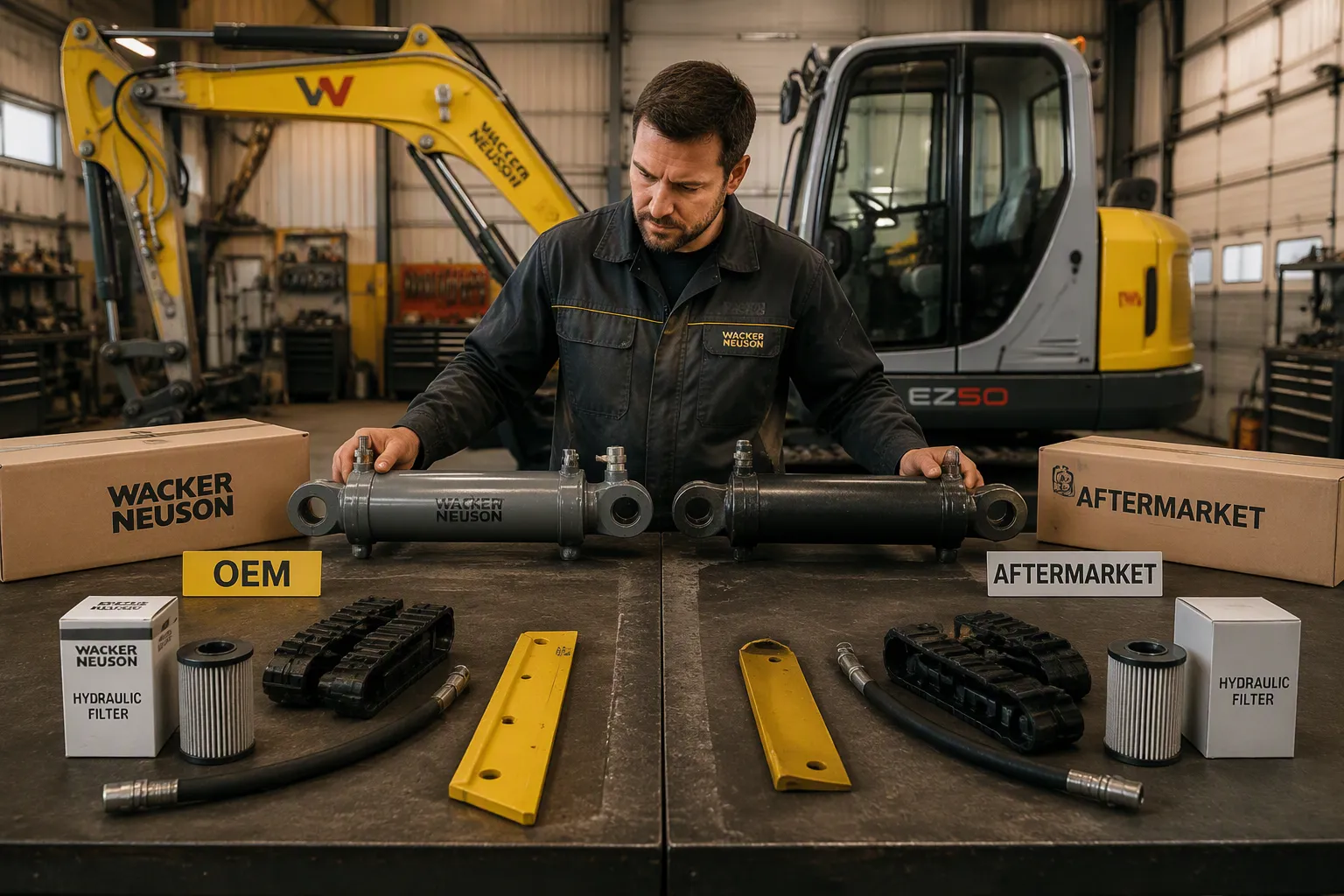
You have two ways to get replacement parts. OEM parts come from Wacker Neuson. Aftermarket parts come from other companies. Each way has good points and bad points you must think about.
Evaluate OEM Parts for the Required Application
Confirm that the offered OEM part number applies to your machine and installed component. OEM branding alone does not establish fitment, especially after previous modifications.
Request the actual written warranty and claim procedure. Check coverage, exclusions and any installation or documentation requirements before ordering.
For hydraulic, structural and other safety-critical components, use the applicable manufacturer specifications and qualified technical advice. Do not select a part solely by OEM or aftermarket branding.
An authorized dealer may help check catalog application and supersession information. Provide complete identification and ask for the compatibility basis in writing.
When Aftermarket Spare Excavator Parts Make Sense
Check three things before you buy. First, check the engine serial number. Engine builders change specifications mid-production. A part for a later Yanmar engine may not fit an earlier one in the same excavator. Second, ask about material quality. Ask the supplier to state the grade and hardness in writing. Third, read the warranty terms. Know who backs the part and who pays return shipping.
Filters, tracks and cutting edges still require the correct specifications and application. Compare supported compatibility, quality documentation and total cost; a lower purchase price does not establish acceptable service life.
Use the machine manual and recorded condition to plan maintenance. Part selection should meet the required specifications; neither a fixed interval nor running to failure proves that a particular source is suitable.
Spot Genuine Wacker Neuson Parts and Avoid Counterfeits
Check Packaging, Markings, and Dealer Documents
Fake parts can look real at first. The box design may copy the original. The label may show the right logo. So you must look past the outside.
Compare the ordered part number with the label, invoice and applicable catalog. Unusual print quality or inconsistent information calls for further investigation, but packaging appearance cannot prove authenticity.
Request an invoice or packing slip identifying the part, quantity and supplier. Ask for available traceability documentation and retain the compatibility confirmation with your service records.
Remember this. Being genuine does not guarantee fitment. A real part can still be wrong for your machine. Always check the part number against your serial number break. Looks alone do not prove a part is real.
Watch for Price Red Flags and Vague Claims
A large price difference deserves explanation, but it does not prove a part is counterfeit. Compare condition, specification, scope of supply and documented origin before deciding.
Listen for vague words. Phrases like “fits most models” or “universal replacement” do not tell you if it fits your excavator. An honest seller gives the exact part number and the machine models it fits. Ask for the material grade and maker name in writing. If the seller avoids these questions, leave.
Check the return policy before buying any excavator parts. If a seller takes no returns, you can be stuck with a wrong or fake part. Get the warranty terms in writing. Know who pays return shipping. Compare the total delivered price using the actual quote, not the listed price alone. A cheap part that fails early costs more than a correct one.
Choose a Reliable Source for Spare Excavator Parts
Compare Parts Sourcing Options
You have four main ways to buy excavator parts. Each way comes with a different level of fitment risk and warranty protection.
An authorized dealer may provide catalog assistance and OEM parts. Confirm the specific part application, availability and actual warranty terms rather than assuming that every offered part fits.
Online marketplaces give you many choices and low prices. But you must check the seller’s reputation and where the part comes from. A listing photo does not prove the part is real.
Used parts carry an inspection and history question. Obtain condition evidence and any applicable test results; compare the actual price and risk rather than assuming a saving.
Rebuilt parts fall between new and used. A good rebuilder replaces worn parts and tests the unit. Ask for the rebuild details in writing. Without that document, you cannot judge how much life the part has left.
Confirm Warranty, Returns, and Shipping Lead Time
Read the actual written warranty, including exclusions, claim steps and freight responsibility. Coverage varies by item and seller; ask whether the offered wear item is covered.
Check the return window and the restocking fee. Some sellers charge a fee even on wrong parts they shipped. A clear return policy protects you when fitment goes wrong.
Ask for the shipping lead time in writing. A part that arrives late makes your downtime longer. Factor that delay into your preventive maintenance strategy. Order wear parts before they fail, not after.
Compare the total delivered cost using the actual quote. Add freight, import charges, and return shipping risk. A low part price means nothing when the total cost climbs. Slow down, document your machine, and buy from a source that stands behind the part.
Avoid Downtime and Save Money When Buying Parts
Know Common Wear Parts and Replacement Signals
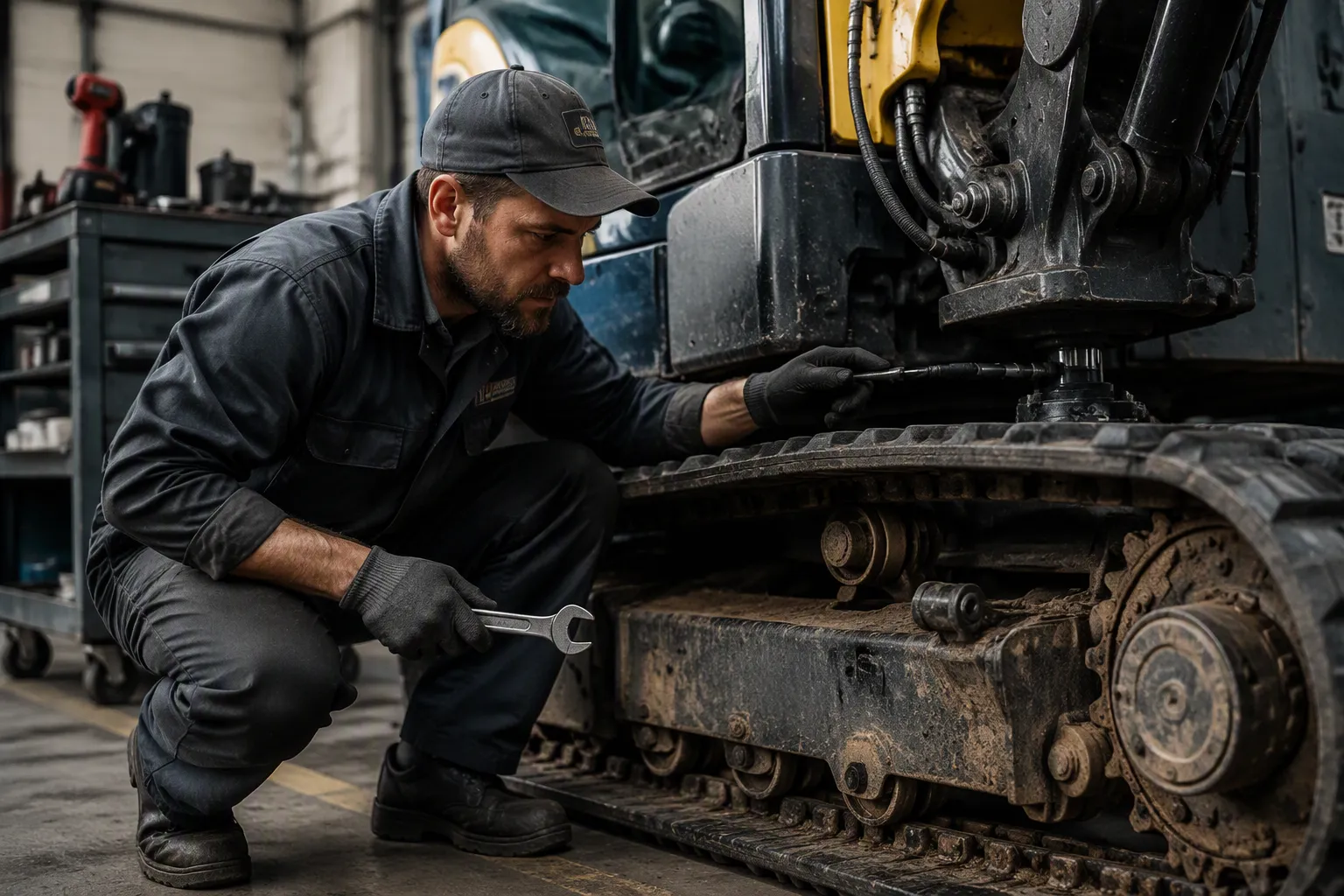
Undercarriage wear varies with operating conditions, maintenance and application. Inspect tracks, sprockets, idlers and rollers according to the machine manual, and compare findings with its service limits.
Inspect hydraulic hoses and cylinders safely for visible damage and leaks. Do not use your hands to search for a pressurized leak. Contamination or unusual fluid appearance warrants qualified diagnosis; color alone does not identify a failed pump or motor.
Follow the specified filter service schedule and inspect pins, bushings and linkages using the approved procedure. Secure the attachment, shut down and isolate the machine as required before inspection; keep clear of pinch points and use specified wear limits.
Carry out the manual’s pre-use inspection for leaks, cracks, loose fasteners and other defects. Refer unsafe conditions to a qualified technician before operating.
Compare Total Cost and Downtime Before Ordering
The part price is only one number. You must add machine downtime to the real cost. A cheap replacement part that arrives late costs more than a correct one that ships fast. Think about your crew. They stand idle while the machine sits. That idle time has a price.
Compare the total delivered cost using the actual quote. Add freight and any import charges. Factor in the return shipping risk if fitment goes wrong. A low price means nothing when the total climbs.
Stay up-to-date on maintenance records. Track hours on each component. Replace wear items before they fail. This preventive maintenance strategy saves money. You avoid emergency orders and rushed freight. You also avoid the downtime that comes with a breakdown. Slow down and plan your parts order. Your machine stays working, and your wallet stays fuller.
Buying the right part starts with your machine record. Write down the model, serial number, and factory part number first. Check the serial number break before you call anyone. Pick OEM or aftermarket based on your service plan. Make sure the part is real before you pay. Choose a seller who offers warranty and return protection. Compare the total cost against downtime risk.
Take your time. Write everything down. Do not buy on price alone. A cheap part that fails costs more than a correct one. Your excavator keeps working when you follow this order. Your parts order becomes a planned step, not an emergency.
FAQ
Which machine details do I need before ordering any part?
Record the machine model and full serial number from its identification plate. Find the applicable ordering part number in the correct catalog; it may not be on the machine plate. For engine or component parts, record their separate identification and confirm any serial-number break.
How can I verify a part is genuine?
Check consistency between the part, packaging, invoice and available traceability records. Ask the brand owner or an authorized dealer when authenticity is uncertain. Print quality, certificates and price alone are not conclusive.
Should I choose OEM or aftermarket parts?
Compare documented compatibility, required specifications, actual delivered cost and support. OEM or aftermarket branding alone does not establish fitment or quality. Seek qualified advice for hydraulic and structural components.
What should I check in a warranty or return policy?
Get the warranty terms in writing before you pay. Ask who pays return shipping. Check the restocking fee and the return window. Know the shipping lead time. A clear policy protects you when fitment goes wrong.
Are salvage or rebuilt parts worth considering?
Used or rebuilt parts may be considered when their application and condition are supported. Request inspection or rebuild details and relevant test evidence, then compare the actual delivered cost and downtime risk.
For Wacker Neuson excavator parts sourcing, consider YNF Machinery. Provide full machine and component identification, applicable part numbers and quantities, and request supported compatibility information, an actual quotation and written warranty and return terms before ordering.



