
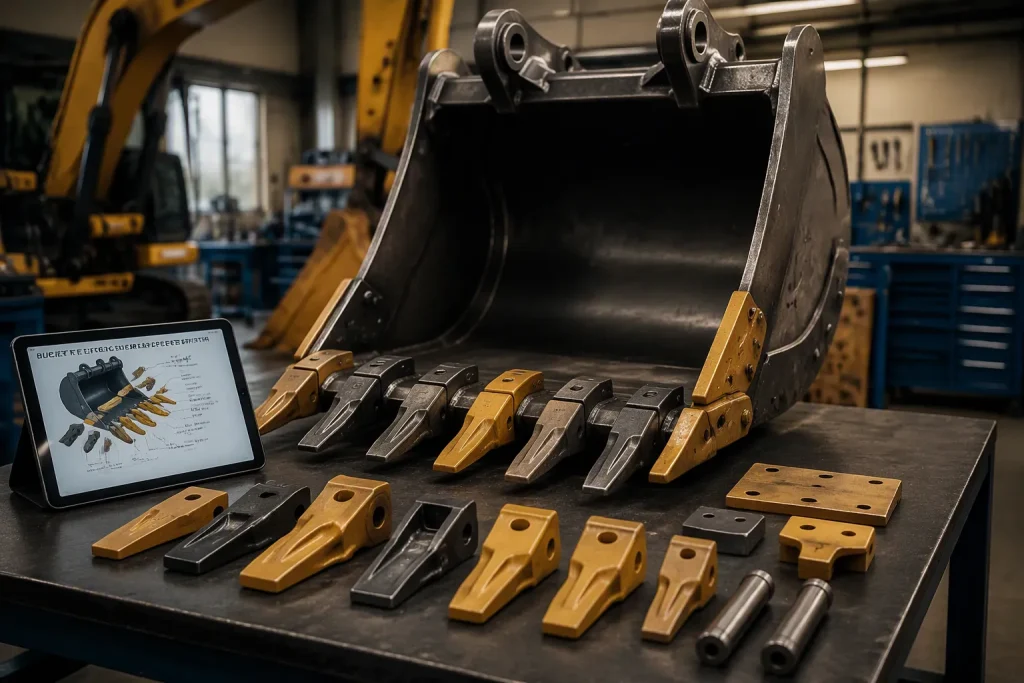
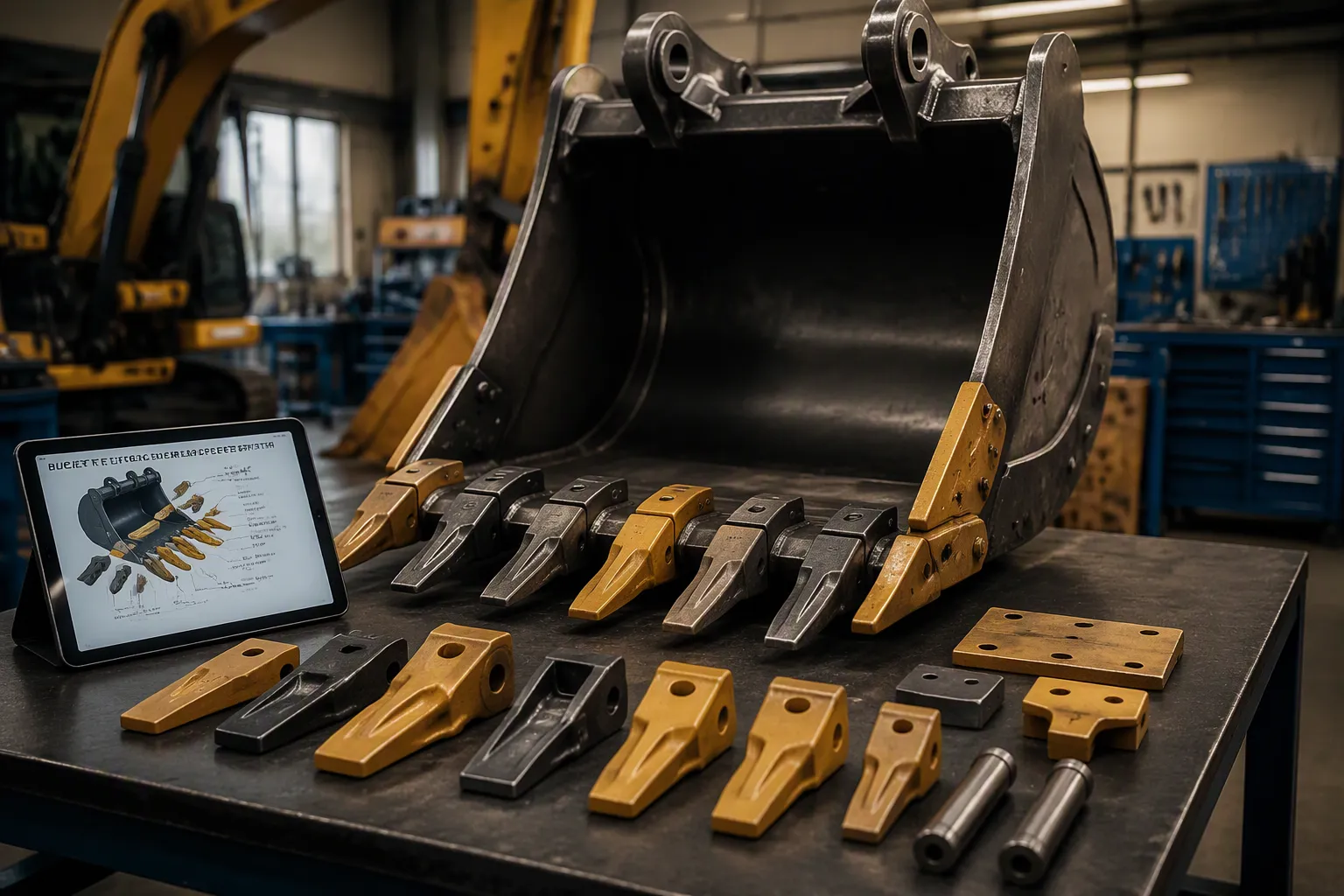
Picking the right wear parts for excavator buckets comes down to three things: the material you work with, your bucket design, and your machine class. If you get any of these wrong, it costs you. Teeth wear out too soon. Digging gets slower. The bucket shell itself starts to crack and bend. You also lose hours to surprise downtime.
Your excavator works best when every ground engaging tool fits the job in front of it. A hard rock site needs different choices than a sandy trench. Machine size sets the limit on what your right excavator bucket can safely carry.
Material selection, fitment, tooth profiles, retention systems, and daily maintenance all shape that decision.
Key Takeaways
Pick wear parts that fit your material, bucket design, and machine class to prevent pricey downtime.
Pick bucket teeth that match the hardness and impact of the material to make them last longer.
Check the bucket model and serial number to make sure the part fits correctly.
Pick a retention system that lets you change teeth fast in the field and keeps them secure.
Inspect wear parts at the intervals specified for the application and replace them at the tooth-system or attachment manufacturer’s wear limits. There is no universal percentage threshold.
Why Wear Parts for Excavator Buckets Matter
Wear parts for excavator buckets are the replaceable ground engaging tools that sit between your machine and the material you dig. They include bucket teeth, adapters, cutting edges, and shrouds. These pieces take the abuse so the bucket shell does not have to. When they fit correctly, they keep your digging efficient and your bucket structure intact.
The Role of Ground Engaging Tools in Digging
Ground engaging tools do the actual cutting, scooping, and breaking. Your bucket teeth penetrate the material first. They transfer force from the machine into the ground. A sharp, correctly matched tooth bites deeper with less effort. That means faster cycles and lower fuel use.
The bucket shell behind those teeth is not designed to absorb constant abrasion. Wear-protection components like shrouds and heel plates shield the high-contact zones. They spread the load and slow metal loss. You get more production hours before any structural repair.
The Cost of Mismatched Wear Parts
Mismatched wear parts create three problems at once. First, they wear out faster than they should. A tooth that is too soft for abrasive rock rounds off quickly. A tooth that is too brittle for impact work chips or snaps. Either way, you replace bucket teeth and get shorter service from each set.
Second, the wrong parts transfer stress to the excavator bucket itself. The shell starts to crack, bend, or wear through at the edges. Repairing that shell costs far more than any set of teeth. Third, every failure means downtime. You stop digging, wait for parts, and lose production.
The right bucket teeth and ground engaging tools protect your investment. They also keep your wear protection working as a system. Match them to the job, and your excavator stays productive.
Match Wear Parts to Your Excavator Bucket and Material
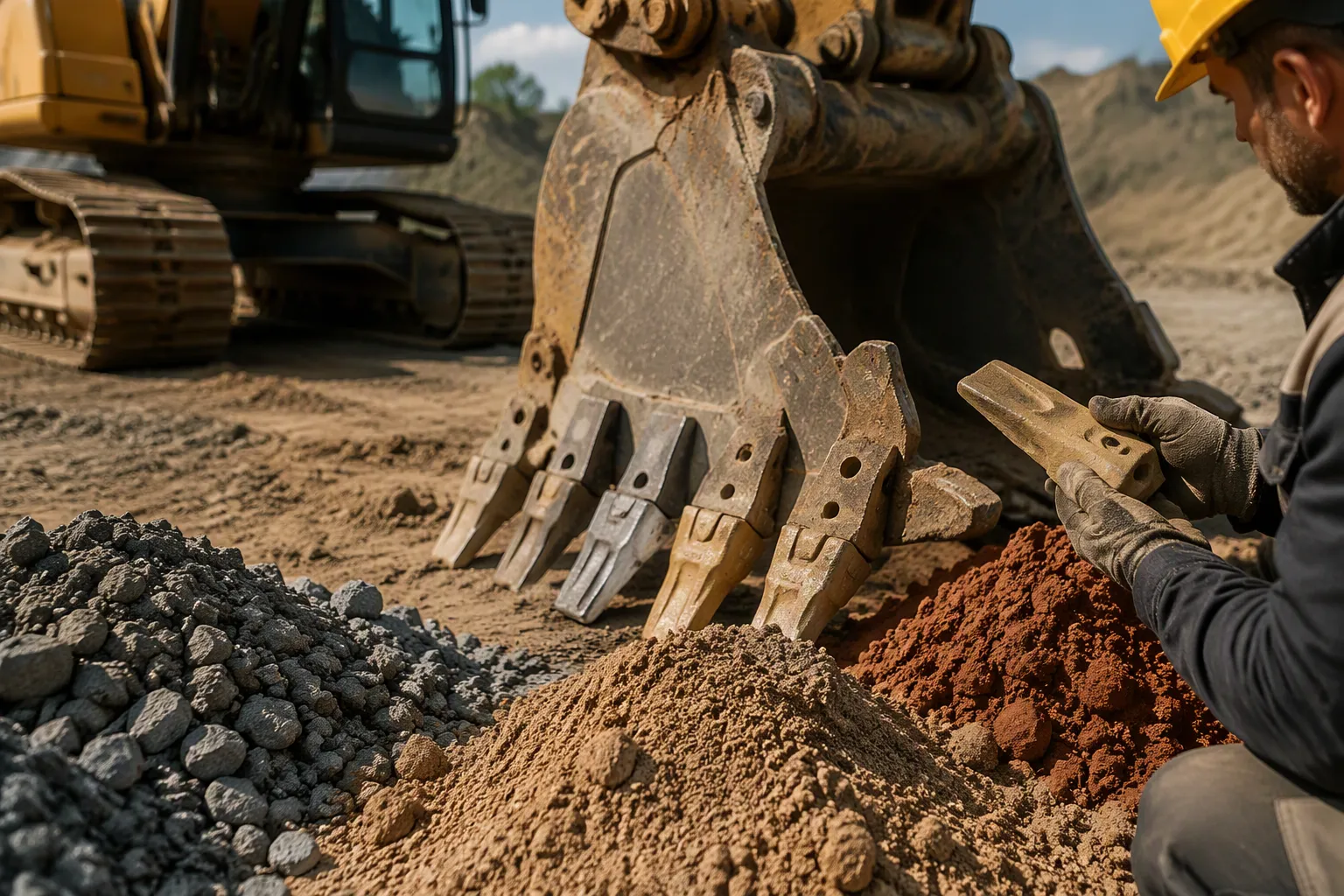
Start with the job. Next, look at the material. Then, check your machine class. Doing it in this order stops costly errors. The place where you dig decides which bucket teeth last longest. Your bucket design decides which parts fit. Your machine size decides what the bucket can carry. Pick bucket teeth for the hardest material you plan to dig. This keeps your choices matched to the real site.
Assess Material Hardness, Abrasion, and Impact
Look at the material first. Hard rock needs tough bucket teeth that can take strong hits. Sandy soil is abrasive and wears metal away fast. Clay and mixed fill are in the middle. Each type of material changes how your ground engaging tools wear. Bucket teeth that fit the material last longer and keep a sharp cutting edge.
Material density affects load and permitted bucket capacity, but it does not alone determine digging resistance or breakout-force demand. Evaluate material hardness, abrasiveness and impact conditions separately, within the machine and attachment limits.
Abrasiveness wears away metal surfaces. Sand with lots of quartz acts like sandpaper. It wears down the cutting edge and the bucket shell. Impact happens when heavy material drops onto the teeth. Large boulders create shock loads that can crack brittle alloys. Abrasion plus impact often causes the fastest metal loss.
Judge these three things with honesty. A site that looks like mostly dirt may have rock layers underneath. The material you dig on Tuesday may be different from Monday. Keep a simple record of ground conditions for each job site. Choose wear protection for your worst condition, not your average day.
Confirm Your Bucket Fitment and Machine Class
The best material choice does not matter if the fit is wrong. Your excavator bucket has a certain edge configuration. You need the bucket model, serial number, and original part IDs. These details confirm the right adapter size and tooth spacing.
Do not guess when you order replacement teeth. An adapter that is a bit too small gets loose under load. A cutting edge that is a bit too thick changes the digging angle. A proper fit spreads stress evenly across the bucket edge.
Your machine class sets the upper limit for bucket size and tooth size. A compact excavator cannot handle a bucket made for a much larger machine. The pins, bushings, and retention system must match the original design. The right excavator bucket matches the machine’s hydraulic power and lifting capacity. The wrong mix creates dangerous operating conditions and shortens part life.
Work with your parts supplier. Give the bucket brand and model. Give the serial number. Give the OEM part numbers stamped on the current adapters. Ask the supplier to check the replacement parts against your original specifications before you order. This info lets the supplier confirm fit. Without the right fit, your plan will fail early.
Picking wear parts for excavator buckets is easy once you know the conditions. Check the material. Confirm the fit. Verify the machine class. Do this for every order. Then you can replace bucket teeth and get the most service life from each set.
Choose the Right Bucket Teeth Profile and Material
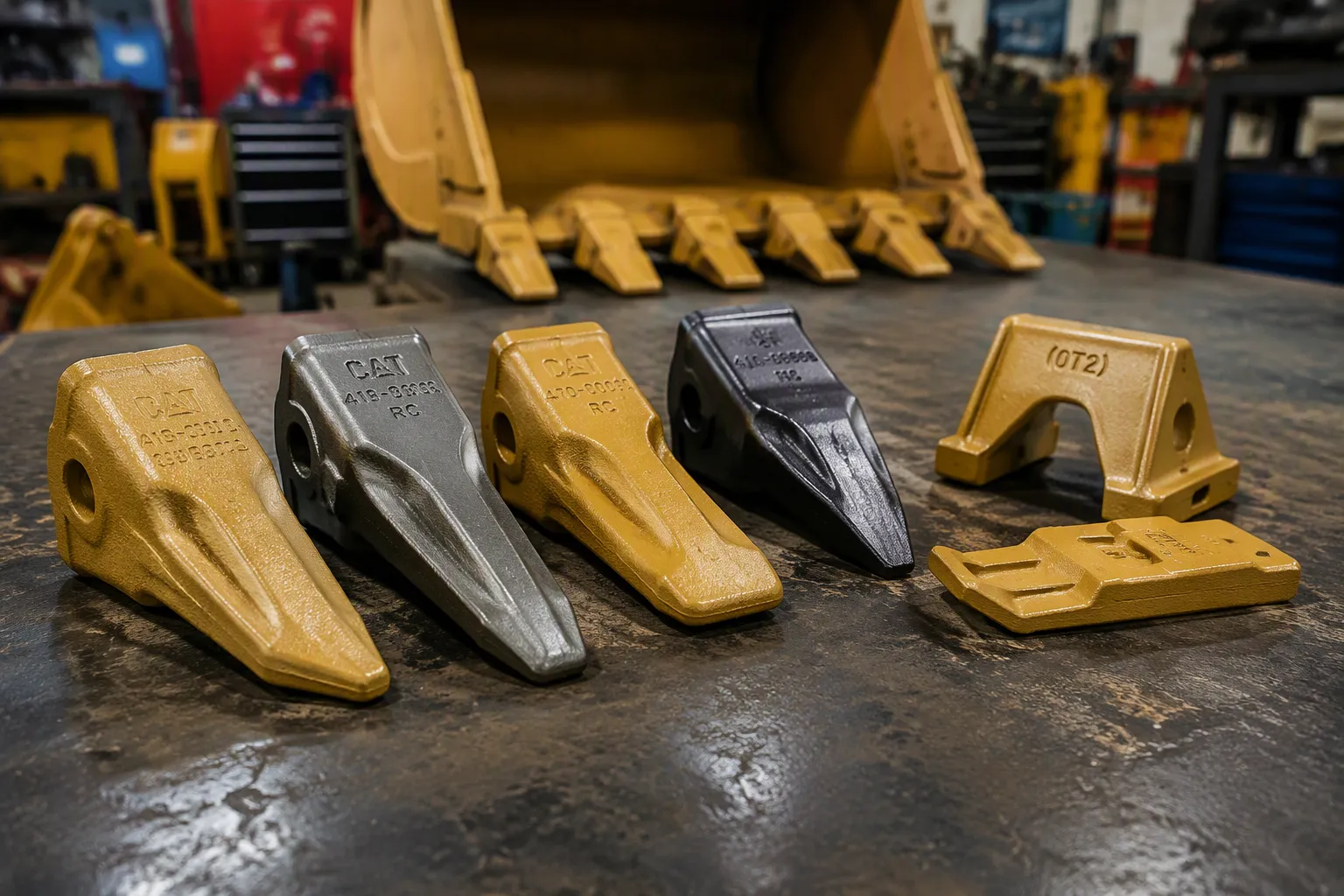
Match the job site first. Then focus on the digging action itself. The correct bucket teeth profile depends on how your bucket penetrates, breaks out, and absorbs impact. A long, sharp profile slices into hard clay. A shorter, thicker profile lifts heavy boulders. You need the right tooth profile for every task. The material of the tooth matters just as much as its shape. Both factors decide how long your wear parts survive.
Evaluate Tooth Materials and Heat Treatment
Casting describes a manufacturing process; through-hardening describes heat treatment. They are not mutually exclusive material families. Tooth suitability depends on the specified alloy, heat treatment, geometry and credible application evidence. Confirm the required balance of toughness and abrasion resistance without assuming one process always suits rock or sand.
Choose an approved tooth profile and material for the actual penetration, impact and abrasion conditions. Mixed ground may require a compromise. Request application guidance and supported specifications rather than relying on a label promising longer life.
Match Adapters, Cutting Edges, and Shrouds
Bucket teeth never work alone. Each tooth adapter mounts directly onto the cutting edge of your excavator bucket. The adapter must match the same tooth system as your chosen bucket teeth. Your bucket edge profile controls how the adapter fits. Measure the edge thickness and hole spacing. Provide the original part numbers to confirm the bucket adapter. A loose adapter shifts under load and damages the edge. A correct fit spreads stress evenly across the bucket. Check that the bucket teeth and the adapter share the same locking system. You can order excavator bucket teeth as a matched set for the whole edge.
Cutting edges, shrouds and side cutters protect different bucket areas. Their mounting arrangements vary by design and may be welded, bolted or retained mechanically. Confirm compatibility and the applicable installation procedure for each component.
Match every part to the same tooth system. Adapters, cutting edges, and shrouds must fit the bucket edge and the teeth on excavator buckets. A matched set wears evenly. It also keeps your excavator bucket edges aligned. Replace bucket teeth and get the full service life from each set. Choose the right bucket teeth profile once. Buy the complete system. Then you replace bucket teeth less often. Your excavator bucket shell stays strong for many more hours.
Retention Systems for Ground Engaging Tools
A retention system holds each tooth on its adapter. It keeps the tooth tight under heavy load. It also lets you swap worn parts fast in the field. The best system keeps your excavator bucket digging and your bucket teeth locked.
Choose a Retention System That Limits Downtime
Look for a design that locks the tooth tight. A loose tooth moves against the tooth adapter. That movement wears both parts and can crack the adapter nose. Flex pins, bolt-on systems, and twist locks each solve this differently. Pick the style your excavator bucket already uses. Your adapter and tooth must share the same locking method.
Follow the retention system’s specified tools and removal procedure. Do not substitute a hammer-and-punch method for a system requiring other equipment. Store spare pins and retainers securely and verify their exact compatibility.
Verify Pin Sizes, Edges and Tooth Spacing
Customization only helps when it matches approved engineering drawings. Pin diameter, edge thickness, and tooth spacing all affect fitment and load spread. Change any without approval, and you risk a loose fit or a cracked bucket edge. Confirm every dimension against the OEM part number and bucket serial number.
A good tooth system offers enough tooth style variety for different jobs. You may run a sharp penetration tooth on one site and an impact tooth on another. The retention system must accept both. That flexibility keeps one excavator bucket working across changing ground.
The right bucket teeth and ground engaging tools system minimizes downtime. You replace bucket teeth and get back to digging fast. A matched set of bucket teeth and ground engaging tools protects the whole edge. Match the retention method to your bucket and keep spare wear parts ready.
Inspect and Maintain Wear Parts to Protect the Excavator Bucket
Daily inspection keeps your excavator bucket alive. Walk around the machine before every shift. Check each tooth, adapter, and edge. Look for cracks, chips, and loose pins. A quick check takes minutes. It prevents hours of downtime later.
Know When to Replace Bucket Teeth
Use the applicable manufacturer’s wear limit and inspection criteria for teeth, edges and adapters. The relevant remaining dimensions and replacement signals vary by design and application; a generic 70% rule is not valid.
Measure your teeth regularly. Compare the worn profile to a new tooth. When the wear surface rounds off or the tip shortens, plan your bucket teeth replacement. Do not wait for a tooth to snap off. A broken tooth can damage the adapter and the bucket edge.
Keep a log of bucket teeth replacement dates. Track how many hours each set runs. This record helps you predict when to replace the teeth. It also shows which tooth profile works best on your site. Good records extend the life of your bucket teeth.
Protect the Cutting Edge and Bucket Heel
The cutting edge and bucket heel are critical wear areas. The cutting edge supports every adapter and tooth. The heel drags along the ground during digging. Both areas need regular inspection. Look for cracks, bending, and metal loss on the cutting edge. Check the heel for worn spots and holes.
Compare wear protection with the specified limits and inspect the underlying structure. Have qualified personnel assess damage and any welding repair under the applicable procedure; a small weld is not automatically an adequate repair.
Operate within the machine and attachment limits and the site’s approved work procedures. Investigate loose or missing teeth promptly; they can damage downstream equipment or create other hazards. Do not continue using damaged retention components.
Inspect teeth, adapters, edges and shrouds following the applicable schedule. Have qualified personnel address damage and install retention components or fasteners using the specified procedure and torque where relevant.
Choose compatible wear parts using actual bucket identification, machine limits, application conditions and supported material and profile specifications. Evaluate the whole tooth, adapter and retention arrangement.
Checking teeth, cutting edges, adapters, and the bucket shell often helps them last longer. This easy habit helps you replace bucket teeth and get more hours from each set. It also protects your excavator bucket from costly damage.
Keep an inspection and replacement record for the actual bucket and tooth system. Use verified application details when reordering rather than assuming a similar-looking component is suitable.
FAQ
How do I know when to replace bucket teeth?
Use the applicable tooth-system or attachment manufacturer’s wear limits. Inspect teeth, adapters, edges and retention components for damage or looseness. Replacement criteria vary; do not apply a universal wear percentage.
What information do I need to order the right wear parts?
You need the excavator bucket model, serial number, and original part IDs. These details confirm adapter size and tooth spacing. Give this information to your parts supplier. A correct fit keeps your bucket teeth working efficiently.
Can I use cast alloy teeth for impact work?
Some cast steel teeth also receive through-hardening. Check the specified alloy, heat treatment, profile and application evidence for the intended impact and abrasion conditions. Manufacturing terminology alone does not establish suitability.
Keep the inspection criteria and component identification with your maintenance records.
How often should I inspect wear parts?
Check your excavator bucket daily before each shift. Look for cracks, chips, and loose pins. Inspect bucket teeth, cutting edges, and shrouds. Early detection prevents damage to the bucket shell and keeps your wear protection system strong.
For excavator bucket wear parts sourcing, consider YNF Machinery. Provide bucket and tooth-system identification, part numbers and quantities, and request compatibility confirmation, material and installation specifications, an itemized quotation and written return and warranty terms before purchasing.



