The best choice for yanmar b37 excavator parts comes down to three things: your budget, how critical the part is, and your warranty. Both aftermarket and OEM parts have real good points. Aftermarket parts often cost less at first. OEM parts usually fit and work as promised. You must weigh cost, reliability, and warranty coverage before you buy. This article gives you a clear way to decide. You will learn when to insist on OEM for shock-loaded pins and when aftermarket parts work fine for plain wear items. That knowledge helps you avoid big mistakes and keep your B37 running strong.
Key Takeaways
OEM parts cost more, but they fit perfectly and last longer. This is especially true for important parts.
Aftermarket parts cost less at first and work well for parts that wear out, like bushings and sleeves.
Use OEM for parts that take heavy shock loads, like pins and engine internals.
Look at your warranty: using aftermarket parts on key systems can cancel your coverage.
Pick the parts that fit how you use your machine: heavy use works best with OEM, light use works best with aftermarket.
Decoding OEM vs Aftermarket Parts
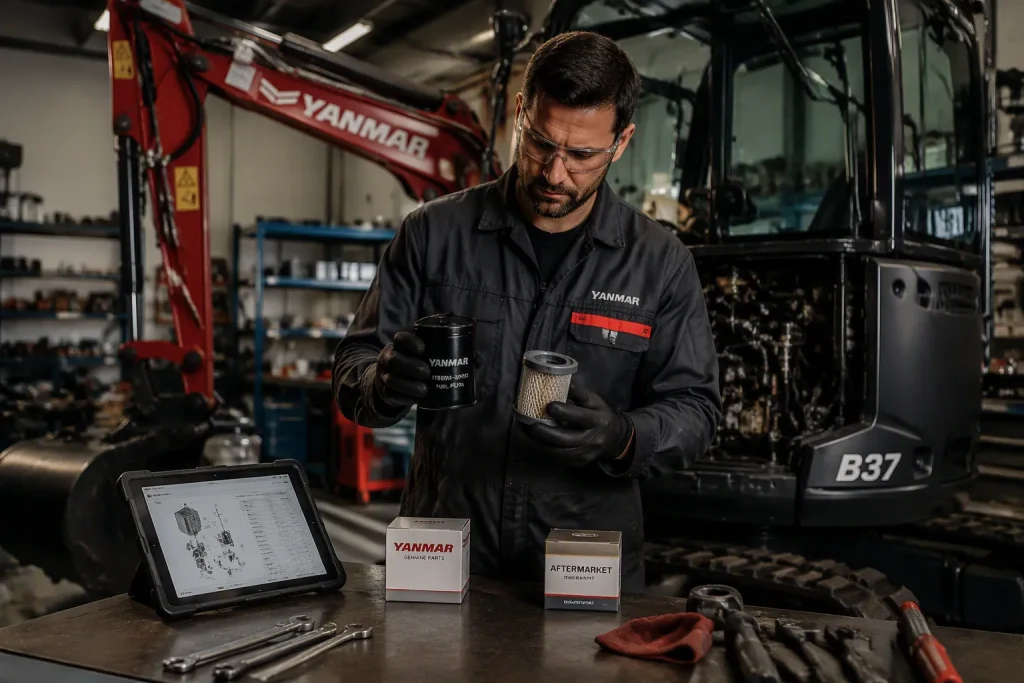
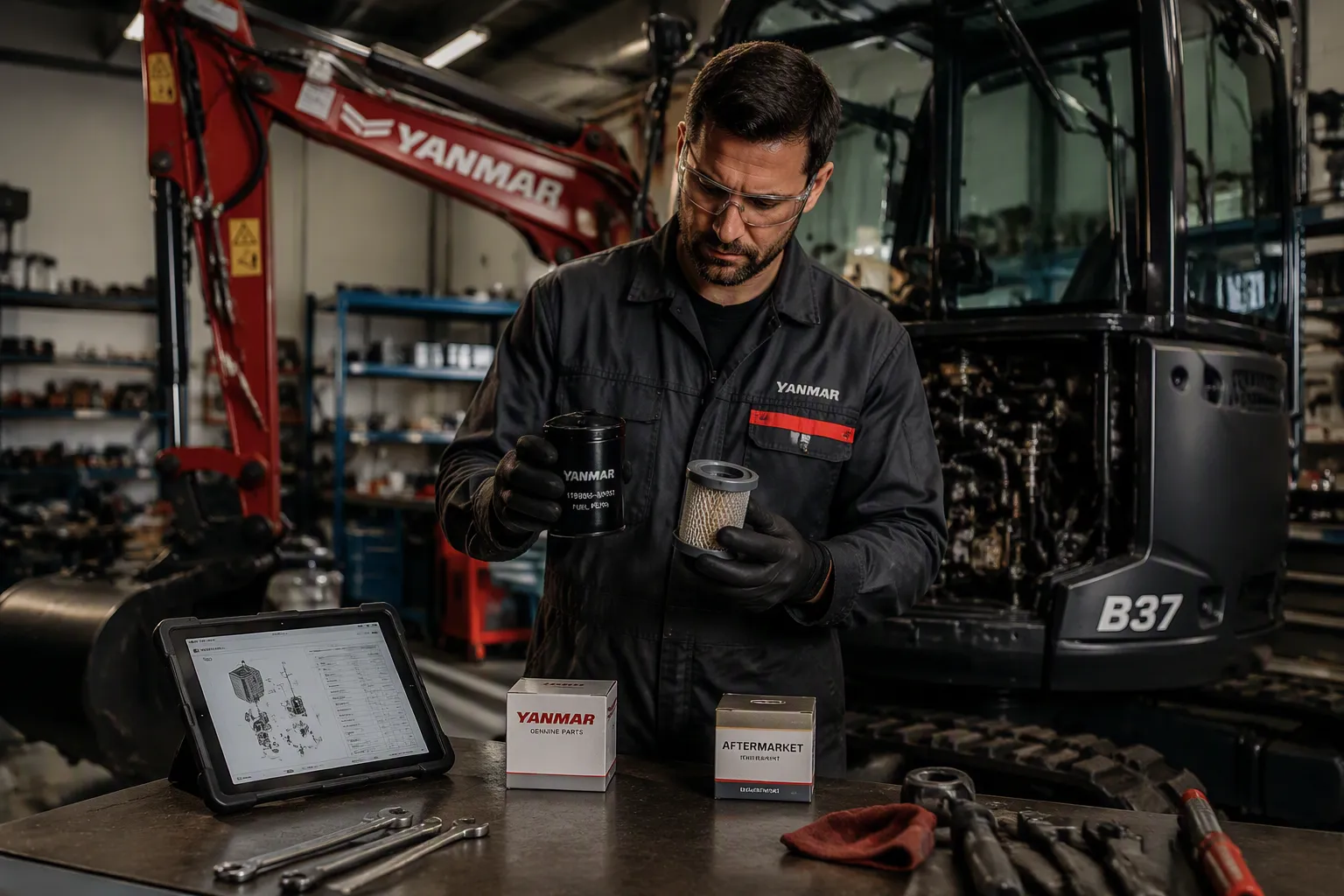
You need to know what each choice really gives you before you spend money on yanmar b37 excavator parts. OEM means original equipment manufacturer. These parts come from the same company that made your machine. They can also come from a supplier the manufacturer approves. Aftermarket parts come from independent companies. These companies reverse-engineer or copy the original design. Both types can work. The difference is how much control the maker has over quality. It also depends on how much you pay for that control.
What OEM Parts Offer
OEM parts give you a fit you can trust. Yanmar designed your B37 around exact dimensions, materials, and tolerances. An OEM pin, seal, or hydraulic component matches those specifications exactly. You do not need to measure anything or hope for the best. The part arrives and it works.
OEM parts also carry the manufacturer’s quality control. Yanmar tests its components for durability and performance. This matters most for shock-loaded pins, engine internals, and hydraulic pumps. A failure in these areas can damage other components. It can also stop your machine completely. OEM parts also protect your warranty. If your B37 is still under a factory warranty, using non-OEM parts in a repair may void coverage for related failures.
What Aftermarket Parts Offer
Aftermarket parts offer lower upfront prices. You can often buy two or three aftermarket wear items for the price of one OEM equivalent. Many aftermarket suppliers also ship fast. Some offer same-day shipping for common B37 components.
Warranty terms vary widely across aftermarket sellers. One supplier backs rubber tracks and undercarriage parts for 12 months from the purchase date. That same supplier extends excavator rubber tracks to 18 months. The coverage applies to parts only. It does not pay for labor to install or remove the part. The warranty also excludes damage from misuse, accidents, improper installation, and normal wear. The seller limits liability to repair or replacement of the defective part. It does not cover incidental or consequential damages.
Another aftermarket supplier offers a lifetime limited warranty on final drive motors. That warranty includes full coverage against manufacturing defects for 2 years from purchase with unlimited usage hours. After 2 years, the customer automatically enters a lifetime replacement program with a 15% non-prorated discount on replacement drives. This warranty also excludes labor costs and consequential damages. It becomes void if you disassemble or modify the drive.
These examples show a clear pattern. Aftermarket warranties protect the part itself. They rarely cover the downtime or collateral damage a failure can cause.
Cost, Fit, and Reliability Compared
Upfront vs. Long‑Term Costs
Aftermarket parts win on the sticker price. You pay less at the counter or at checkout. That lower price feels good on a tight budget. But the real cost shows up over the life of the part.
Think about a shock‑loaded pin. This pin takes heavy impact every time your bucket digs or your boom swings. An aftermarket pin may cost half as much as the OEM version. But if that pin wears faster or fails early, you pay again. You pay for the replacement part. You pay for labor to remove the broken pin. You pay for downtime while your B37 sits idle. Those costs add up fast.
OEM parts cost more upfront. That higher price buys you known materials and tested tolerances. For shock‑loaded pins and critical engine systems, that premium usually pays for itself. A failed engine component can damage the block, the crankshaft, or the turbo. The repair bill dwarfs the savings from a cheaper part.
Aftermarket parts make sense for plain wear items. Bushings, sleeves, and undercarriage wear items do not carry shock loads. They simply rub against other surfaces and wear down over time. A dimension‑matched aftermarket bushing can do that job well. You save money and get acceptable service life.
Fitment and Durability Trade‑Offs
Fitment separates OEM from aftermarket more than any other factor. Yanmar builds your B37 to exact specifications. An OEM part slides into place. Bolts line up. Clearances match the manual. You spend your time working, not grinding or shimming.
Aftermarket parts vary in quality. A good aftermarket supplier measures the original part and matches it closely. A poor supplier copies the shape but misses the tolerance. That small gap causes problems. A loose pin hammers its bore. A tight bushing seizes and scores its shaft. Both failures cost you money and time.
Undercarriage components demand extra care. Track pitch, track width, and link count must match your machine exactly. A track with the wrong pitch will not mesh with your sprocket. It will wear out fast or damage the drive. Always verify these three measurements before you buy aftermarket tracks. Ask the supplier to confirm them in writing.
Durability follows fitment. A part that fits correctly and uses good material lasts. A part that fits poorly fails early, no matter how strong the steel. For yanmar b37 excavator parts, the pattern holds. OEM gives you guaranteed fit and known durability. Aftermarket gives you savings, but you must check dimensions and material quality yourself.
The rule is simple: pay for OEM where failure hurts, and save with aftermarket where wear is normal and slow.
Sourcing Yanmar B37 Excavator Parts
Where to Find Reliable Aftermarket Options
You can find good aftermarket options in a few ways. Local suppliers often keep common wear items in stock for your machine. Online sellers carry a bigger range of parts. Authorized dealers may also sell aftermarket lines next to genuine parts. The important thing is to check the supplier’s reputation before you buy.
Reliable aftermarket suppliers offer same-day shipping for many B37 components. That speed helps a lot when your machine is sitting idle. Ask about warranty terms before you place your order. A strong supplier backs its parts in writing. A weak supplier hides behind unclear promises.
Ensuring OEM Quality and Fitment
Genuine Yanmar parts guarantee fitment. You pay more for that certainty. The part shows up with exact dimensions, correct materials, and tested tolerances. You put it in and get back to work.
Aftermarket groups may fit your B37 if you double-check dimensions first. Measure the old part. Compare it to what the supplier lists. Confirm pin diameters, bushing lengths, and seal sizes. For undercarriage parts, verify track pitch, track width, and link count in writing. A small mismatch leads to big problems later.
You should also confirm material grades when you can. Cheaper steel may wear out faster under load. Ask the supplier for the material specification. Compare it to the OEM standard. If the supplier cannot give you that information, walk away.
Sourcing yanmar b37 excavator parts takes patience. The right supplier saves you money without losing quality. The wrong supplier costs you twice.
Deciding Based on Your Yanmar B37 Excavator Parts Needs
Critical Systems vs. Wear Items
You can put every part on your B37 into one of two groups. Critical systems carry heavy shock loads or keep you safe. Wear items rub against other surfaces and wear down slowly over time.
A shock-loaded pin connects your bucket to the boom arm. That pin takes the full force of every dig cycle. An engine component like a piston ring or a fuel injector works under extreme pressure. A hydraulic pump sends power through your whole machine. A failure in any of these parts can stop your excavator completely. It can also damage other components nearby. For all these critical systems, OEM yanmar b37 excavator parts are the wiser investment. You get known materials and tested tolerances. You remove the risk of a cheap part failing early and costing you double.
Wear items work under different conditions. A bushing inside a track chain sees constant friction. A sleeve on a linkage rotates at a steady speed. These parts do not take sudden impact loads. They simply wear down through normal use. For these items, aftermarket parts perform well. A dimension-matched aftermarket bushing or sleeve costs much less. It delivers a predictable service life. You can replace it again when it wears out. The savings add up over many replacement cycles.
Use this simple rule for every part you need. Ask yourself one question. Does this part take shock loads? If yes, stay with OEM. If it only sees steady friction or ordinary wear, aftermarket is a solid choice.
Matching Parts to Your Machine’s Usage
Your machine’s daily workload guides your decision. A B37 that runs every day in a rocky quarry endures more stress than one used for light trenching on a farm. Heavy use puts more strain on every component. Frequent replacement of aftermarket wear items becomes costly. OEM parts last longer under tough conditions. They also reduce downtime. For a daily-use machine, that extra durability matters greatly.
Light use changes the equation. A machine that works only a few hours each week wears parts slowly. Aftermarket wear items give you real savings over the full life of the parts. You do not need the extra longevity of OEM. The lower upfront cost makes more sense for light duty.
Warranty status also affects your choice. If your B37 has a factory warranty, using aftermarket parts on critical systems may void coverage. That risk carries financial consequences. Check your warranty terms before you decide. For machines out of warranty, you have more freedom.
Budget plays a role too. A tight budget may push you toward aftermarket for many parts. That approach works fine if you apply the critical systems rule. Spend your limited money on OEM for the parts that matter most. Save on the rest.
The final decision rests with you. Look at each part. Think about its function. Think about how hard you run your machine. Then choose. For yanmar b37 excavator parts, this framework guides you to the right balance of cost and reliability.
Aftermarket parts cost less at first. You accept the risk of poor fit and less warranty coverage. OEM parts guarantee they will fit and work well, but you pay a higher price. Follow one rule for every choice. Use OEM for pins that get hit hard and for important engine parts. Choose aftermarket for parts that just wear down from normal rubbing.
Using aftermarket parts that are not certified raises the total cost to run your equipment by 47% in 3 years. That number is much higher than any money you saved at first.
Look at how hard you use your B37, your warranty status, and your budget. Use this rule for each part you buy. To find good yanmar b37 excavator parts, think about using YNF Machinery as your supplier.
FAQ
Will using aftermarket parts void my Yanmar B37 warranty?
Yes, it can. If your B37 still has a factory warranty, non-OEM parts on critical systems may void coverage for related failures. Check your warranty terms before you buy. For machines no longer under warranty, you have more freedom to choose.
How do I know if a part is critical or just a wear item?
Ask one question: does this part take shock loads? Pins that connect your bucket to the boom take heavy impact. Engine internals and hydraulic pumps work under extreme pressure. Bushings, sleeves, and undercarriage wear items only see steady friction.
Can I mix OEM and aftermarket parts on the same machine?
Yes. Use OEM for shock-loaded pins and critical engine systems. Choose aftermarket for plain wear bushings, sleeves, and undercarriage wear items. This approach balances cost and reliability. You spend money where failure hurts most.
What should I check before buying aftermarket undercarriage parts?
Verify track pitch, track width, and link count. These three measurements must match your B37 exactly. Ask the supplier to confirm them in writing. A wrong pitch will not mesh with your sprocket and will wear out fast.
Do aftermarket parts come with any warranty?
Yes, but coverage varies. Some suppliers back rubber tracks for 12 months and extend that to 18 months. Others offer a lifetime limited warranty on final drive motors. These warranties cover the part only. They exclude labor and consequential damages.