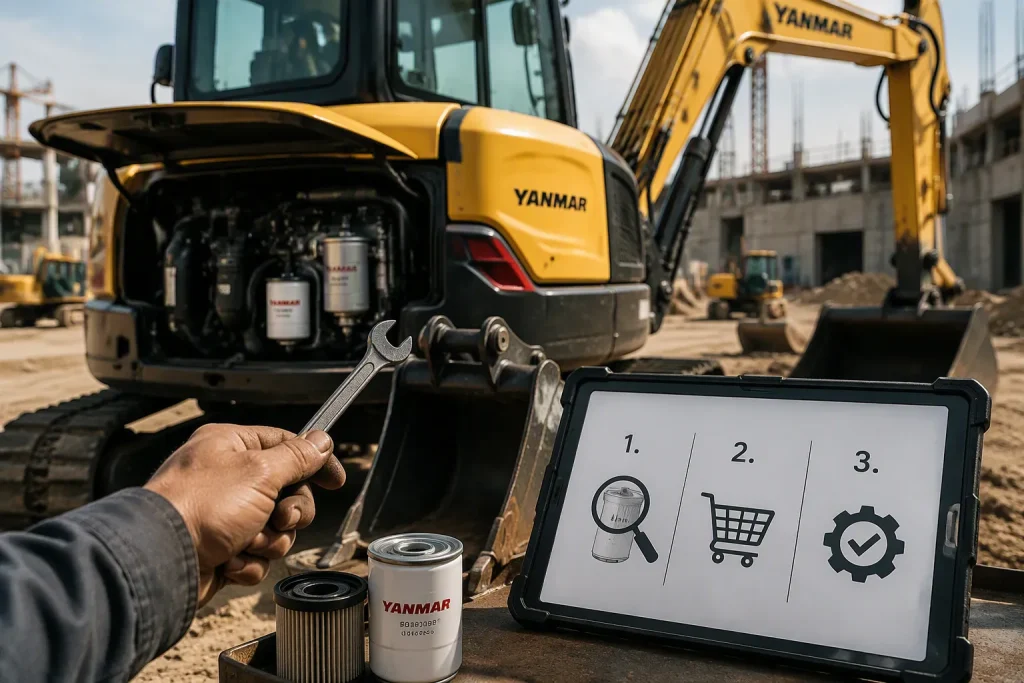
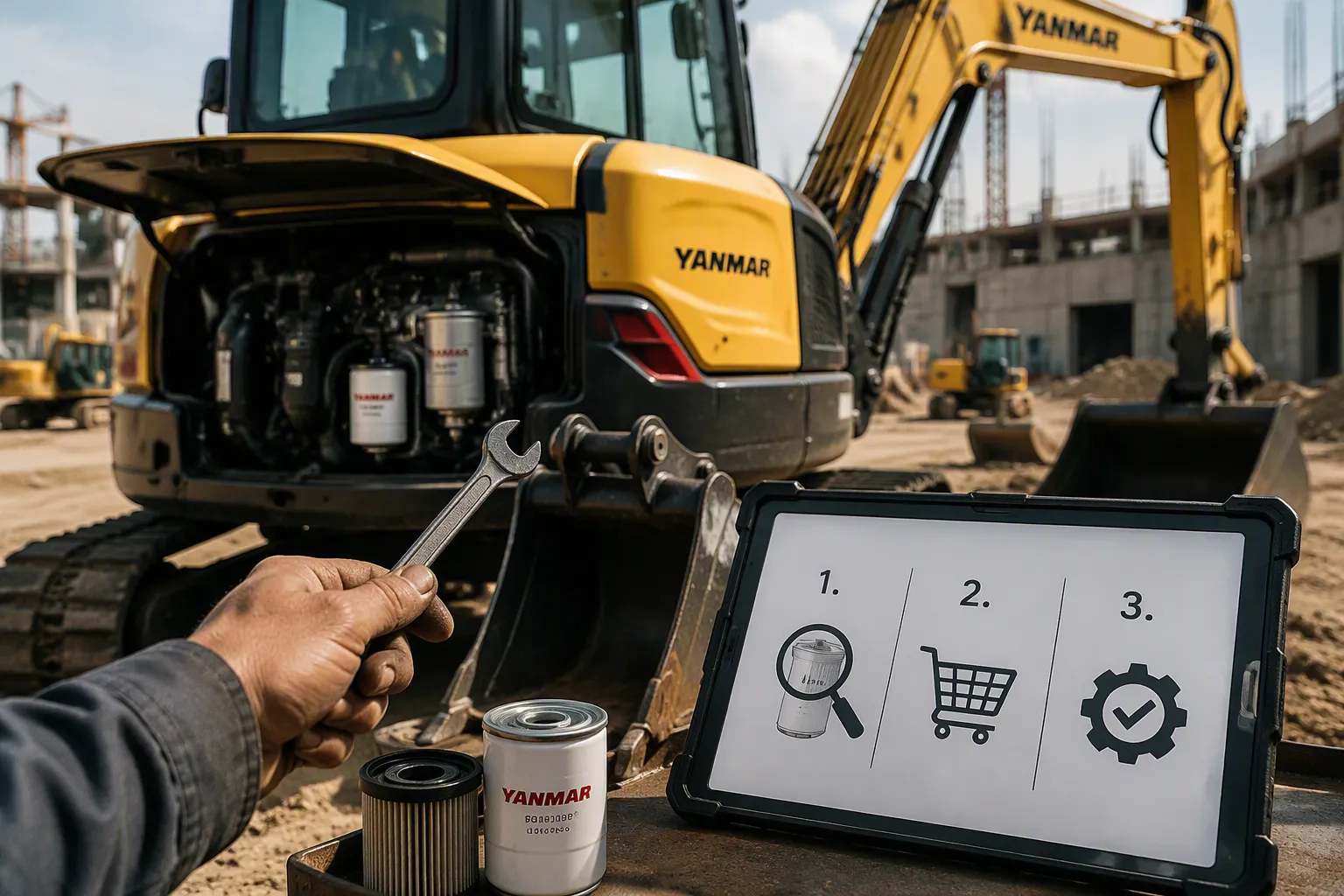
Finding the right yanmar excavator aftermarket parts comes down to three easy steps. First, figure out your model. Second, check that the part fits and is good quality. Third, pick a supplier you can trust. Without a clear plan, you risk wrong fits, bad performance, and wasted money. Many buyers order parts that look right online. The parts show up. They do not fit. You lose time and cash. This post fixes that problem. By the end, you will know just how to find reliable yanmar excavator aftermarket parts with confidence. You will check every detail before you buy. You will avoid common traps. You will get the right part for your machine.
Key Takeaways
-
Find your excavator’s model and serial number before you buy any part.
-
Use cross-references to check that aftermarket parts match OEM specifications.
-
Look at supplier certifications and customer reviews to make sure the parts are good quality.
-
Compare the price, warranty, and shipping rules to avoid surprise costs.
-
Check with customer support before you buy to make sure they can help when you need it.
Step 1: Identify Your Model
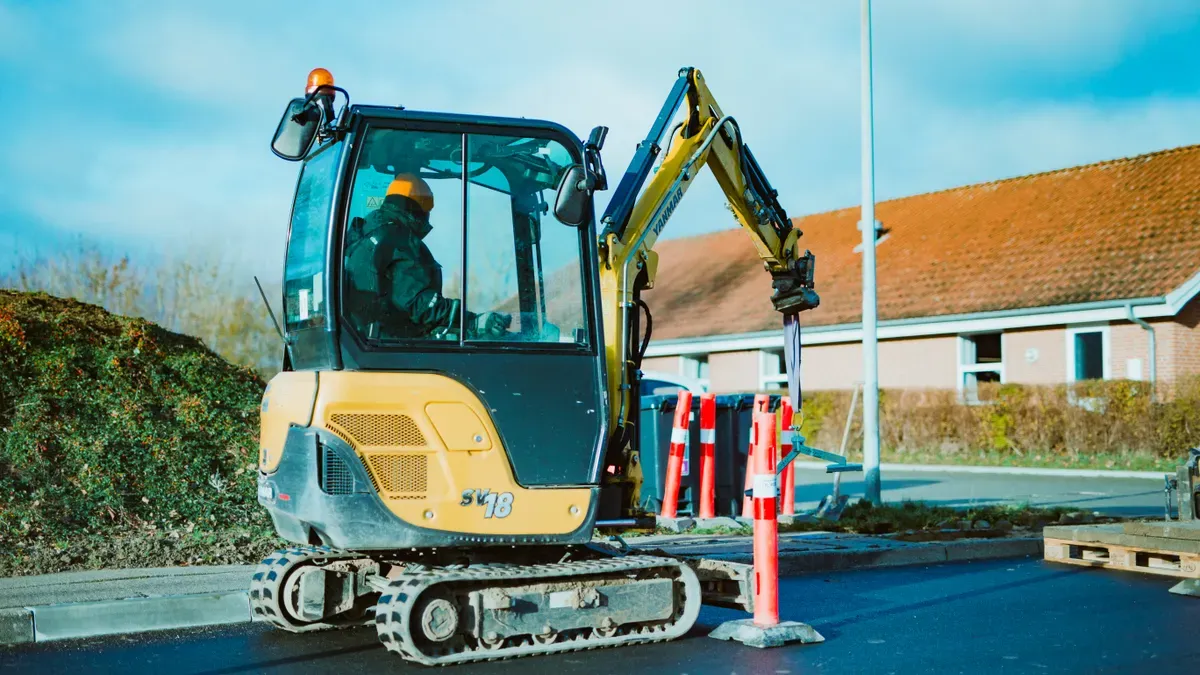
Your machine’s identity starts with two numbers. The model tells you the series. The serial number tells you the exact build. You need both before you order any part. This first step takes only a few minutes. It saves you hours of returns and frustration later.
Decode Model and Serial Number
Find the data plate on your Yanmar excavator. It usually sits on the frame or under the cab. The plate shows the model code and the serial number. Write both down exactly as they appear. A single digit can change the part you need. Take a photo of the plate with your phone. This gives you a backup copy for later reference.
The model code often combines letters and numbers. Each character carries meaning. Letters may indicate the series or the generation. Numbers often show the size class or the engine type. The serial number goes further. It marks the production run and the build date. Yanmar updates parts across production runs. A part that fits an early unit may not fit a later one. Always check the serial number range in the parts listing. The listing will state which serial numbers the part covers.
Skipping the serial number check is the most common mistake in aftermarket parts buying. It leads to wrong-fit parts, return shipping costs, and downtime.
Find Part Diagrams
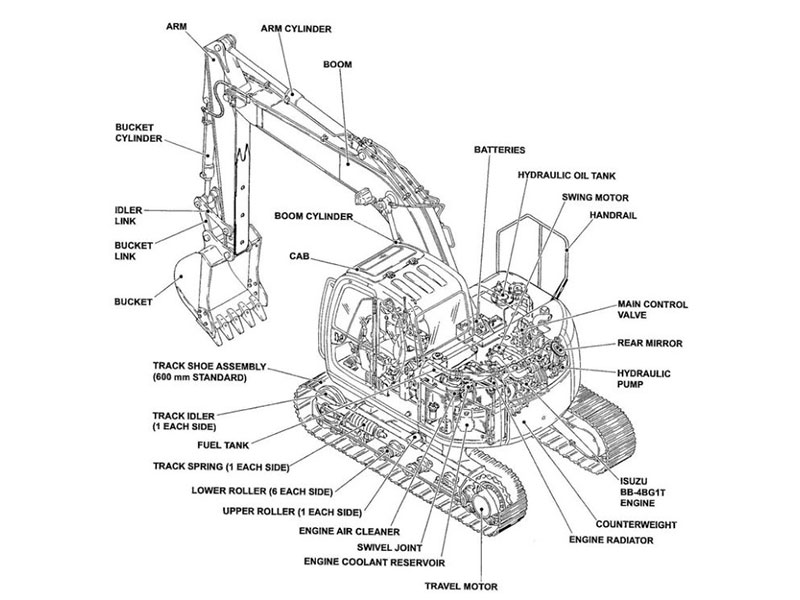
Part diagrams turn your model and serial number into a specific part number. You can find these diagrams in your operator’s manual. The manual lists the parts for your machine’s build. Keep it near your machine for quick checks. If you lost the manual, contact your local dealer for a replacement.
Online parts catalogs also host diagrams. Enter your model and serial number into the catalog search. The system narrows the results to your exact machine. The diagram then shows each component and its part number. You can match the number to the aftermarket listing. This step confirms the fit before you spend a dollar. Bookmark the diagram page for future orders.
Step 2: Verify Yanmar Excavator Aftermarket Parts
You have your model and serial number. Now you must make sure a certain aftermarket part truly fits your machine. This step is the difference between a smooth repair and a costly mistake. Verification takes a bit of research. It keeps your money and your schedule safe.
Check OEM Cross-References
An OEM cross-reference links a real Yanmar part number to its aftermarket match. This link is your proof of fit. Begin with your OEM parts manual. Write down every engine-related part number, its description, and the serial number range it covers. Then match each number to an aftermarket equal. Always compare a dimensional drawing with the OEM specification. Check bore diameter, outer diameter, length, flange height, pin diameter, and bearing shell thickness. One OEM number may also cover multiple physical specifications across different engine serial numbers. Mark those production batch revisions in your notes.
You can build your own cross-reference file. Use a tab on a cross-reference database to find Yanmar and John Deere number matches. Search online marketplaces with the OEM number itself. Hunt across multiple sources for confirmation. Trusting an unverified listing without cross-referencing is the most common mistake here. A listing photo proves nothing about fit.
Check Certifications and Reviews
Certifications tell you about the maker’s process. ISO 9001 certification means a manufacturer keeps full quality management systems covering design, production, and testing. Not every legitimate supplier holds it. Its presence still shows a commitment to systematic quality control. It helps you tell genuine components apart from counterfeits that lack proper quality assurance.
Read the scope of that certificate, though. A US-based distributor once shared a case where a supplier’s certificate listed “manufacture of gaskets and seals.” The buyer ordered complete engine overhaul kits, including pistons and crankshafts. The certificate was real. The scope was narrow. The machined metal components lacked certified quality controls, and the field failure rate ran higher than average. ISO 9001 verifies process consistency. It does not guarantee product perfection. Confirm the scope covers the hydraulic or engine components you plan to buy.
Real user reviews add another layer. Look for owners discussing yanmar excavator aftermarket parts in forums and social media groups. Search for the exact part number. Look for reports about fit, durability, and return experience. A pattern of complaints about one seller tells you more than any product page. Combine certification checks with review checks. Together they give you a clear picture of what you are buying.
Step 3: Choose a Trustworthy Supplier
You know your model. You have checked the part. Now you need a seller who keeps their promises. A good supplier keeps your money and machine safe. A bad one leaves you with a useless part and no return option. This step separates dependable sellers from risky ones.
Compare Price, Warranty, Shipping
Price is important, but it is not everything. A cheap part with no warranty can end up costing more. Before you buy, compare three things side by side: the full price, the warranty terms, and the shipping speed.
|
Factor |
What to Check |
Why It Matters |
|---|---|---|
|
Price |
Total cost with tax and shipping |
A low price can hide high shipping fees |
|
Warranty |
Length, coverage, and claim process |
A short or unclear warranty puts you at risk |
|
Shipping |
Delivery time and tracking |
Every day your machine sits costs money |
Some big distributors keep common parts in stock and ship them right away. Others give you prices from around the country so you can compare. Ask each supplier for a written quote. Include shipping in that quote. A part that seems cheap online often costs more after you add delivery.
Get the warranty terms in writing before you pay. A spoken promise is worthless if the part breaks.
Talk to a local Yanmar construction dealer about where to buy parts. These dealers know which aftermarket brands work well on real jobs. A dealer who focuses on parts can also guide you to trusted brands. Their reputation relies on making you happy, so they seldom give bad advice.
Test Customer Support
How a supplier treats customers tells you what to expect after the sale. Test them before buying. Ask about fit or warranty and see how long they take to answer. A supplier who answers in hours will probably help later when trouble shows up. One who ignores you now will ignore you later.
Ask clear questions. Does the part have a written warranty? Who pays to ship back a broken part? Will they check the part number against your serial number? A confident supplier answers right away. An unsure one avoids the questions or puts off answering.
Look at their return policy. A fair one protects you if a part does not fit. Read the fine print about restocking fees. Some sellers charge a fee to take a part back. Others allow free returns for a limited time. Learn the rules before you place the order.
Reviews also show support quality. Search forums and owner groups for comments on yanmar excavator aftermarket parts from specific sellers. Look for reports of fixed claims and fast replacements. A pattern of good support beats one glowing review. Use your own test and owner feedback together. They show the real picture.
A reliable supplier earns your future orders. If the first order goes well, you will keep coming back for yanmar excavator aftermarket parts. Do not rush this step. Taking a few extra minutes to check can save you weeks of waiting.
You now have a clear path for buying yanmar excavator aftermarket parts. Step one: identify your model and serial number. Step two: verify compatibility and quality through cross-references and certifications. Step three: choose a reputable supplier with fair warranty and shipping terms. Double-check every detail carefully before you click buy. Confirm the model, the serial number, the cross-reference, and the supplier terms. These simple checks save you time, money, and frustration. Apply them on your next purchase. The process is simple when you follow the three steps. For reliable yanmar excavator aftermarket parts, use the verification steps to find a trusted supplier.
FAQ
How do I find the serial number on my Yanmar excavator?
Look for a metal data plate on the frame or under the cab. The plate shows the model code and serial number. Write both numbers down exactly. Take a photo with your phone for backup. This information is essential for ordering correct parts.
Will using aftermarket parts void my machine warranty?
Aftermarket parts do not automatically void your warranty. A dealer must prove the aftermarket part caused the failure. Check your warranty terms first. Keep receipts and records for every part you install.
How do I verify an OEM cross-reference is correct?
Start with your OEM parts manual. Write down the Yanmar part number. Search for aftermarket equivalents using that number. Compare specifications like bore diameter and length. Confirm the match across multiple sources before you order anything.
What should I do if the part does not fit when it arrives?
Stop installation immediately. Contact your supplier right away. Review their return policy for restocking fees. Request a return authorization or exchange. Confirm the part number against your serial number again to avoid the same mistake twice.