Used Hitachi excavator parts should be matched to the exact machine configuration, not selected by brand or appearance alone. If you are comparing used parts in Canada or arranging a cross-border order, use the same identification checks and confirm the order details in writing.
Start with the full machine model and serial number or PIN. Then verify the component reference, configuration, condition, included items, and any replacement number against documentation for that machine. Geographic location does not replace the fitment check.
Key Takeaways
Record the full Hitachi model and serial/PIN from the identification plate or equipment records.
Match the component number to the correct parts information and serial range.
Compare the part’s interfaces and configuration; similar appearance does not establish compatibility.
Document condition, included pieces, inspection records, and purchase terms before proceeding.
Confirm any shipping, duties, delivery, or return terms directly for the specific order. Do not assume rules based on a general location.
1. Identify the Machine and Its Configuration
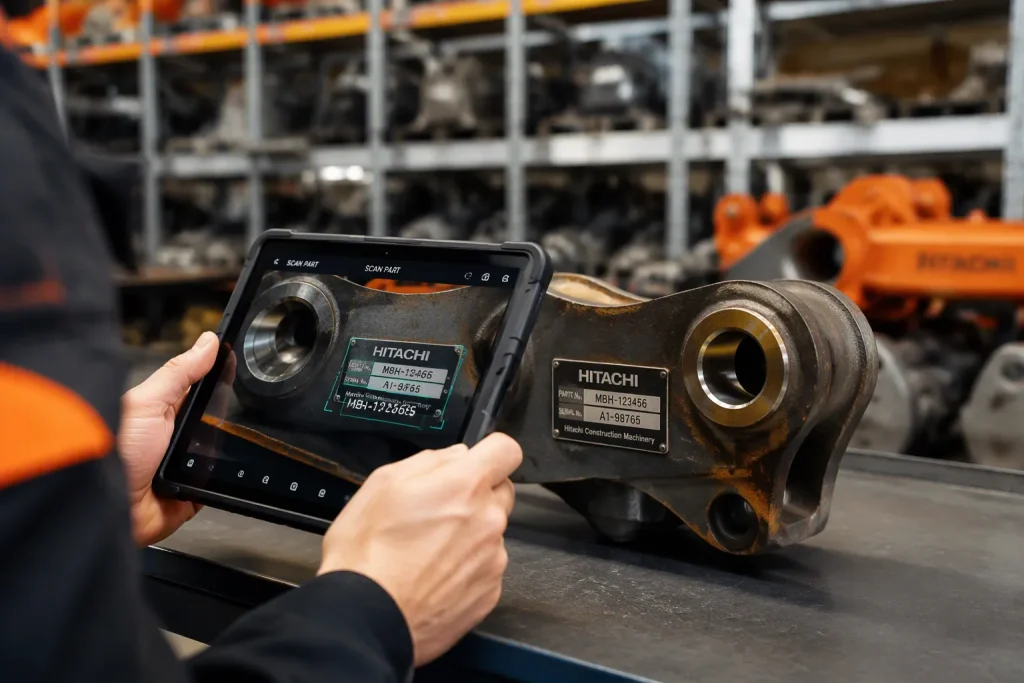
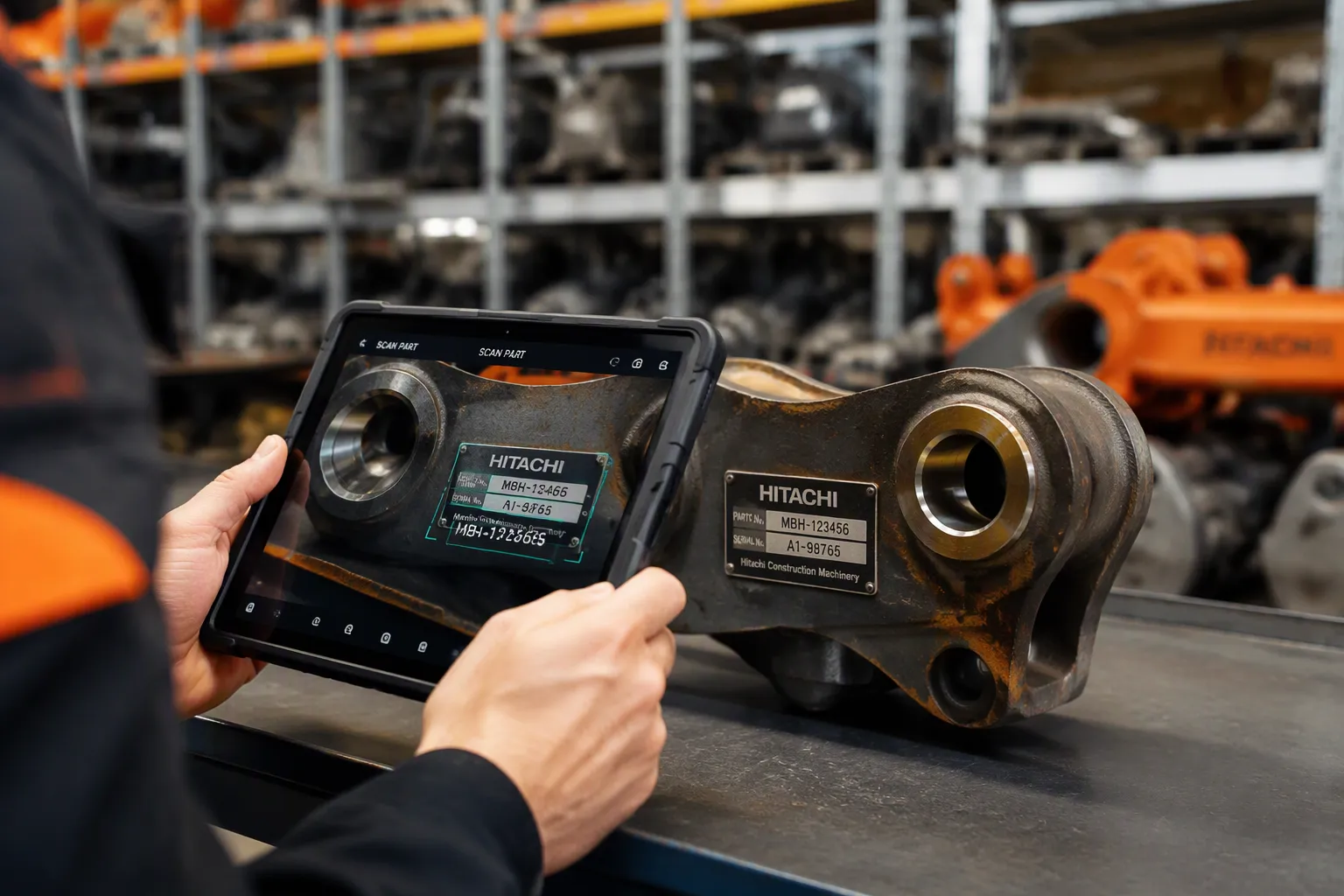
Copy the complete model designation and serial number or PIN exactly as shown on the machine or in its records. Include letters, numbers, prefixes, and suffixes. A model family can contain different revisions, so shortened names may point to the wrong component list.
Use parts documentation that covers the machine’s serial range. If the identification plate is worn, use service and ownership records or request help reading it. Do not sand the plate, guess missing characters, or use an online serial pattern as a substitute for verification.
If the part came from another machine, record that donor machine’s model and serial as background. Donor details can help explain the component’s history, but the receiving machine’s documentation must confirm the application.
2. Match the Component Number
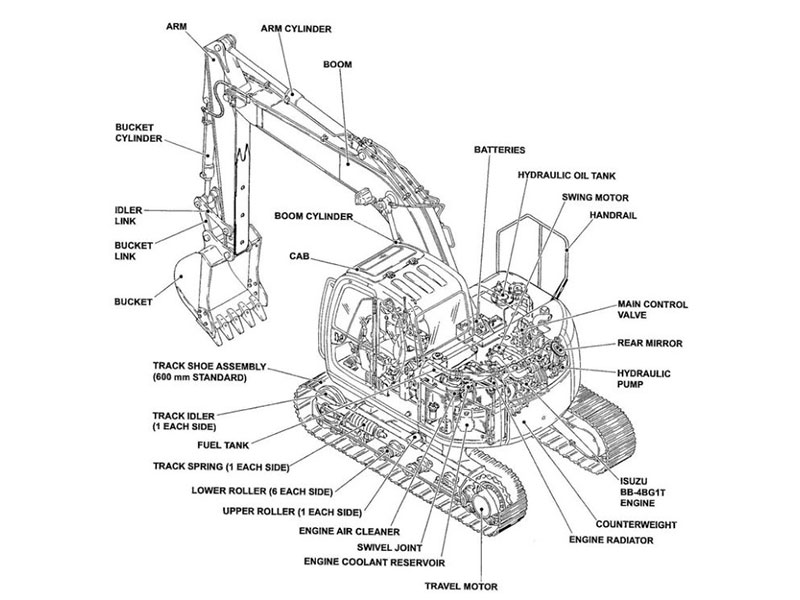
Find the component in the parts list or illustrated documentation for the identified machine. Record the complete reference, description, assembly location, and any suffix. Compare those details with markings on the used part, if they are legible.
A replacement or superseded number should be supported by documentation that connects it to the original reference and applies to the relevant serial range. A similar description or shared brand is not enough to establish interchangeability.
When a label is missing, gather other clues such as casting marks, mounting layout, port arrangement, connector type, orientation, and dimensions. Treat these details as identification aids, not proof. Confirm the final reference through applicable parts information.
3. Compare Configuration and Condition
Compare the used component with the specification for the exact application. Depending on the part, check mounting points, bolt pattern, ports, shafts or splines, connectors, orientation, and included fittings. Use measurements only when you have reliable values for that component and compare matching surfaces in the same units.
Inspect the actual part for visible cracks, deformation, corrosion, damaged threads, worn contact surfaces, missing fittings, or signs of repair. Keep the review appropriate to the component. Photographs can show external details, but they cannot confirm internal condition or functional performance.
For components that require testing, ask for records tied to the specific unit being considered. Review what was tested, when it was tested, and the recorded result. A claim that a part worked before removal does not provide a complete condition history.
Confirm exactly what is included. Brackets, sensors, seals, hoses, wiring, fasteners, and other small pieces may be separate. Write down known repairs, missing items, available test records, and any condition limits before agreeing to the order.
4. Confirm the Order Details in Writing
Before proceeding, compare your notes for the machine model, serial/PIN, component reference, configuration, condition, and included items. Ask for written confirmation of any cross-reference or replacement number, with the documentation that supports it.
For an order involving Canada or another cross-border destination, confirm the specific delivery arrangement, estimated timing, costs, taxes or duties where applicable, and return conditions with the parties handling that order. Requirements and charges can depend on the shipment. Verify current details instead of relying on a general estimate.
Keep the written fitment response, quote, inspection details, and order terms with your machine records. If any important number conflicts or information is missing, pause until the discrepancy is resolved. A clear paper trail makes it easier to check what was agreed.
FAQ
What information should I provide to identify a used Hitachi excavator part?
Provide the complete machine model and serial number or PIN, along with the component number and its location in the assembly. Include clear images of markings and interfaces when available. The parts documentation for the machine’s serial range should support the final match.
Can a part from a similar Hitachi model fit my excavator?
Possibly, but similarity does not confirm fit. Check the reference number, configuration, serial range, and interfaces in applicable documentation. Confirm any replacement number in writing before ordering.
What if the used part has no readable label?
Use the machine records, parts list, assembly location, casting marks, and interface details to narrow down its identity. Then verify the component reference against the receiving machine’s documentation. Do not rely on appearance alone.
What should I check before buying used parts across a border?
Confirm the machine and part identification first. Then obtain written details for condition, included items, delivery, costs, applicable duties or taxes, and return terms for that specific order. Verify current arrangements before committing.
Do photographs prove a used part is in good condition?
No. Images help show external markings and visible damage, but cannot establish internal wear or performance. Request condition details and relevant test records for the actual component.