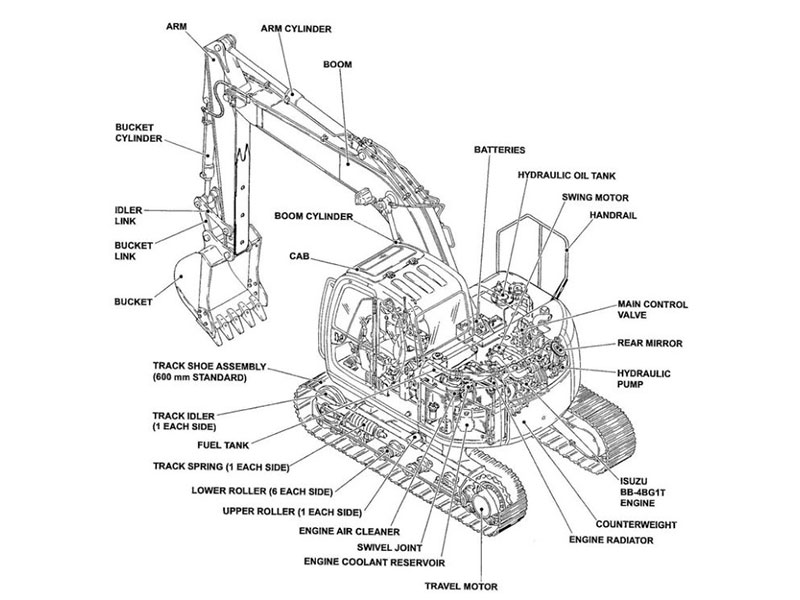
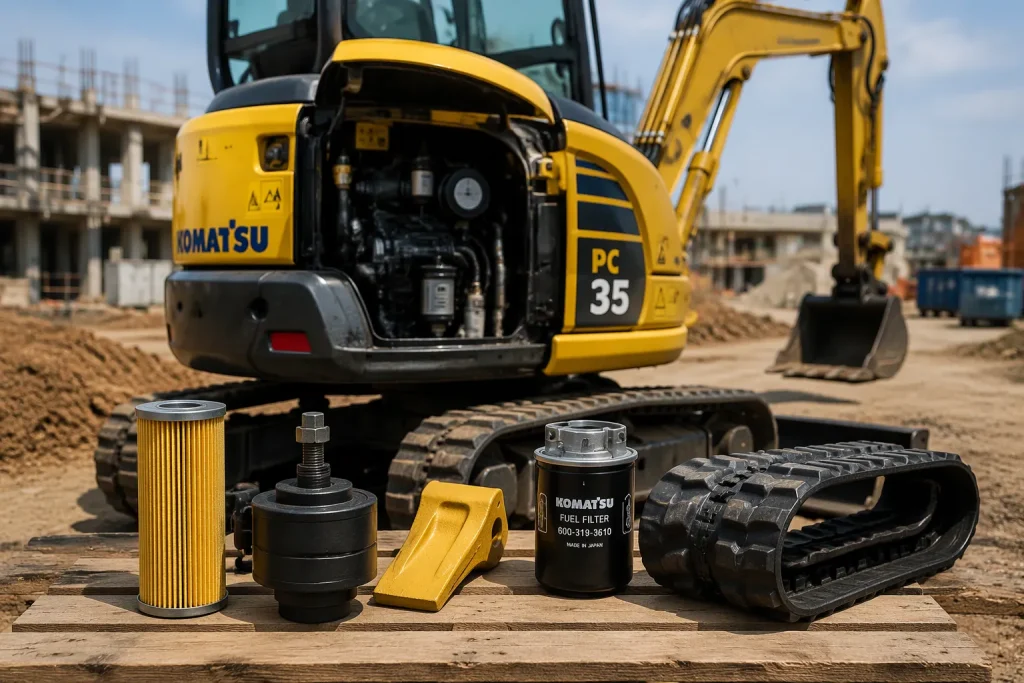
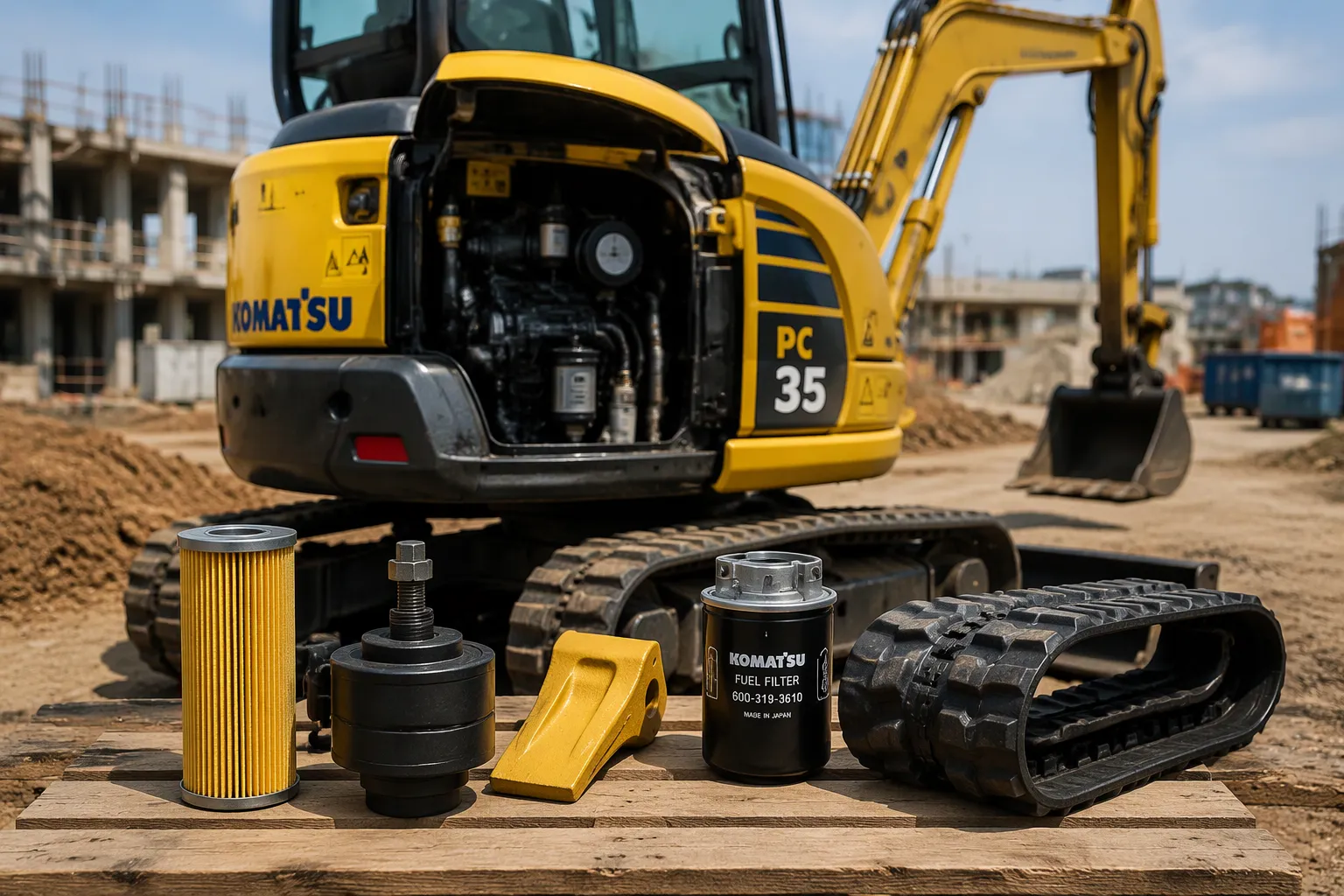
This guide covers common inspection areas for Komatsu PC35 parts: hydraulic hoses, undercarriage components, bucket teeth and edges, service filters, and electrical components. The parts fitted to a machine can vary by model and serial range, so confirm each item in the applicable parts manual before ordering.
Use the model, serial number, and parts manual to identify components. The guide explains general wear checks and what information to verify before selecting a replacement; it does not replace model-specific service instructions.
Key Takeaways
Use the parts manual to identify items on your exact PC35 configuration before planning replacements.
Inspect for visible damage and follow the manual maintenance schedule for inspection intervals.
Confirm part number, dimensions, and specifications against the applicable documentation; appearance alone does not establish fit.
Choose any spares based on service history, usage, and the manual, rather than assuming a fixed list suits every machine.
Check and test the electrical connections and charging system at every service. This helps prevent no-start problems.
Hydraulic Hoses: Core Komatsu PC35 Parts
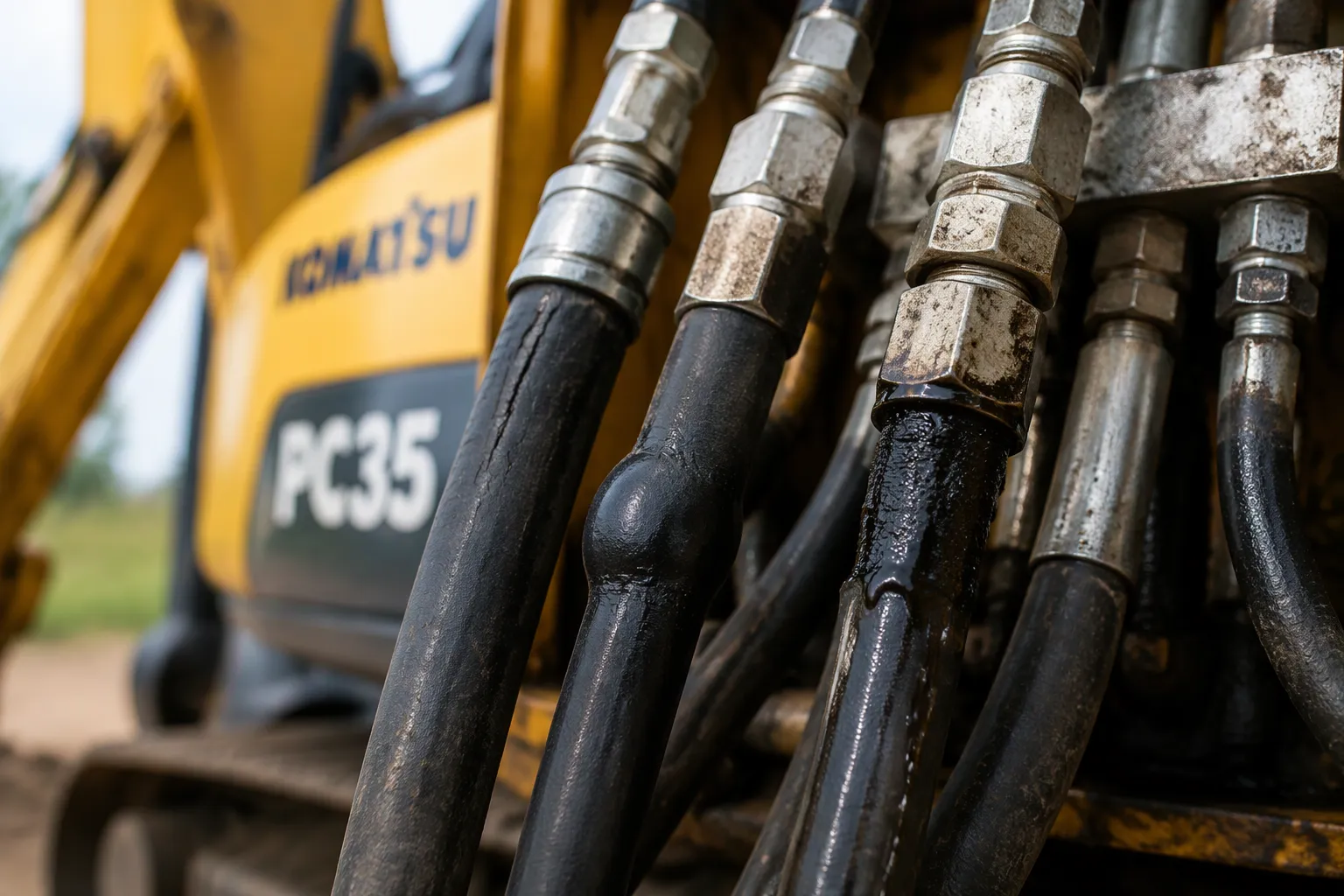
Inspect hydraulic hoses and fittings for visible damage, abrasion, cracking, bulges, or signs of leakage. A damaged hose can create a safety hazard and stop work; follow the manual for isolation, depressurization, and service.
Why Hoses Fail
Hoses fail from the inside out and the outside in. Rubber hardens with heat and age, then cracks appear near the fittings. A bulging section means the inner reinforcement has given way, and that hose is close to bursting. You may also see fluid weeping at a fitting, a chafed outer cover where the hose rubs against the frame, or a loose clamp that lets the hose vibrate and wear.
Visually inspect accessible hoses at the intervals in the service manual. Do not run your hand along a pressurized hose or use your hand to locate a leak. If leakage or damage is suspected, shut down and seek qualified service using the approved safety procedure.
Choosing Hoses and Fittings
Before selecting a hose, verify pressure rating, length, fittings, thread and seat type, and routing against the machine specification or the removed part. Do not infer compatibility from a similar appearance.
Do not assume an OEM or aftermarket label guarantees fit or compliance. Confirm the specifications for the application and request supporting documentation where relevant. Consider service conditions and price only after fitment is established.
Undercarriage: Tracks, Rollers, and Idlers
Undercarriage wear depends on machine configuration, ground conditions, operation, and maintenance. Inspect tracks, rollers, idlers, and sprockets for visible damage and follow the manual for wear limits and service intervals.
Spotting Undercarriage Wear
Start with track tension. A track that sags on one side or runs too tight points to wear or a failing adjuster. Look for flat spots on rollers, because a seized roller drags and wears the track from the inside. Check the idler flanges for thinning or sharp edges. Cracked rubber tracks and rounded sprocket teeth both signal that replacement is close.
Use the inspection frequency stated in the applicable manual and increase attention when operating conditions or visible wear call for it. Record changes so developing problems can be assessed.
Picking Replacement Components
Confirm the exact PC35 model and serial range before selecting undercarriage components. Track material and design must match the machine specification and intended application; do not assume rubber or steel options interchange.
Check track condition and tension using the manual procedure and interval for your machine. Replace components based on documented wear criteria, not a generic calendar.
Bucket Teeth and Cutting Edges
Why Dull Teeth Cost Money
A dull tooth stops biting and starts rubbing. You feel it in the seat: the bucket skids across the surface, the engine labors, and each cycle takes longer. Slow cycles burn more fuel per yard moved. The extra force also travels back through the bucket shell, the pins, and the linkage, so worn teeth quietly wear out parts that cost far more to replace.
Look for rounded or missing tooth material, cracks, looseness, and uneven wear on teeth, adapters, and cutting edges. Inspect the bucket assembly and compare components with the parts diagram before replacement.
Choosing Teeth and Edges
Select teeth and edges only after confirming the correct part and application in the parts documentation. Ground conditions may influence selection, but they do not establish fitment or interchangeability.
Confirm dimensions and application against the parts catalog and request relevant quality or test documentation when needed. Avoid relying on broad claims about compliance or service life without evidence for the specific part.
Rotate and replace teeth in sets. Even wear keeps the digging load balanced across the bucket and protects the adapters underneath.
Filters: High-Impact Komatsu PC35 Parts
Why Filtration Protects Everything
Consult the parts manual for the filter types fitted to your exact PC35 configuration. Filters help protect systems when selected and serviced according to specification, but the required parts and service intervals can vary.
Use any restriction indicator as directed by the manual. Oil appearance alone does not determine whether a filter has failed; follow the specified inspection and replacement procedure, and investigate performance changes rather than assuming a filter is the cause.
Matching Filters and Excavator Engine Parts
Verify the filter part number and specifications for the exact model and serial range in the parts documentation. Do not infer the required micron rating or compatibility from a general description.
Electrical Components: Battery, Alternator, Starter
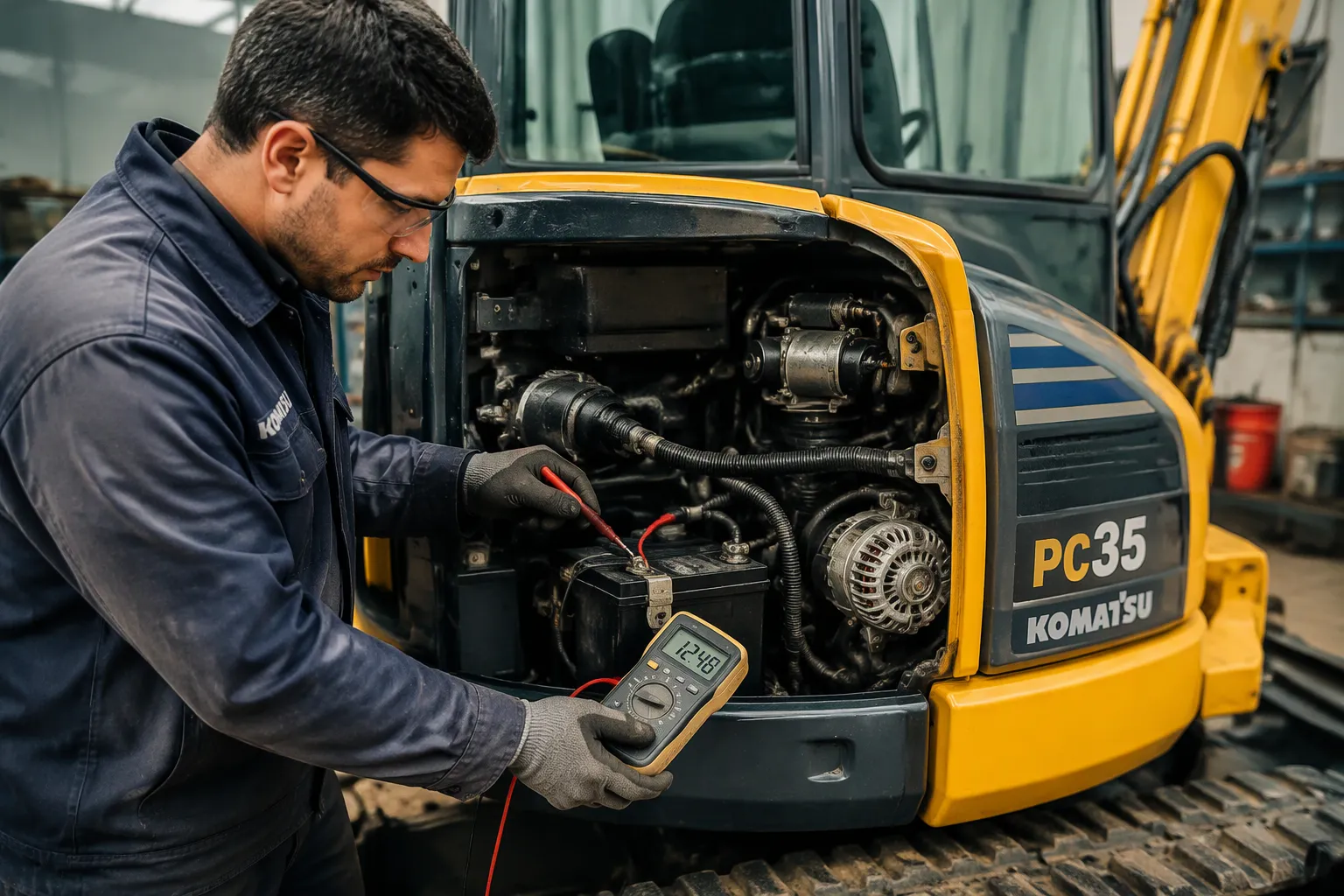
Starting or charging problems can involve the battery, alternator, starter, wiring, or other systems. Symptoms alone do not identify a failed component; diagnose the system using the manual and appropriate test procedures.
Common Electrical Failures
Slow cranking, dim lights, or a battery that does not hold charge can indicate an electrical issue, but each symptom can have more than one cause. Check connections and test the battery and charging system with appropriate equipment before choosing replacement parts.
Check the simple things before you buy parts. Loose or corroded terminals act like a dead battery. A slipping belt can rob the alternator of its drive. Clean the terminals and test the charging output first, then decide what to replace.
Testing and Replacement Tips
Verify voltage, connections, dimensions, and mounting requirements against the exact machine specification. Compare documented warranty terms and test information when available; do not assume a warranty guarantees service life or fitment.
Contact YNF Machinery to ask about current availability for a Komatsu application. Provide the model, serial number, and part reference, then confirm the match against the applicable documentation.
Follow the manual for inspection and testing intervals. Keep terminals clean and secure using the approved procedure, and investigate warning signs before they lead to a no-start condition.
This guide covered inspection considerations for hoses, undercarriage components, bucket wear parts, filters, and electrical systems. The right replacement depends on the exact machine configuration and documented service criteria.
Use the service manual to set inspection and maintenance intervals. Record the model, serial number, and part references, and confirm fitment before ordering. For help checking availability, contact YNF Machinery with those details.
FAQ
Should you buy OEM or aftermarket parts for a PC35?
OEM and aftermarket parts should be assessed against the applicable specification and fitment documentation. Neither label alone proves compatibility, quality, or compliance; verify the part number and evidence for the specific component.
How often should you replace these five parts?
Use the service manual for filter and fluid intervals, and inspect other components as specified. Replace parts when documented wear limits or qualified inspection call for it, rather than relying on a generic schedule.
Which parts belong in a peak-season spares kit?
Choose spares based on operating conditions, service history, machine configuration, and the parts manual. Confirm part numbers and storage requirements before keeping components in inventory.
Will PC35 parts fit the PC35MR variants?
Fitment may differ across PC35 and PC35MR variants. Verify the full model and serial range in the parts catalog before ordering; do not assume interchangeability based on the family name.
What are the warning signs that a part is about to fail?
Visible damage or unusual operation warrants inspection, but no single symptom proves a specific part has failed. Follow safe diagnostic procedures and confirm the part against the manual before replacement.