
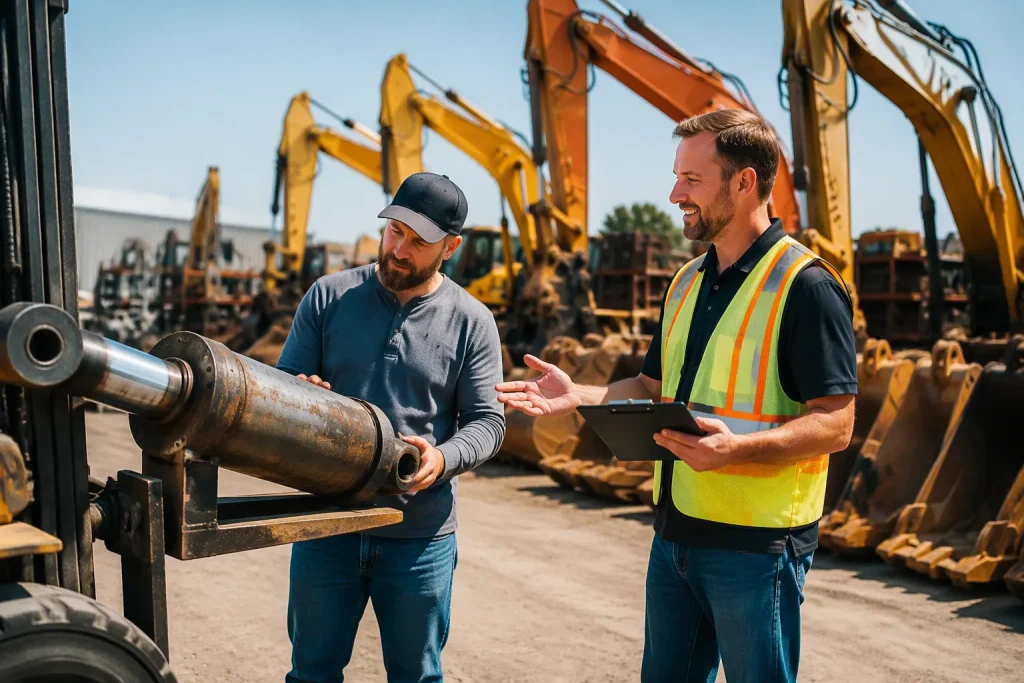
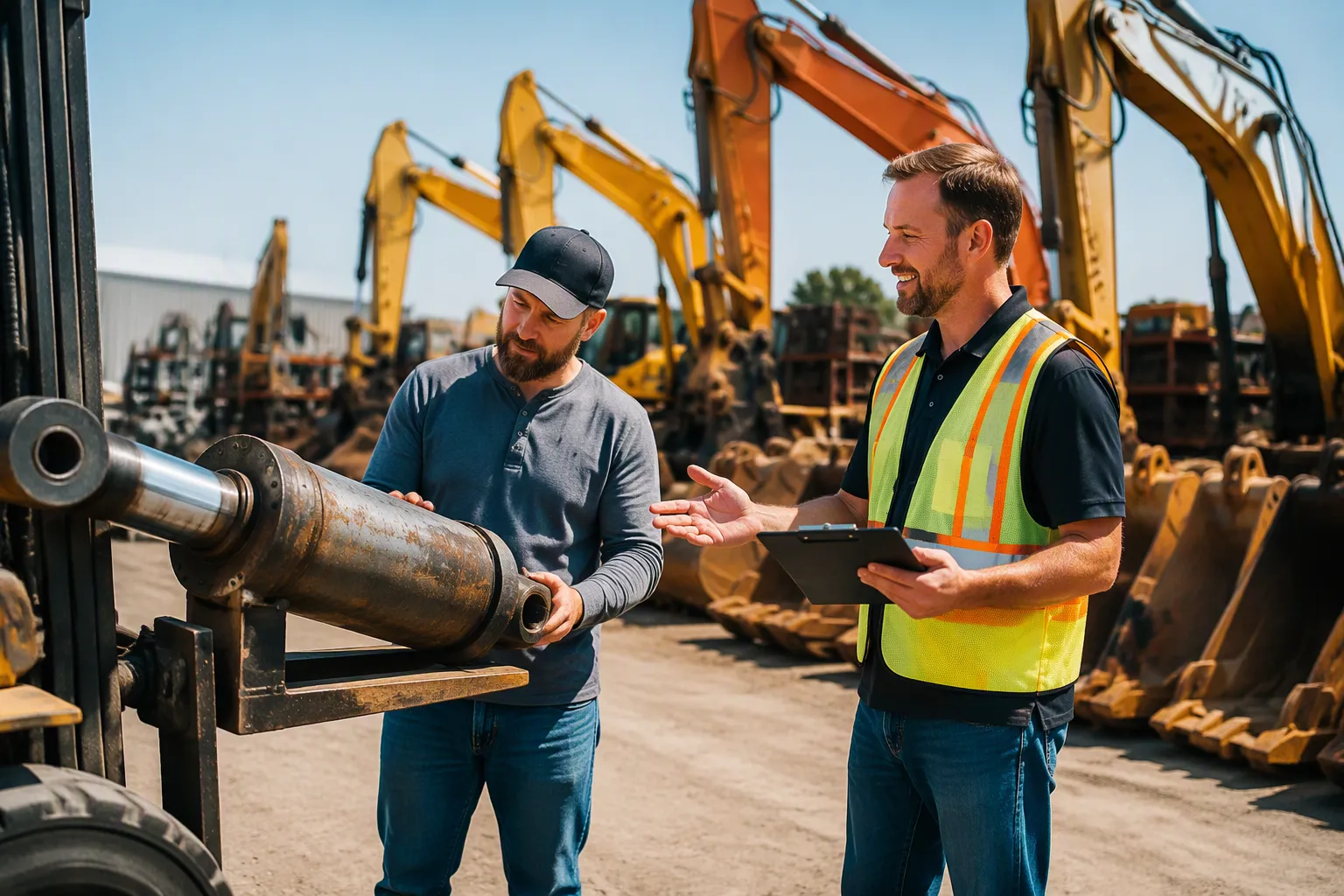
Finding used excavator parts near you takes more than a quick search. The right part must match your machine, its configuration, and the job it needs to do. Local availability can save time or simplify pickup, but distance alone does not prove fit or condition. Use a consistent process: identify the part, check nearby options, confirm compatibility, inspect evidence, and compare the terms before paying.
KEY TAKEAWAYS
Write down the machine make, model, full serial number, and any readable part number.
Describe the assembly and its position on the machine so the other party knows what you mean.
Ask for current photos, measurements, condition details, and written fitment confirmation.
Compare pickup, freight, return terms, and any stated warranty before choosing an option.
IDENTIFY THE PART BEFORE SEARCHING
Start with the machine identification plate and your maintenance records. Record the make, model, and full serial number exactly as shown. A model name alone may cover different production versions, so include every serial character when asking about fitment. If the old component is available, photograph its label, connectors, mounting points, and overall shape. A readable number can help narrow the search, but confirm it against machine details and the part’s specifications.
Describe what you need in plain terms. Include whether you are looking for a complete assembly or a service component, which side or location it fits, and what function it performs. For example, a hydraulic pump, travel motor, track roller, and cylinder seal kit each require different identification details. Avoid guessing at a number from a similar machine. If the label is damaged, share clear photographs and ask what additional measurements or machine records would help identify it.
Keep a short request sheet with the information you have and the questions still open. Separate confirmed details from assumptions. This makes it easier to compare responses and reduces the chance that a visually similar component is treated as an exact match.
SEARCH NEARBY OPTIONS
Search using the part name, machine model, part number, and your city or state. You can also contact general local sources such as equipment dismantlers, repair shops, or parts suppliers. These are categories of businesses, not proof that a particular listing is suitable. Availability changes, so confirm that the actual component is on hand and that the photographs show the unit being offered.
When comparing nearby results, record the location, listed part number, condition description, price, and whether pickup or delivery is available. Ask when the listing was last checked. A short drive may be useful if you can inspect the component, while a more distant option may provide a clearer record or better evidence. Do not choose solely on the basis of proximity or a low advertised price.
CONFIRM COMPATIBILITY
Before making a decision, compare the proposed part with the machine and the component being replaced. Share the model and full serial number, not just a family name. Confirm the part number, dimensions that matter for installation, mounting points, port locations, electrical connections, and any included hardware. Which details matter depends on the component. A track roller, hydraulic valve, controller, and engine accessory do not use the same fitment checks.
Ask for a clear written answer stating what machine configuration the part is intended for and what information was used to make that determination. If a number has been superseded, request the reference that connects the old and new numbers. A matching label is useful evidence, but it does not replace checking dimensions and connection details. Stop if the response relies only on appearance or a broad model description and leaves a critical specification unanswered.
REVIEW CONDITION EVIDENCE
For a used component, request recent, well-lit photographs of the actual unit from several angles. Ask for close-ups of wear surfaces, cracks, corrosion, repairs, labels, connectors, and mounting areas relevant to that part. A general image of a machine or a stock photograph cannot show the condition of the specific component you may receive.
Request a written description of how the part was removed, what condition it is in, and what defects are known. If operating hours or testing results are provided, ask what records support them and what the test covered. Treat missing records as unknown rather than assuming the part passed a test. For hydraulic components, for instance, the visible exterior alone cannot establish internal performance. If the part is safety-critical or difficult to inspect, consider having a qualified technician review the evidence before purchase.
COMPARE PICKUP, DELIVERY, AND TERMS
Nearby pickup can let you inspect a component in person and may reduce transit time, but confirm the address, collection window, loading arrangements, and what identification is needed. For delivery, request the shipping method, estimated dispatch date, packaging approach, and who is responsible for freight and damage claims. Heavy or irregular parts may need special handling, so ask for the total delivered cost instead of comparing item prices alone.
Read the written terms before paying. Confirm the return window, restocking charges if any, who pays return freight, and whether labor or installation is excluded. If a warranty is offered, check its duration, covered defects, exclusions, and claim process. Do not assume all used parts have the same coverage. Keep the listing, photos, messages, invoice, and fitment confirmation together in your records.
A SIMPLE PRE-PURCHASE CHECKLIST
Before ordering, make sure you can answer these questions: Do I have the machine model and full serial number? Is the part number or specification verified? Do the measurements and connections match? Are the photos current and specific to this unit? Is the known condition documented? Are pickup or delivery costs and return terms clear? If one important answer is missing, ask for it in writing or pause the purchase.
FREQUENTLY ASKED QUESTIONS
What information should I have before contacting a local source?
Prepare the machine make, model, full serial number, component name, and any readable part number. Photos of the old part and its connections can help clarify what you need.
Can I rely on a part number alone?
Use it as a starting point, then verify it against the machine serial range and relevant dimensions or connections. Similar numbers or appearances do not establish compatibility by themselves.
What should I request for a used part?
Ask for current photos of the actual component, a written condition description, fitment basis, included items, and clear pickup or delivery and return terms.
How do I compare local pickup with delivery?
Consider inspection access, timing, loading, freight, packaging, and damage responsibility. Compare the total cost and written terms, not only the distance or item price.



