You take a real risk when you order a used radiator, oil cooler, water pump, thermostat, or hose. The part may look right. But it may still be wrong for your machine, or its condition may be unacceptable. The answer is a step-by-step check. Confirm the machine and part identity first. Then inspect the condition. Review written findings from qualified work. Check part numbers through official sources. Put the terms in writing before you pay. Set one ground rule now: no assumed specifications, no “fits-all” claims, no guesswork. Accept only evidence you can check. That standard protects every purchase of used new holland excavator parts.
Key Takeaways
Write down your excavator’s model and serial number before you look for parts.
Verify the actual component reference and supported application separately from its condition.
Ask qualified personnel to determine the appropriate assessment scope for the actual component.
Check the part number using New Holland’s official parts lookup.
Write down all order terms and return conditions before you pay.
Confirm Machine And Component Identity
Record Model And Serial
Begin with the machine itself. Copy the exact model and serial number from the ID plate on your excavator. These two details support every check that follows. A model year by itself tells you very little. Sellers often describe a machine in general terms, and those descriptions may be loose or incomplete. The serial number links the machine to a specific build, and that build decides which cooling components belong on it.
Keep this record in your file before you contact any supplier. You will use it again when you check part numbers, review test reports, and confirm the order. Treat the serial number as the fixed reference point for the whole purchase. If a listing cannot be matched to your recorded identity, stop there.
Match To Cooling Circuit
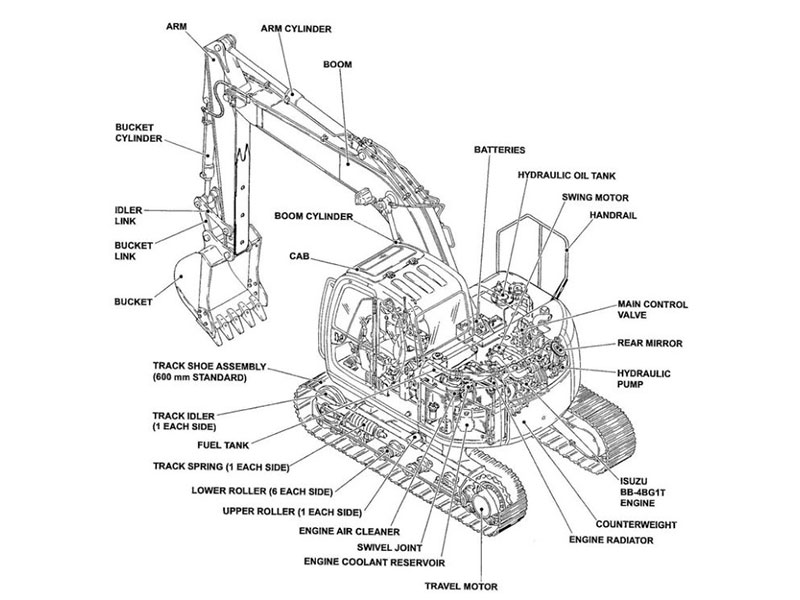
Each cooling component serves a specific circuit on the machine. The radiator handles engine coolant. The oil cooler manages oil temperature. The water pump drives coolant flow. The thermostat controls when coolant circulates. Hoses carry fluid between these parts. Confirm which circuit the part serves before you judge fit.
A component from a similar-looking machine may not fit yours. Two excavators can share a family resemblance and still use different cooling layouts. Identity must be confirmed, not inferred. Ask the supplier to state the circuit and the machine the part came from. Compare that answer against your recorded model and serial number. A vague answer about “similar machines” is not confirmation. Only a documented match counts.
Inspect The Component Visually
Check Damage And Wear
Request clear views and qualified findings for the housing, fins, connections and mounting areas. Damage or corrosion requires investigation; appearance alone does not establish its cause or acceptable condition.
Read the label on the component and record what it says. A faded or missing label is a finding, not a detail to skip. Write down the numbers you see and compare them later against your machine record.
Visual inspection is a first filter, not a final verdict. Your eyes can confirm external condition. They cannot confirm internal condition. A radiator can look clean outside and still hold a blocked core. A water pump can turn freely by hand and still fail under load. Treat a clean appearance as a reason to keep checking, never as proof of serviceability.
Confirm The Part Is What It Claims
The part must match its own paperwork. Read the ID plate and any stamped numbers. Record them exactly as they appear. Then compare them with the seller’s description and the part number you expect for your machine. A mismatch between the label and the listing is a serious warning sign.
Record any available markings and clarify which identify the ordering reference. A plate or matching shape alone does not prove origin or application. Investigate inconsistencies with supported documentation.
Review Qualified Component Assessment
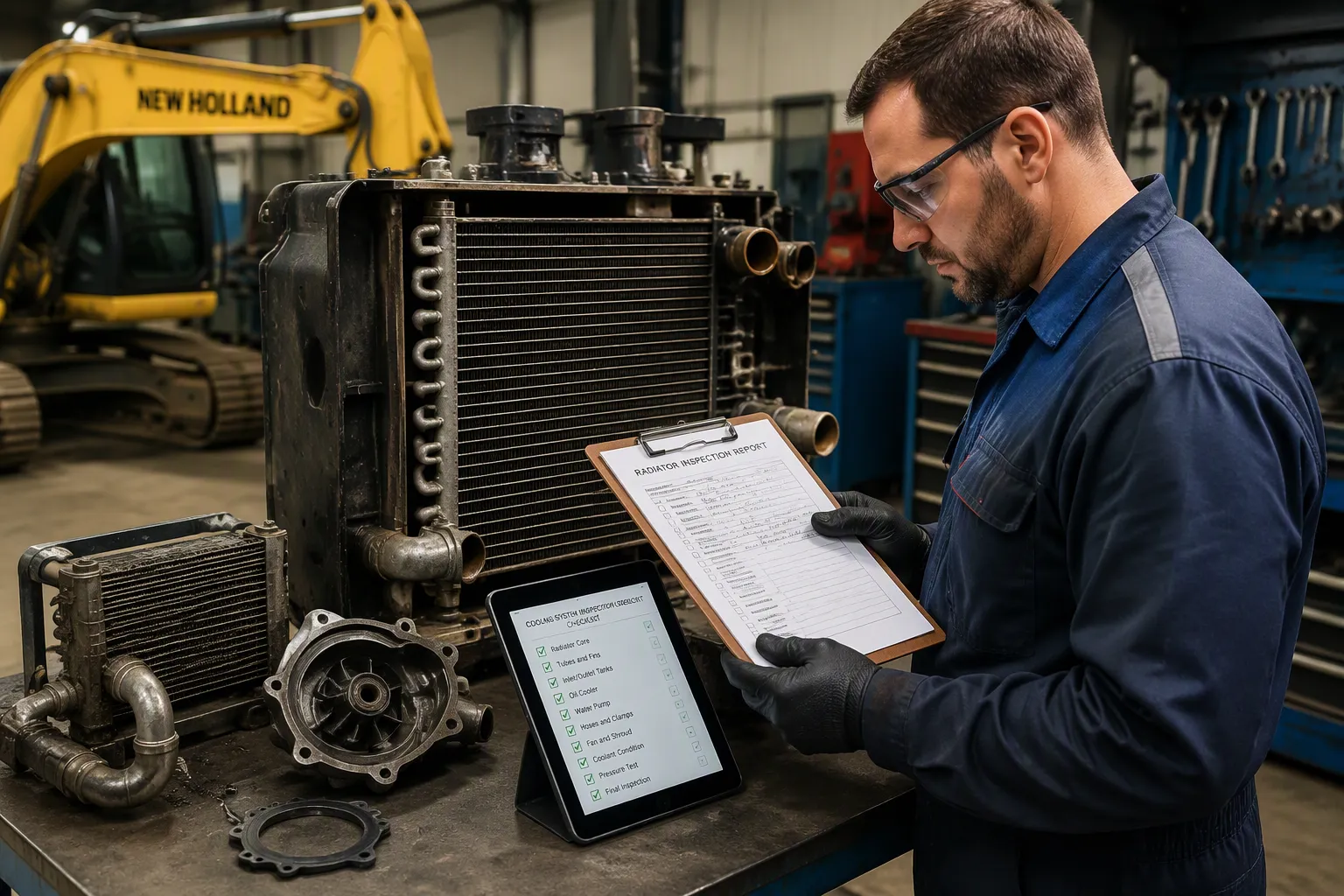
Request Documented Preparation and Findings
A full teardown is not a universal requirement for a used cooling component. Ask qualified personnel to determine the appropriate inspection and testing under the applicable procedures for the actual item. Some assessments may require specialized work; buyers should not disassemble or test components themselves.
Request the assessment scope, preparation methods and findings. Do not demand that every radiator, cooler or pump be completely dismantled or cleaned in the same way. Appropriate methods vary by construction and condition.
The report should identify the actual item, methods, relevant findings and limitations. Internal passages, leakage and previous repair may be relevant where assessed; note unassessed areas rather than assuming a standard report proves every aspect.
Treat the offered component as unresolved where essential condition questions remain unanswered. A teardown record alone does not establish suitability.
Review Assessment Scope and Limitations
Read the assessment for what it covers, and note what it leaves out. A good report states which component was inspected, the method used, and the findings in plain terms. It should also state its limits. An inspection of the core does not prove the mounting brackets are sound. A cleaning record does not prove the thermostat opens at the right point.
Compare the report against your recorded model and serial number. The document should identify the component and the machine it came from. A report with no identity link proves nothing about your machine. Ask the inspector or seller to explain any gap between the report and the part in front of you.
Keep the report in your purchase file. You will use it again when you confirm the part on arrival and when you discuss return terms. A documented assessment gives you a factual basis for the order. It also gives you a clear standard to hold the seller to if the part arrives in worse condition than the report describes. Qualified findings protect both sides of the deal.
Test Against Manufacturer Specifications
Request Documented Findings
Use requirements applicable to the actual component and configuration, including supported revisions where relevant. Do not assume the latest specification for a model automatically applies to every earlier or replacement component.
Pressure and flow checks are qualified procedures. They require the right equipment, the right procedure, and a technician trained to run them. You should ask for the written results. You should not run your own operating tests, open the component, or take internal measurements. A DIY check on a used radiator or oil cooler can damage the part and tells you little. The written findings tell you what a qualified inspector measured and how the part performed.
Ask for the full report. It should identify the component, the machine it came from, the specification used, and the result of each check. A single line that says “tested good” is not a report. Keep the document with your machine record and your part number notes.
Know What Tests Prove
Test results have a clear limit. They prove what was tested, under the conditions of that test. A pressure check confirms the component held pressure at the tested point. A flow check confirms flow through the tested passages. Neither result confirms the part number is correct for your excavator.
Review supported application and qualified condition evidence separately. Qualified personnel should decide which tests are appropriate; pressure and flow testing are not universal prerequisites for every cooling part.
Read each finding against the specification it cites. Note any check the report leaves out. A missing check is a gap, not a pass. Ask the seller to explain the gap before you agree to terms. Test results support your decision. They do not replace the identity checks you already completed.
Verify Used New Holland Excavator Parts Numbers
A part number is the bridge between your machine record and the physical component. You have the model and serial number. You have inspection notes and test findings. Now you need the number that ties them to the exact cooling component your excavator requires. This step is a lookup exercise. It is not a guess, and it is not a conversation with a seller who promises a fit.
Use Official Parts Lookup
Use applicable manufacturer parts information or ask an authorized dealer to verify the proposed reference for the actual machine and configuration. Lookup features and serial-number coverage vary; do not assume a portal returns one exact item from a serial number alone.
Confirm which visible markings are ordering references and whether a documented supersession applies. A casting number, production code or alternative reference need not equal a catalog number.
Cross-Check Catalogs And Portals
Resolve discrepancies using applicable documented references. Multiple matching portals do not independently prove compatibility, and differing revisions require explanation rather than automatic rejection.
Keep the proposed ordering reference, available markings and any documented supersession together. Confirm that the quoted unit corresponds to the supported application before ordering.
This habit matters most when you shop for used new holland excavator parts. Listings for used new holland excavator parts often carry loose descriptions and copied photos. The official lookup cuts through that noise. It gives you a number you can check, and it gives the seller a standard to meet.
A part number confirmed through official lookup is evidence. A part number copied from a listing is a claim.
Keep the lookup printout or screenshot in your purchase file. You will use it again when the part arrives. You will also use it if you need to discuss return terms. The number on the box should match the number in your file, and that match should be verifiable by anyone who reads your records.
Screen Used New Holland Excavator Parts For Counterfeits
Spot Red Flags
Missing or inconsistent identification is a reason to investigate. It does not alone prove a counterfeit part, while a correct-looking label does not establish authenticity. Request traceable evidence and qualified findings where needed.
Read the seller’s description with care. Vague provenance is a red flag. Phrases like “came off a similar machine” or “fits many models” skip the verification you already completed. A seller who cannot name the machine, the circuit, or the part number is asking you to guess. Reject that path.
A listing that skips part number verification is not a shortcut. It is a risk you carry alone.
Request Provenance Records
Request donor and service records where available and link them to the actual offered item. Keep donor, receiving machine and component identifiers separate; their numbers are not expected to be equal.
Do not assume a general certified-part category proves product identity or suitability. Review actual traceability, supported application and qualified condition evidence separately from quality-management claims.
Apply this screening to every batch of used new holland excavator parts you consider. Check the numbers, the plates, and the paperwork before you discuss price. A part that passes this screen earns your attention. A part that fails it does not.
Put Order Terms In Writing
Define Supply Scope
Your written order should say exactly what you are buying. List the component type, the confirmed part number, and every accessory included in the sale. A radiator may ship with a cap, brackets, or mounting hardware. A water pump may come with a gasket or pulley. Write each item down. Then write down what is not included. This list prevents a dispute later about parts the seller never promised.
Return terms and condition guarantees belong in the same document. Agree on them before you pay. The terms should state the condition standard the part must meet on arrival. They should also state what happens if the part fails that standard. Get the seller’s acceptance in writing. A verbal promise gives you nothing to point to when a problem appears.
An order without written terms leaves you to prove a promise the seller can simply deny.
Confirm On Arrival
Check the part against your records as soon as it arrives. Do this before installation, not after. Open the package and compare the ID plate to the part number in your file. Compare the component to the photos and the assessment report you received. Confirm the accessories match your supply scope list.
Document shipping damage and identification or condition discrepancies promptly. Follow the actual agreed return terms and seek resolution before installation; installation does not universally void every return right.
Retain the receiving record with the quotation and relevant supporting documents.
Use machine and component identification, supported references, appropriate qualified assessment and agreed scope to make the purchase decision. Resolve important gaps before committing.
Confirm the actual offered items and written warranty and return terms before payment.
FAQ
What details should I collect before I contact a seller?
Write down the exact model and serial number from your machine’s ID plate. Note which cooling circuit the part serves. Keep these details in your file. You will use them for part number lookup, report review, and order confirmation. A general description or model year alone will not anchor the check.
Can I judge a used radiator or oil cooler by looking at it?
A visual review can identify questions, but cannot establish hidden condition. Ask qualified personnel to determine appropriate assessment or testing for the actual radiator or cooler; a complete teardown is not always necessary.
Why do test results not confirm the right part for my machine?
Tests prove only what was tested, such as pressure holding or flow through passages. They do not confirm the part number matches your serial number. Treat testing and part number verification as separate steps. You need both results before you order.
How do I confirm the correct part number for my excavator?
Use applicable manufacturer parts information and qualified assistance to verify the proposed reference and supported supersession for the actual machine. Available markings and catalog entries serve different purposes and need not be identical.
What should the written order include?
List the component type, the confirmed part number, and every included accessory. State what is not included. Agree on return terms and the condition standard in writing before you pay. Confirm the plate and condition against your records on arrival, before installation.
For excavator parts sourcing, consider YNF Machinery. Share full machine and component identification, applicable part references and quantities, and request supported compatibility information, an actual quotation, and written warranty and return terms before ordering.