
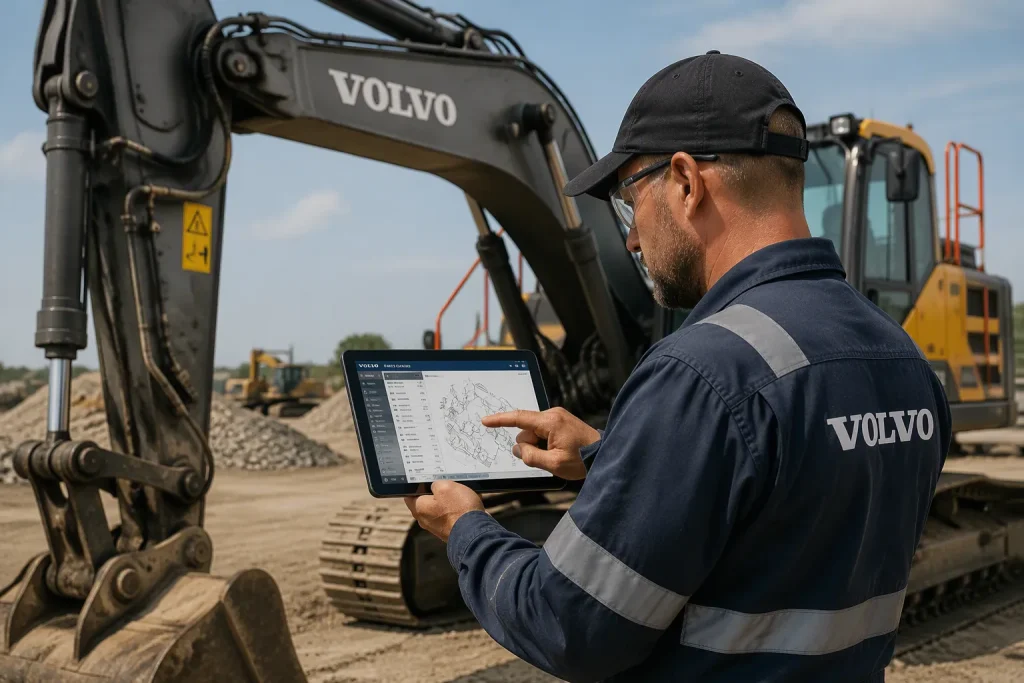
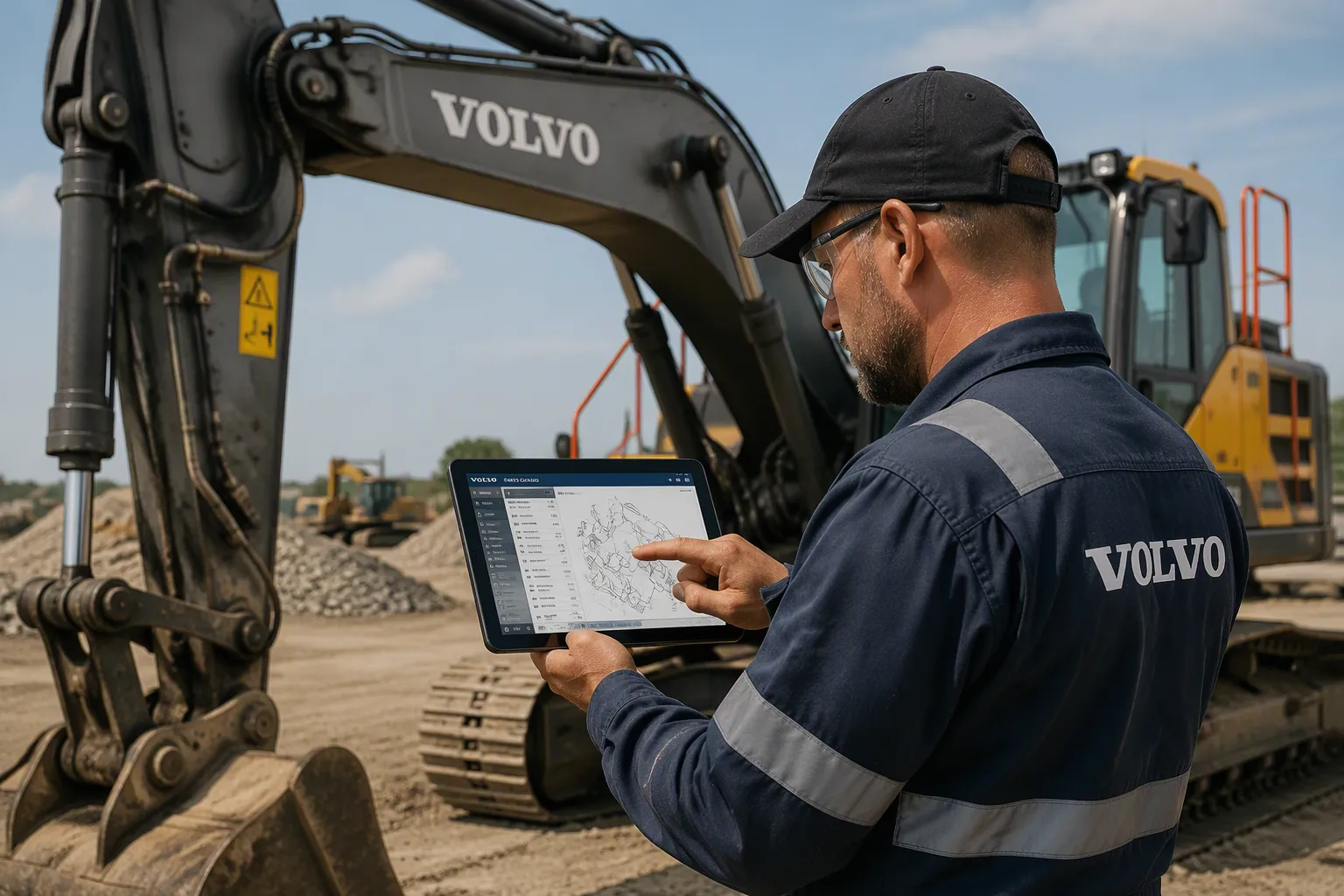
A Volvo excavator parts lookup starts with the full machine identification and the applicable catalog. Model and serial number help narrow the search, but installed components, build options and later modifications may require additional checks. Gather that information, locate the relevant diagram and parts list, and confirm the replacement reference before ordering.
Key Takeaways
Record the full model and machine serial number, then check catalog applicability and installed component details.
Use official Volvo tools like the online catalog or a dealer. They match parts to your serial number.
Aftermarket parts can cost less. Check the supplier and part number closely to avoid problems.
Check that the part will work before you buy it. Match the old part number, your serial number, and the new listing.
Check every number twice before you order. This saves time, money, and keeps your machine running.
Start With Machine ID
Find Model And Serial Number
The model number shows the general family of your machine. It tells a mid-size excavator apart from a large one. That information by itself will not get you the right part. You also need the serial number. Think of the model as the category and the serial number as the unique fingerprint. Two excavators can share the same model name and still use different components. Production changes happen over time. The serial number tells suppliers exactly which version you own.
Use the applicable operator documentation to locate the machine identification. Record every character clearly. Identify engine, pump and other component plates separately, because their numbers are not substitutes for the machine serial number. If the plate is unclear or missing, seek qualified identification support.
Why Serial Number Matters
The serial number drives the whole parts lookup process. It tells a supplier which parts fit your exact machine. Manufacturers update components during a production run. A part that fits an early unit may not fit a later one. The serial number reveals those breaks in the production line. It also helps identify supersessions. A supersession happens when a manufacturer replaces an old part number with a new one. Without your serial number, you cannot confirm which version applies to your machine.
This step is not optional. Skipping it leads to wrong orders, wasted money, and more downtime. You cannot complete an accurate volvo excavator parts lookup without these details. Gather the model and serial number before you contact anyone. Keep them in your phone or a notebook. You will use them every time you need a part.
Official Volvo Resources
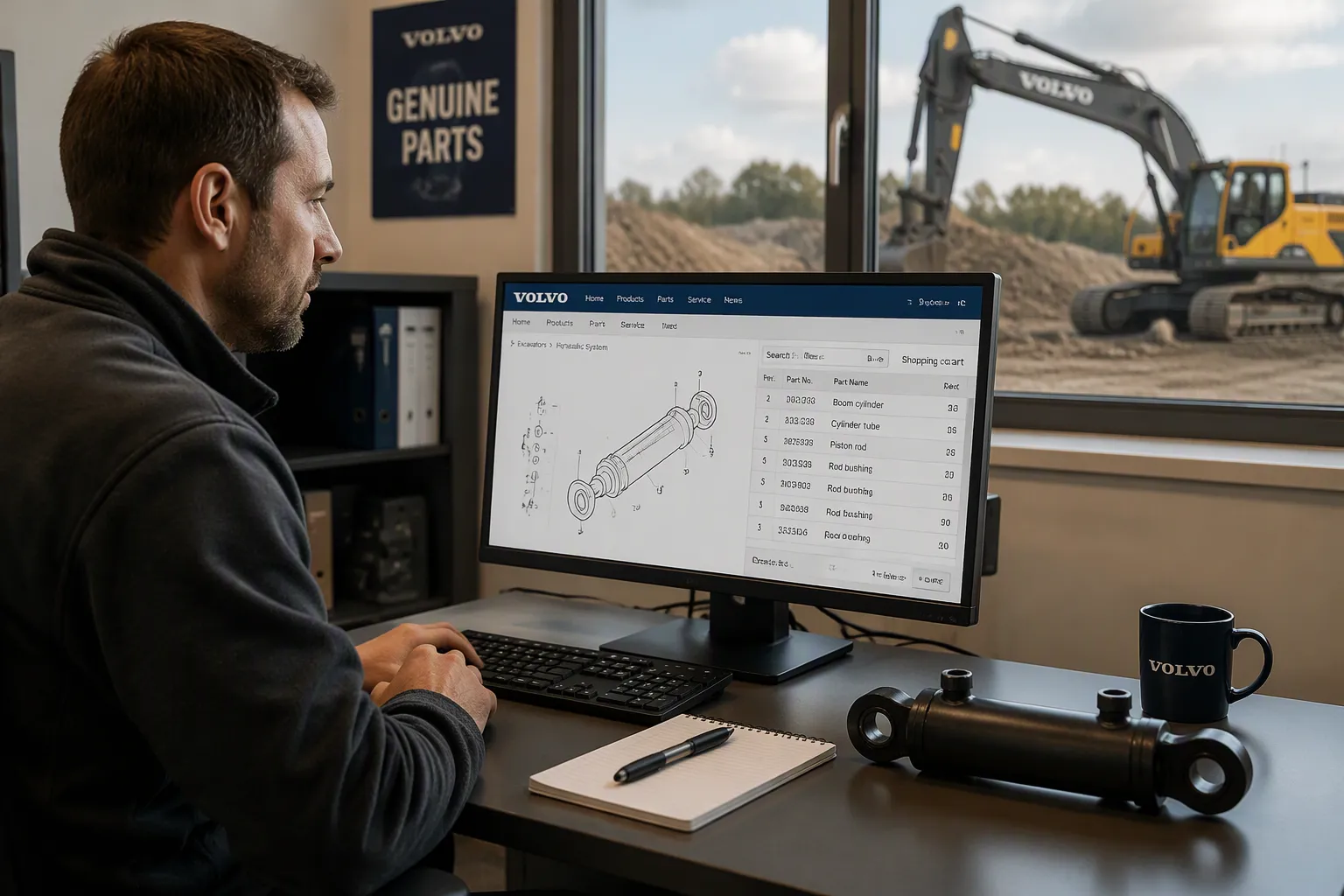
Use parts documentation applicable to your machine and ask an authorized construction equipment dealer for help where coverage or part applicability is uncertain. Access arrangements, available documents and catalog features vary.
Online Parts Catalog
Where an applicable digital catalog is available, use its documented search or navigation features to find the correct machine configuration. Do not assume every catalog automatically filters all incompatible items. Read the serial ranges and option notes yourself.
The catalog groups parts by assembly and function. You can browse categories like hydraulics, undercarriage, electrical, and engine components. Each listing includes a part number and often a diagram. The diagram helps you confirm the location and look of the component you need. You can compare the diagram to the old part in your hand. That visual check catches errors before you order.
Check the catalog notes for serial ranges and configurations. Obtain current confirmation of superseded numbers and any additional installation requirements. A replacement number may require other items or apply only under specified conditions.
Genuine Volvo Parts fall into three main groups. Maintenance parts include filters, fluids, and belts. Repair and remanufactured parts cover major components like pumps, cylinders, and final drives. Wear parts include bucket teeth, cutting edges, and track components. Volvo develops and tests each part for its equipment. That process supports proper fit and function. A part built for a different machine may bolt on but fail under load. Genuine parts lower that risk.
Authorized Dealer Support
Authorized Volvo dealers offer expert support that goes beyond a catalog search. These dealers can access dealer portals with detailed parts information. They can confirm fitment for your specific serial number. They also explain supersessions and help you understand which parts work together. When a catalog listing leaves you unsure, a dealer gives you clarity.
Ask an authorized construction equipment dealer for a written part reference, availability and quotation using your full machine and component details. Assistance and stock depend on the actual request and location. Do not assume a particular online ordering service is available to every buyer.
Dealers also help with parts that do not show up in standard listings. Some components change across production runs. A dealer can check your serial number against internal records. That check confirms the right part for your machine. You avoid ordering a component that looks correct but fits a different version.
For critical components such as pumps and final drives, verify the required specifications and applicable service reference. Product branding or a familiar catalog entry does not remove the need to confirm configuration and installation requirements.
Aftermarket Parts Options
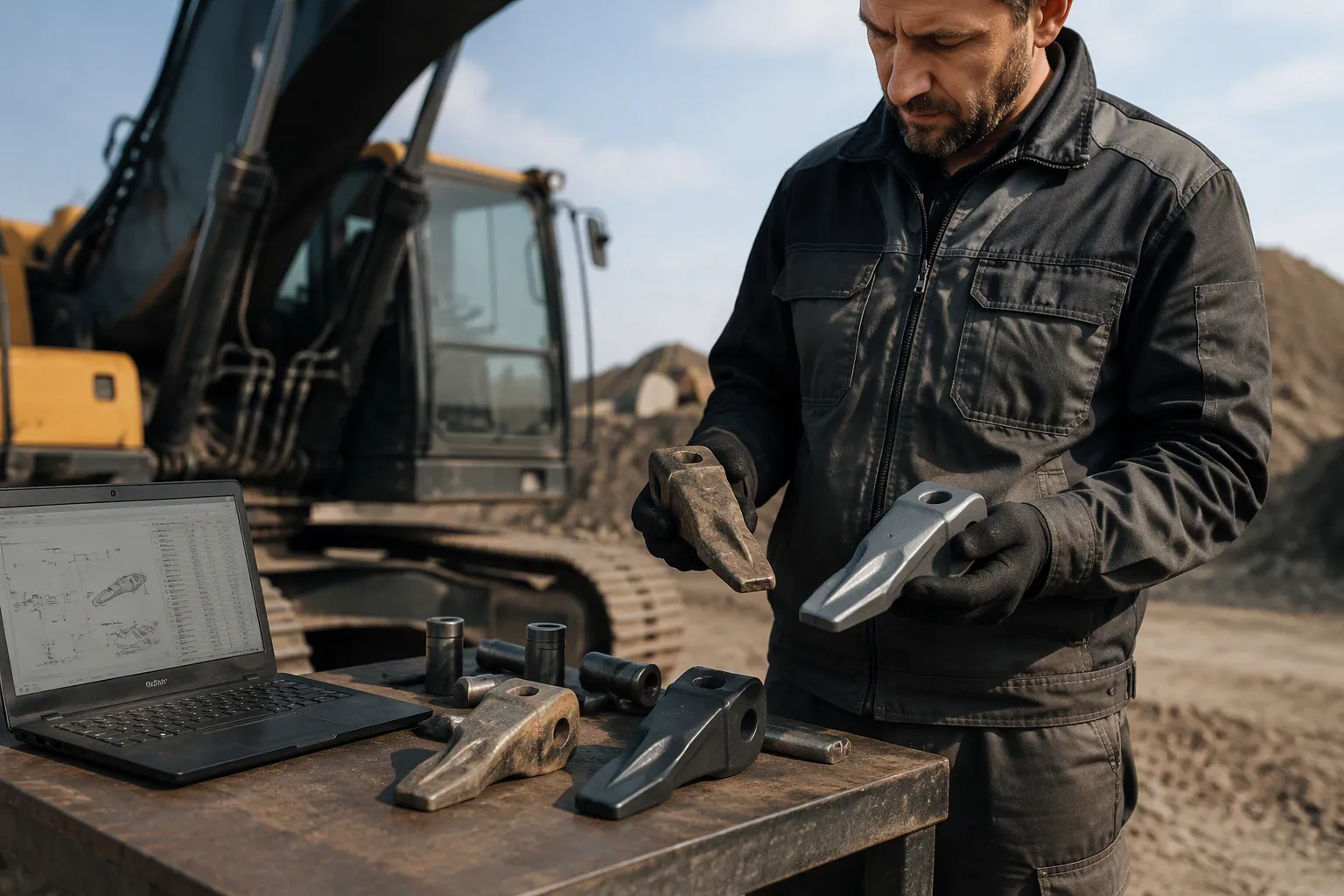
Aftermarket parts give you another way to do your volvo excavator parts lookup. These parts come from companies that are not Volvo. They often cost less than genuine parts. They can also be easier to find when a machine is older or when a part is out of stock. Many owners choose this option when they need a fast fix or want to save money on a repair.
Pros And Cons
The main draw of aftermarket parts is the price. You can often pay much less for a similar part. Availability is another plus. Some aftermarket suppliers stock parts for older models that dealers no longer carry. That access keeps your machine running when genuine options run out.
The downsides need careful thought. Quality can differ a lot between suppliers. One company may build a part to tight standards. Another may cut corners to lower the price. You cannot assume every aftermarket part meets the same standard as a genuine one. Some parts may fit poorly or wear out faster. Others may work well for years. The difference often comes down to how the supplier makes and checks their parts.
Checking becomes even more important with aftermarket parts. You must confirm the part number matches your machine’s serial number range. You should also check the supplier’s reputation and return policy. A low price means little if the part fails early or does not fit. Ask about the materials used and any testing the supplier does. A trustworthy supplier will answer these questions clearly.
Finding Specialized Suppliers
Specialized suppliers can be a strong resource for hard-to-find Volvo excavator parts. These companies focus on construction equipment components. They often carry parts that mainstream sources no longer stock. Many of them offer high-quality, durable components built for demanding work. Their knowledge of specific models can help you find a part that fits correctly.
When you check out a specialized supplier, look for clear part number listings. A good supplier provides detailed specs and photos. They should let you cross-reference your old part number against their inventory. Ask whether they offer any warranty on their products. A supplier who stands behind their parts gives you more confidence in the purchase.
You should also compare the part’s design to your original component. Check mounting points, dimensions, and material type. A visual match does not guarantee a working fit. Construction equipment parts must handle heavy loads and constant stress. A part that looks similar may fail under real working conditions.
Aftermarket parts can save you money and time. They can also bring risk if you skip proper checks. Use them when you have verified the supplier and the part number. That approach protects your machine and your budget.
Verify Part Compatibility
Cross-Reference Part Numbers
Record markings on the old component, but distinguish casting and assembly markings from service ordering numbers. Compare these with the applicable catalog entry and your machine or component identification. Ask for a documented cross-reference and current supersession check, including any extra fittings, associated parts or configuration limits.
You should also compare the new part number against the supplier’s listing. Make sure the listing states your model and serial number range. If the listing only shows a model name, ask for more detail. A model name alone cannot confirm fitment. You need the serial number range to be sure.
Pre-Purchase Checklist
Run through these steps before you pay for any part.
Identify the part clearly. Confirm the name, function, and location on your machine.
Evaluate the supplier. Check their reputation and their knowledge of your model.
Check quality and warranty terms. Ask what testing the part received and what the warranty covers.
Compare prices across sources. A low price may signal lower quality.
Verify compatibility one final time. Match the part number to your serial number range.
Construction equipment parts are not like car parts. A visual match does not guarantee a functional fit. Two parts can look identical and still differ in material strength or internal dimensions. Your excavator works under heavy loads every day. A part that fits loosely or wears early can damage nearby components. Always confirm the part number and serial number range before you buy. This habit saves you money and keeps your machine working.
Use the full machine identification, applicable catalog and relevant component details together. Check serial ranges, options, supersessions and the written quotation before ordering. Resolve uncertainties before shipment rather than relying on a model name or appearance alone.
FAQ
Where do I find the model and serial number on my Volvo excavator?
Consult the applicable operator documentation for the machine identification location. Record the full model and serial number exactly as shown. Keep engine and component serial numbers separately identified; do not substitute them for machine identification.
What if the serial number plate is damaged or missing?
A damaged plate makes lookup harder. Contact an authorized dealer with your model number and any partial numbers you can read. The dealer can check internal records against your machine’s details. They may also use other stamped numbers on the frame to confirm the exact build.
How do I know if a part number has been replaced by a newer one?
Manufacturers update part numbers during production. This change is called a supersession. A reliable catalog or dealer shows you the current number to order. Always compare the old part number, your serial number range, and the new listing before you buy.
Can I use an aftermarket part instead of a genuine one?
Yes, but verify carefully. Aftermarket parts often cost less and can be easier to find for older machines. Quality varies between suppliers, so check the part number against your serial range. Ask about materials, testing, and warranty terms. A visual match alone does not guarantee a functional fit.
What should I check before ordering any part?
Confirm the part name, function, and location on your machine. Evaluate the supplier’s reputation and knowledge of your model. Check quality and warranty terms. Compare prices across sources. Verify compatibility one final time by matching the part number to your serial number range.
For Volvo excavator parts sourcing, consider YNF Machinery. Provide full machine and component identification, applicable part numbers and quantities, and request supported compatibility information, an actual quotation and written warranty and return terms before ordering.



