
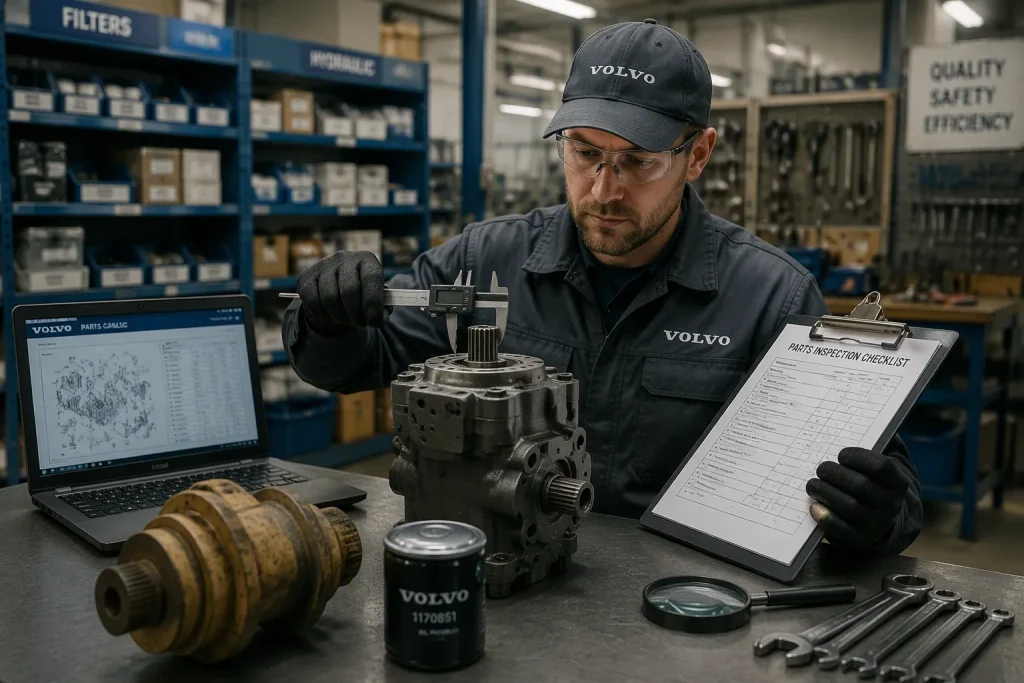
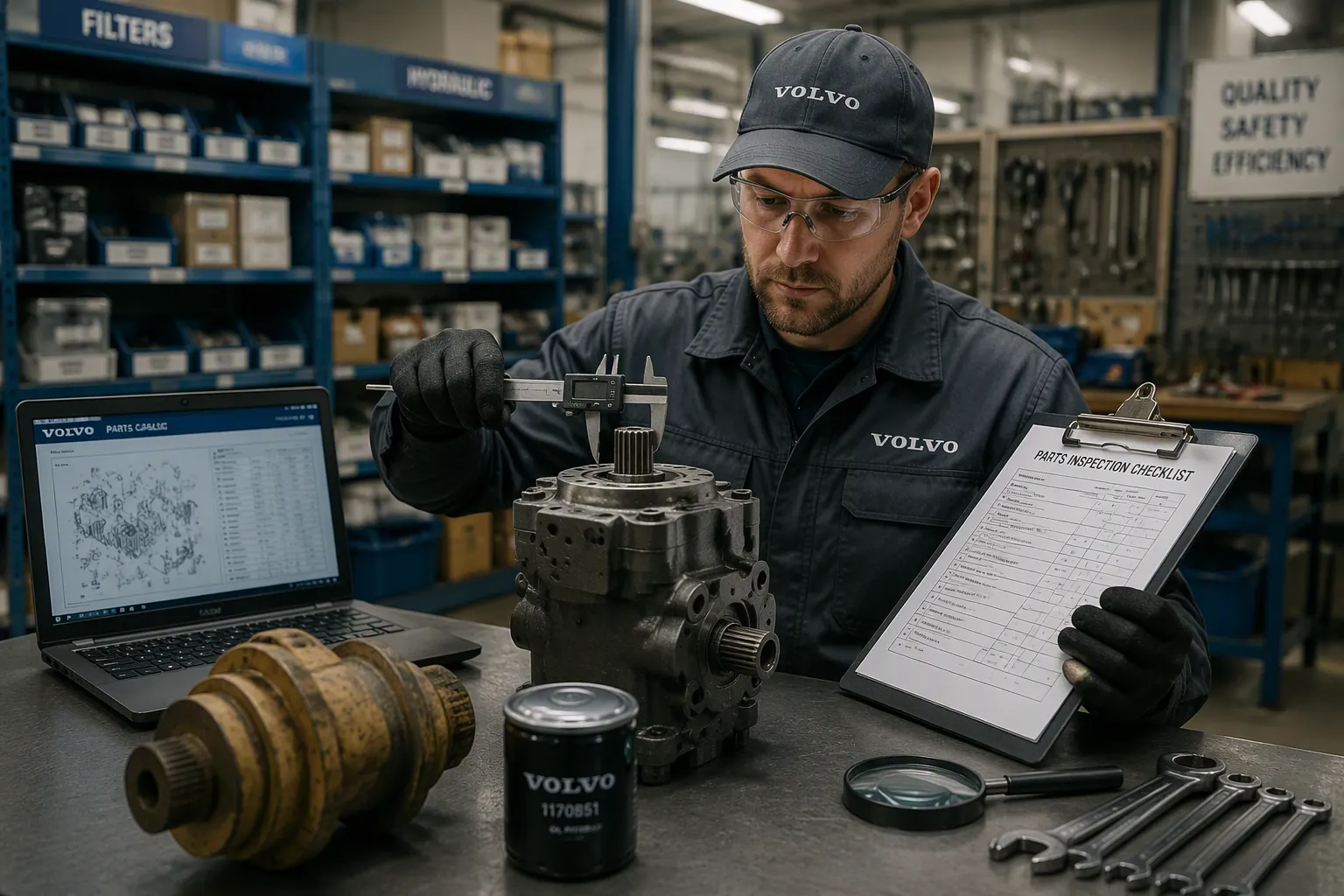
You can check volvo excavator used parts by looking them over, testing how they work, and checking the paperwork. This guide covers planning, checking parts, judging condition, handling paperwork, and avoiding common mistakes. A careful check process protects your budget and keeps your machine running. When you look at second-hand excavator parts, you must inspect every part closely. Hydraulic and structural checks should be done by trained experts. Before inspecting, shut off the machine, release stored pressure, and support it properly. These steps keep you safe. They also help you avoid buying used excavator parts that fail early. Good excavator parts reward careful buyers.
Key Takeaways
Before you buy, match the part to your machine’s model and serial number.
Check the hydraulic, engine, and undercarriage parts for wear, leaks, or damage.
Review records and test evidence relevant to the actual component; donor-machine hours alone do not prove condition.
Plan ahead so you don’t rush or face surprise costs. Set aside money for shipping, setup, and possible repairs.
Check that the part fits your machine and that you can return it before you pay. This will keep your money safe.
Plan Your Volvo Excavator Used Parts Purchase
A smart buy starts well before you talk to a seller. You need to know just what you want, how much you can spend, and who you can trust. This planning step saves you time and money. It also helps you avoid the letdown of getting a part that does not fit or work.
Define the Exact Part You Need
Begin by finding the part by what it does, where it sits on the machine, and whether it works with your exact model. A hydraulic cylinder for one excavator model may not fit another, even when the machines look alike. Write down the part name, the system it serves, and where it mounts on your machine.
Volvo excavator part designs and specifications can differ by model, production setup, and serial number range. Using the full machine serial number with the OEM part number and component details helps confirm fit before shipment and lowers the risk of getting a replacement set up the wrong way.
Several resources can help you confirm fitment before you shop for volvo excavator used parts. The table below outlines the main methods and what each one provides.
Resource / Method | Description |
|---|---|
Applicable machine or component catalog | Confirm the exact model, assembly and serial application; a general model list does not establish fitment |
Machine identification instructions | Use the applicable operator manual to locate and record complete identification |
OEM Cross-Reference & Specifications | Parts specialists verify fitment using OEM part numbers, OEM cross references, machine serial numbers, model information, and critical machine specifications. |
Required Identification Inputs | Complete model, machine serial number, component description, original OEM part number, identification tags, stamped or casting numbers, dimensions, mounting details, and clear photos of the existing component. |
Parts Quote / Request Form | Provide full machine and component identification, ordering references and quantities; a form does not itself prove compatibility |
Specialist Verification | Request the supporting catalog application and relevant specifications; do not assume every seller checks every order |
Collect your machine model, serial number, and the original part number before you search. Take clear photos of the existing component. Note any stamped or casting numbers you can see. These details let a seller confirm compatibility with confidence.
Set a Budget and Vet the Seller
A realistic budget covers more than the part price. Add shipping costs, installation labor, and a cushion for possible repairs. A used part may need new seals, hoses, or fittings before it works correctly. Factor in these extras from the start. You will avoid surprises later.
Request condition records and test evidence for the actual offered item. A donor-machine video can provide context but does not prove that a removed component functions correctly.
Use donor age and hours as context. The component may have been replaced or rebuilt, so its actual history and condition need separate verification.
A whole-machine used-equipment program does not establish the condition, coverage or application of a separately offered used component.
When you evaluate second hand excavator parts, remember that a careful inspection protects your investment. The same discipline applies when you look at second-hand excavator parts from any source. Check compatibility, review maintenance records when available, and inspect every wear item before you pay.
Conduct a Thorough Inspection of Key Components
Inspect the actual offered component using relevant service limits and qualified advice. Donor-machine hours and general whole-machine comparisons cannot establish remaining part life.
Hydraulics, Engine, and Powertrain
Operational or bench tests must be performed by qualified personnel using an appropriate test setup and the applicable component specifications. Before hands-on inspection, isolate the equipment, manage stored pressure and secure support as prescribed. Do not start or operate a machine as a substitute for safe component inspection.
Use the table below to find common leak points on used excavator parts.
Component to Inspect | Indication of Leak | Possible areas to investigate; not a diagnosis |
|---|---|---|
Rod Seal (at Gland) | Oil film on the extended rod | Assess seal and rod condition using the applicable procedure; a light film alone is not conclusive |
Hose Fittings | Weeping or dripping at crimp/threads | Assess the fitting, sealing surfaces and installation requirements |
Port Connections | Fluid accumulation around ports | Investigate the actual connection and sealing arrangement |
Spool Valves | Fluid seepage around the valve body | Assess the valve and its relevant sealing surfaces |
Rod damage, leakage, drift or operating changes warrant qualified diagnosis. Do not infer internal leakage or impending pump failure from a single visible sign.
For the engine and powertrain, look at belts for cracks, fraying, or looseness. Make sure air and fuel filters are clean and free of debris. Listen for grinding, knocking, or hissing while it runs. Check hoses, clamps, and electrical connections for wear or corrosion.
Tracks, Rollers, and Sprockets
Inspect actual track, roller, sprocket or bearing condition against the applicable service limits. Measurements require the prescribed isolation and support setup. Do not apply a universal swing-bearing clearance or repair cost to every component.
Agree a qualified inspection and test scope appropriate to the component. Request measured results, test conditions, specifications and identified limits. There is no universal checklist count, test duration or required test package that proves every used component safe.
Evaluate Physical Condition of Used Excavator Parts
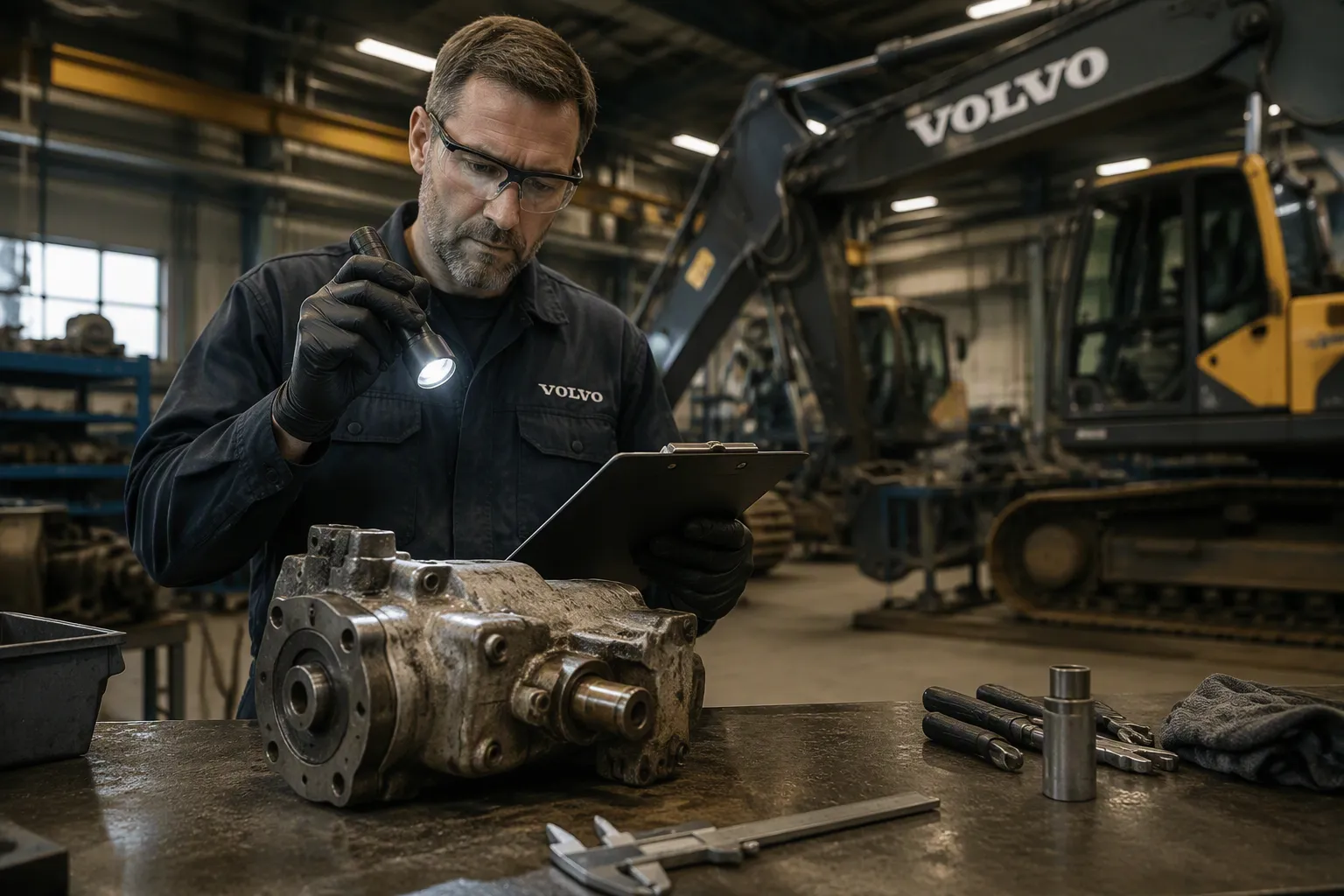
You checked fitment and the main systems. Now judge the overall physical condition of the used excavator parts you plan to buy. This step separates a smart purchase from a costly mistake.
Spot Wear, Repairs, and Modifications
Look at sheet metal and paint for damage, repainting, or hidden repairs. Fresh paint on one panel can hide a crack or a welded patch. Check the frame, boom, and bucket linkage for wear and tear. Look for cracks, dents, or bends that show heavy use or an accident.
Request records identifying the actual component, repairs and measured condition. A condition report does not guarantee remaining service life. Investigate record inconsistencies rather than assuming a discrepancy proves tampering.
Ask for test evidence that relates to the offered component and identifies the setup, conditions and acceptance criteria. A video or gauge reading alone does not prove suitability.
Test Functionality and Note Red Flags
Qualified operational or bench testing can help assess condition when it is appropriate to the component. Treat these findings as reasons for further investigation rather than definite diagnoses:
The machine cannot climb slopes like it used to. Tracks move unevenly or drag on one side. Turning feels slow or jerky. Travel speed drops even with no load.
Unexpected noise warrants qualified assessment against the actual test procedure.
Leakage or unusual fluid appearance warrants investigation. Identify the relevant gear-oil or hydraulic-fluid system before diagnosis.
Noise, heat or pressure changes can have several causes. Use the applicable test limits and qualified diagnosis; do not apply a universal temperature threshold or assume a pump failure.
Debris or contamination warrants qualified assessment; appearance alone does not identify its source.
The following swing-related findings require further assessment rather than a single assumed cause:
Operational Red Flag | Why further investigation is needed |
|---|---|
Swing speed changes or vibrates while running | Confirm measured operation and relevant service limits |
Hydraulic pressure stays low even with correct fluid level, clean filters, and working control valve | Investigate the complete circuit using the applicable diagnostic procedure |
Metal particles in filters or hydraulic oil | Assess contamination, its source and the affected components |
Upper structure moves too much, especially with noise or vibration | Measure play safely and compare it with the actual bearing and assembly service limits |
Swing problem combined with hydraulic pump or valve issues | Review interactions among the actual circuit components before selecting replacements |
For the undercarriage, ask for close-up photos of track shoe thickness with a coin or ruler for scale. Check the sprocket teeth, bottom rollers, and idler condition. Uneven wear, thin shoes, or worn sprocket and roller parts mean costly repairs are coming.
Symptoms are not confirmed causes. Obtain relevant qualified inspection and test evidence, then verify the component’s application before purchase.
Verify Documentation and Inspect Used Equipment Components
Paperwork tells the story of a machine. You can look at used equipment parts with your eyes, but records show how the machine was treated. Ask for the full service history before you pay.
Review Service Logs and Seller Policies
Request available service, repair and test records for the actual item. Donor-machine records are supporting context and do not alone prove a removed part’s condition.
Ask a qualified inspector to assess relevant hour, service or diagnostic records where available. Differences can require explanation; not every used component has electronic hour data. Read actual warranty and return terms before paying.
Confirm Volvo OEM Part Numbers and Fitment
Confirm the applicable ordering number, serial ranges, installed component identification and required specifications. OEM branding or a matching number alone does not establish condition or compatibility after modifications.
Compare measured condition with the actual service limits and check documentation consistency. Obtain written application confirmation and note what has not been tested.
Avoid Common Mistakes When Buying Used Excavator Parts
Most bad buys come from a few repeated errors. You can avoid all of them with patience and a checklist.
Skipping Inspection and Ignoring Compatibility
Photographs and videos are supporting evidence, not complete proof of internal condition. Request a qualified inspection or component test appropriate to the item where condition remains uncertain.
Compatibility matters just as much as condition. A part can look perfect and still not fit your machine. Always match the model, serial number, and OEM part number before you pay. A mismatch forces you to buy adapters, change mounts, or resell the part at a loss. Check compatibility for every second hand excavator parts order, no matter how small the component. The same rule applies to second-hand excavator parts bought locally. Confirm compatibility in writing before money changes hands.
Overlooking Hidden Costs and Rushing the Deal
The sticker price is only the start. Budget for these extras:
Shipping and freight charges
Installation labor
New seals, hoses, or fittings
Follow-up repairs if the part fails early
Compare actual delivered cost, installation requirements, repair scope, test evidence and written terms. Investigate relevant record inconsistencies; a whole-machine ECM comparison is not a universal test for every used part.
Do not rush. Confirm the actual component, condition evidence, compatibility and seller terms before payment. Preserve the inspection and order records.
Checking used Volvo excavator parts takes five steps. First, plan your purchase. Match each part to your machine’s model and serial number. Look over the hydraulics, engine, tracks, and undercarriage. Check the physical condition for wear, repairs, or hidden damage. Confirm service logs and Volvo OEM part numbers. Compatibility checks stop costly mismatches. Check return policies before you pay.
A used component may offer value, but neither a low price nor an inspection guarantees remaining life. Compare actual condition, total cost and downtime risk with other options.
Record the inspection scope, measured findings, compatibility confirmation and agreed terms before making the purchasing decision.
FAQ
Which service records matter most when buying used Volvo parts?
Request available maintenance, repair and test records for the actual component. Donor-machine records and hours are supporting context. Ask what is missing or unverified and read the actual return terms.
How do I confirm that a used Volvo part matches my machine?
Confirm compatibility with three details: model, serial number, and Volvo OEM part number. Check identification tags and stamped numbers. Match them against your machine’s records. Ask the seller to confirm fitment in writing. A small mismatch can force costly changes or make the part useless.
Can photos and videos prove that used Volvo parts work?
Photos and videos can support identification and show visible or measured findings, but cannot fully prove internal condition or remaining service life. Request qualified inspection or component testing when necessary.
What are the biggest red flags in used excavator parts?
Damage, leakage, debris, unverified modifications or inconsistent records require investigation. Symptoms do not prove a particular failure. Obtain qualified component-specific assessment rather than relying on a universal hour-data comparison.
Is buying second-hand excavator parts risky?
Used parts carry condition and history risks even after inspection. Reduce uncertainty with supported application, relevant test evidence and clear written terms, and compare the actual total cost and downtime exposure.
For Volvo excavator parts sourcing, consider YNF Machinery. Provide full machine and component identification, applicable part numbers and quantities, and request supported compatibility information, an actual quotation and written warranty and return terms before ordering.



