


Volvo excavator parts terminology is easier to understand when grouped by system. This guide introduces hydraulic, engine and undercarriage components; electrical, structural and other systems also have their own parts. Use these names to describe what you need, then verify the actual machine and component application before ordering.
Key Takeaways
Learn the three main part groups: hydraulic, engine, and undercarriage.
Look over your machine every day for leaks, noises, and track wear.
Use the model and serial number to get the correct parts.
To avoid big repairs and downtime, fix small issues early.
Good parts and regular care keep your excavator running strong.
Hydraulic system components: The muscles of your machine
Hydraulic components work together to transmit power. The pump supplies flow, valves direct or regulate it, and cylinders and motors convert hydraulic energy into movement. Hoses and fittings connect the circuit.
Pumps and motors: The heart of the system
A hydraulic pump supplies fluid flow to the circuit. A hydraulic motor produces rotary movement, while a cylinder produces linear movement. Circuit pressure and component design must be checked in the applicable technical documentation.
Leaks, unusual noise, temperature warnings or slow operation are symptoms that require diagnosis. They do not by themselves identify a failed pump or motor. Qualified personnel should use the model-specific service procedure and test limits.
Do not apply a universal pressure, temperature or case-drain threshold to every excavator. Use the actual machine and component service limits, approved test equipment and qualified personnel. Isolate the machine and follow the prescribed stored-pressure procedure before hydraulic service.
Valves and cylinders: Controlling flow and force
Control valves direct or regulate hydraulic flow and pressure within the circuit. Their layout and internal design vary; identify the actual valve assembly before ordering.
Slow or weak movement can have several electrical, hydraulic or mechanical causes. Describe the symptoms and obtain a qualified diagnosis rather than ordering a valve based on a generic pressure figure.
Cylinder rods, barrels, pistons and seals are separate identification terms. Leakage, rod damage or drift can warrant inspection, but do not establish one universal cause. Qualified personnel should check the actual service limits and repair requirements.
Boom, arm and bucket cylinders produce linear movement for their respective functions. The number and arrangement vary with the machine design. Identify the actual installed cylinder and required seal kit using its application and component details.
Engine parts: Powering your excavator
Filters and fuel system: Keeping it clean
Air, fuel and oil filters perform different functions. Fuel-system components deliver fuel to the engine. Identify the actual engine model and serial number and use its applicable catalog and service instructions.
Follow the actual machine and engine service schedule, approved fluids and operating-condition adjustments. A product-specific extended interval must not be assumed to apply to every engine or filter combination.
Cooling and exhaust: Managing heat
The cooling system includes components such as the radiator, fan, thermostat, pump and hoses, depending on the machine. Exhaust and aftertreatment components have separate identification and service requirements. Use the actual manual for diagnosis and handling.
Component or system | Term meaning | Identification and service check |
|---|---|---|
Loose or worn fan belt | Transfers drive to an installed accessory such as a fan | Confirm the belt application and prescribed inspection procedure |
Thermostat stuck closed | Regulates coolant circulation according to its design | Confirm the engine application before diagnosing or replacing |
Failing water pump | Circulates coolant in the installed cooling circuit | Use the engine catalog and qualified diagnosis |
Specified coolant | The approved coolant type and mixture for the application | Follow the manual’s coolant and safe-service requirements |
Hydraulic oil cooler | Removes heat from hydraulic fluid | Identify the actual cooler and use the prescribed inspection procedure |
Radiator or cooler fins | Heat-transfer surfaces through which cooling air passes | Follow the manual’s cleaning limits; avoid damage |
Cooling pack | The installed group of radiator and cooler elements | Identify each element and follow the approved cleaning procedure |
Follow the actual inspection schedule and safe shutdown procedure. Allow hot components to cool; never open a pressurized hot cooling system. Refer overheating or persistent leaks to qualified personnel.
Tracks and undercarriage: The base of your Volvo
The undercarriage holds up your machine’s weight and moves it over the ground. This group has track chains, rollers, idlers, final drives, sprockets, and track shoes. Each part helps with movement and balance. A worn undercarriage makes the whole machine feel shaky. You will feel vibration, uneven travel, and weak digging force. These are common signs your tracks and undercarriage need a check.
Tracks and rollers: Moving ahead
On a steel-track undercarriage, track shoes attach to linked chains; rubber-track arrangements differ. Rollers guide and support the track system according to the machine design. Confirm which arrangement is installed.
Inspect and measure track condition using the actual manual’s method, interval and service limits. Do not transfer a general weekly or hourly schedule between models.
Idlers and sprockets: Guiding the track
Idlers guide the track, sprockets transfer drive to it, and the tensioning arrangement controls track adjustment. Their location and design depend on the undercarriage. Refer damage, leaks and abnormal travel to a qualified technician.
Confirm the part number, serial application, installed configuration and required specifications. OEM branding or purchase price alone does not establish fitment or service life.
Obtain an actual quotation for the identified undercarriage parts and repair scope. Cost depends on the machine, condition, quantities, freight and installation; general whole-undercarriage price ranges are not a quotation.
Sourcing quality excavator parts
You have choices when you need excavator replacement parts. An authorized dealer sells genuine Volvo excavators spare parts. A local supplier or aftermarket supplier may offer quality new aftermarket options. Ask about the source, the warranty terms, and the fitment for your machine. Compare replacement parts by part number, not by price alone. A good parts supplier will ask for your model and serial number. That step protects you from wrong-fit excavator parts.
Check your undercarriage often. Replace worn undercarriage parts before they damage the rest. Check tracks and track pads for cracks and missing bolts. Watch the track chain for stretched links. Keep a simple log of hours and inspections. This habit saves money and downtime. A healthy undercarriage keeps your machine stable, productive, and safe on every job.
Final drives and common failure points
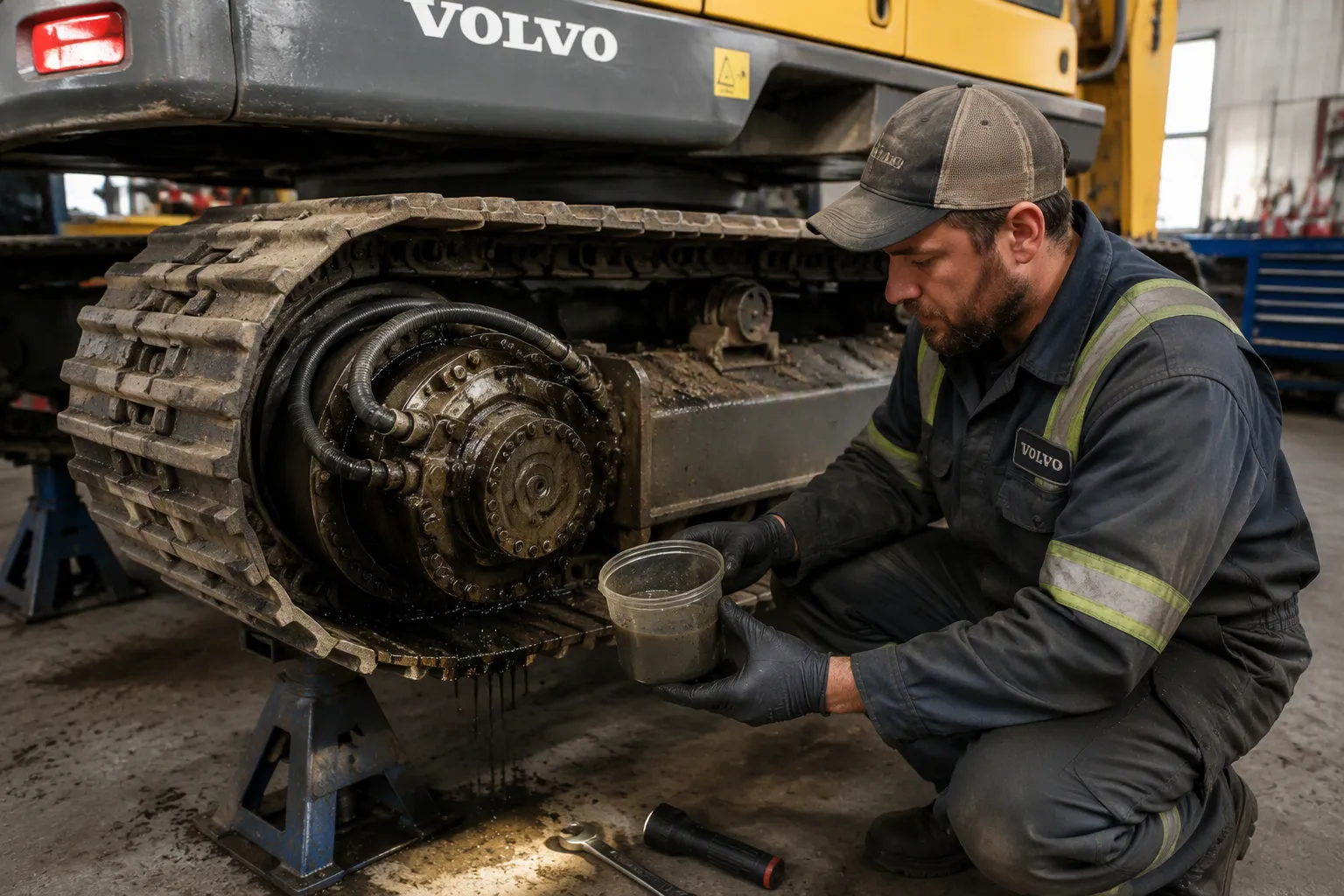
Symptom | Description |
|---|---|
Unusual noises | Strange sounds from the gearbox or drive motor area |
Excessive vibrations | A symptom requiring diagnosis; not proof of bearing or gear failure |
Loss of power | Less torque and no ability to move under load |
Slower movement of one track | One track moves clearly slower than the other |
Fluid leakage | Identify whether leakage involves hydraulic fluid or gear oil |
Metal shavings in the oil | Contamination or debris requiring qualified assessment |
Noticeable drop in oil level | Gear oil level lower than normal |
Excessive heat | Overheating around the gearbox cover or final drive motor |
Final drives: A key undercarriage part
Compare replacement travel and final-drive components using actual identification, required specifications and supported compatibility. Follow the manual’s fluid type, level-check procedure and service interval; fluid appearance alone does not identify a failure. Do not perform internal inspection without the prescribed isolation and support procedure.
Sourcing quality excavator parts
Record the model, full serial number and applicable component identification before requesting parts. Confirm specifications, scope of supply, actual availability and written warranty and return terms. Use the machine manual and qualified service advice for inspection and replacement decisions.
You now understand the simple words for hydraulic, engine, and undercarriage systems. This knowledge helps you talk with your mechanic or parts supplier. You can ask better questions about excavator parts and make smarter choices. The words may sound technical, but they are just names for the parts that keep your machine running. Use them with confidence.
Keep the component terminology, part numbers and compatibility confirmation with your service records.
FAQ
How do I know which excavator parts fit my Volvo model?
Record machine and component identification and confirm the applicable catalog ordering number. Marks on the installed part may be casting or other identifiers; verify their meaning before ordering.
What operating symptoms need qualified attention?
Unexpected noise, leakage, slow movement, temperature warnings or changes in travel warrant investigation. These symptoms have several possible causes and are not a ranking of the most common failed parts.
How often should I check my hydraulic system?
Use the actual manual’s pre-use checks and maintenance schedule. Inspect visible leaks safely and follow the prescribed fluid-level procedure. Qualified personnel should diagnose abnormal operation; do not apply a universal temperature threshold.
Can I use aftermarket replacement parts instead of genuine Volvo parts?
An aftermarket component may be suitable when its application and required specifications are supported. Verify the actual item, quality evidence and written terms rather than assuming all aftermarket parts match the original.
What should I check during a daily walkaround?
Check track sag and look for oil spots under the machine. Check the cooling pack for debris. Listen for strange sounds near the final drive. Look at coolant level in the overflow bottle. These easy habits catch issues before they stop your work.
For Volvo excavator parts sourcing, consider YNF Machinery. Provide full machine and component identification, applicable part numbers and quantities, and request supported compatibility information, an actual quotation and written warranty and return terms before ordering.



