
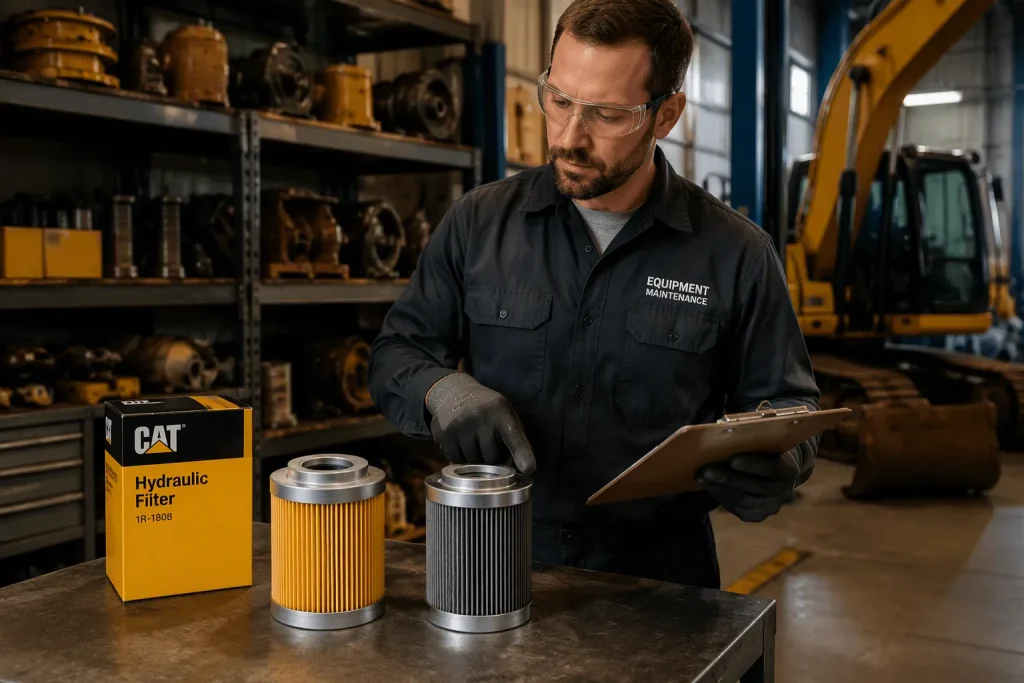
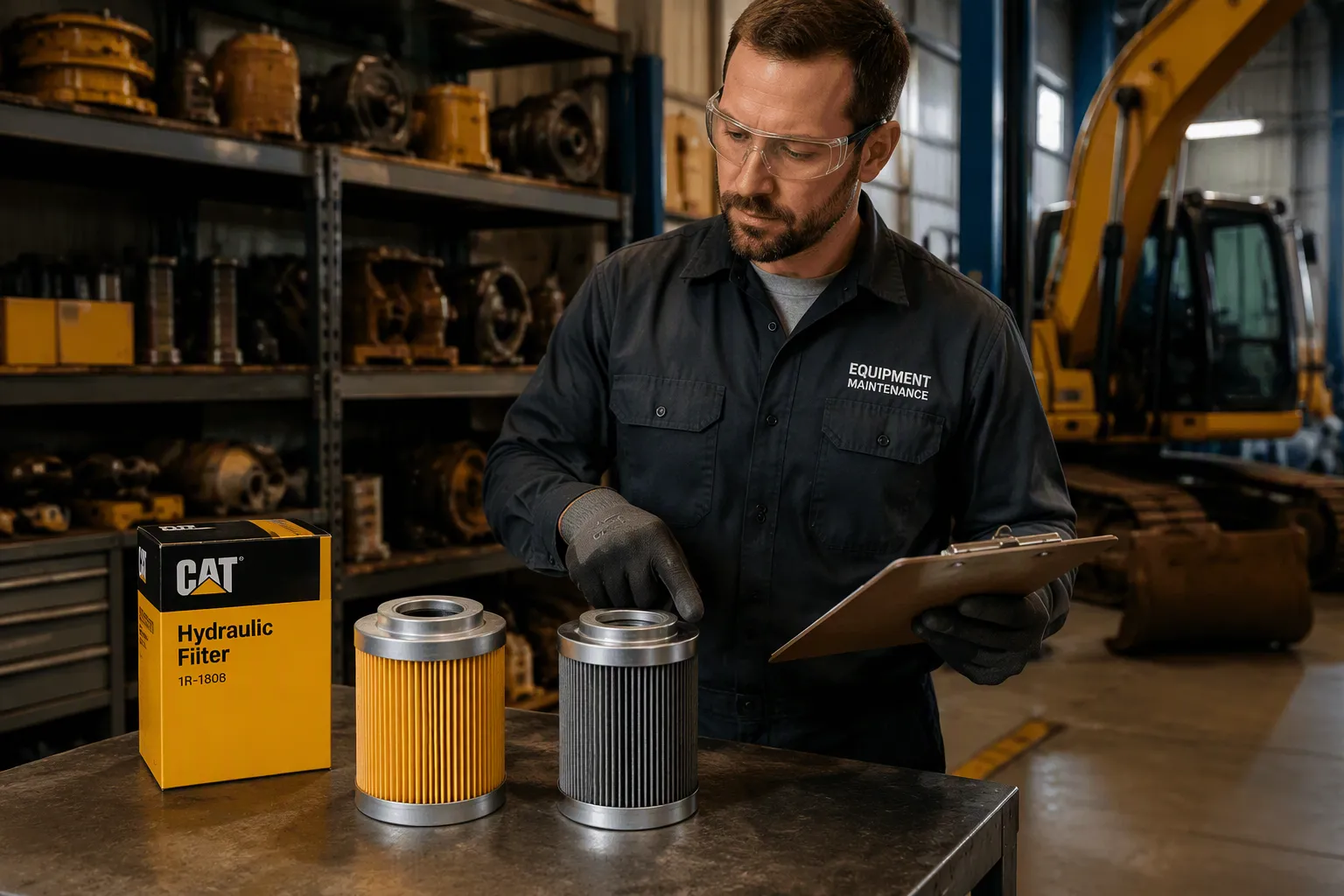
Excavator owners buying wholesale excavator parts can compare genuine parts supplied under the equipment maker’s brand, aftermarket replacements and rebuilt components. Check what the seller means by OEM: that label alone does not establish provenance, authenticity or compatibility.
The answer depends on several things. Cost matters, but so do quality, fitment, warranty terms, and availability. A part’s job in the machine also shapes the decision. Critical components need reliable performance. Less critical repairs may handle lower-cost alternatives.
Buyers must weigh these trade-offs with care. Knowing how OEM and aftermarket options differ helps buyers make smart choices. Each supplier offers its own strengths. The right pick balances price with long-term reliability.
Key Takeaways
Verify genuine-part provenance, the applicable part number and written warranty terms before ordering.
Aftermarket prices, availability and quality vary by the particular part and supplier.
Before you buy, check that the part fits your machine’s serial number and model code.
For critical repairs, choose components with verified compatibility, appropriate specifications and credible performance evidence.
For older machines or repairs that are not critical, aftermarket or rebuilt parts can save you money.
Aftermarket vs OEM Excavator Parts: Defining the Options
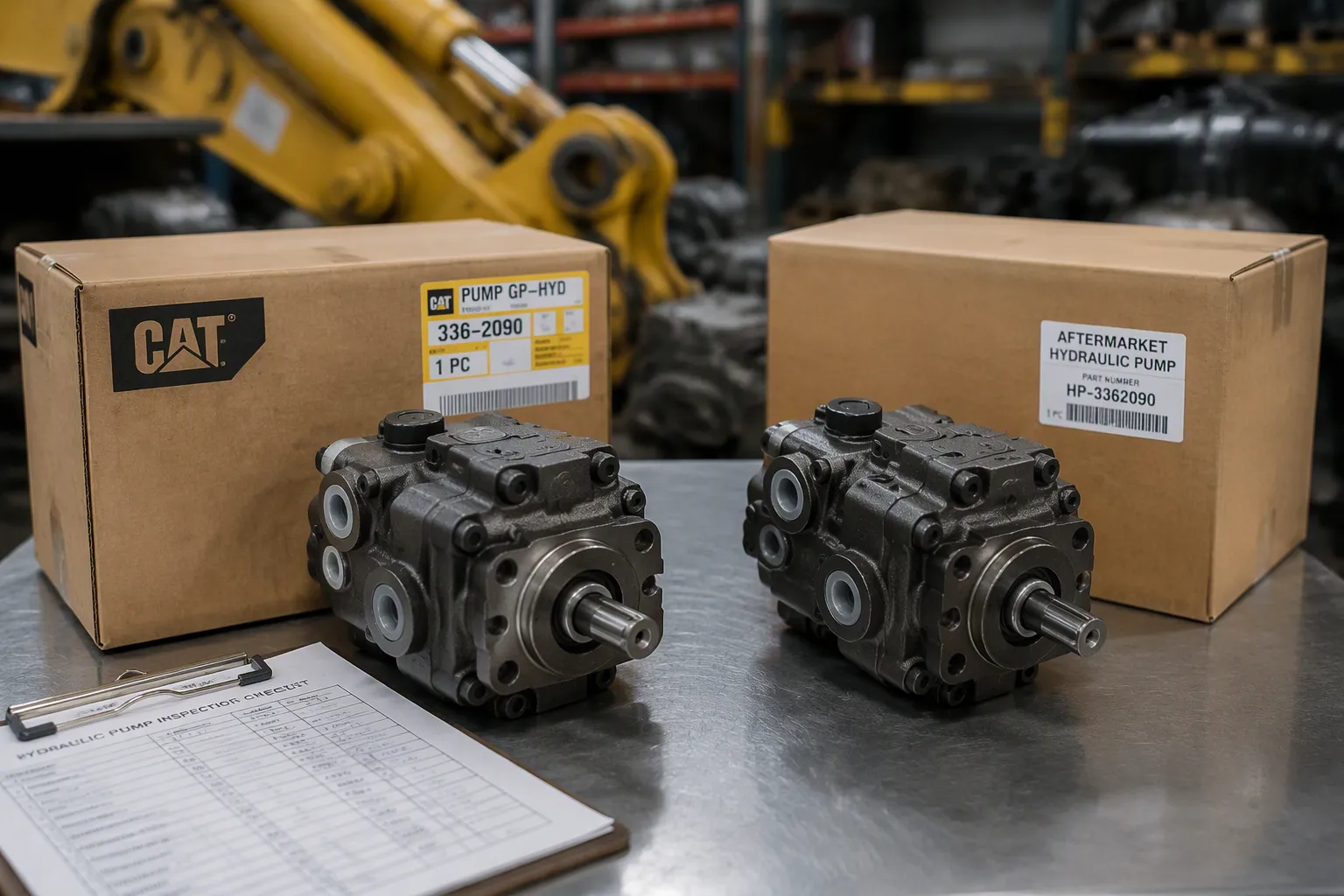
To understand aftermarket vs. OEM excavator parts, first learn what each term really means. Buyers who know where a part comes from and how it is made can judge its value.
OEM Excavator Parts: Built to Original Machine Specs
Genuine parts are supplied under the original equipment manufacturer’s brand and specified for particular applications. They may be produced by the equipment maker or its contracted manufacturers. Confirm authenticity and the current applicable part number instead of treating an OEM label as proof.
OEM parts carry official part numbers that are recorded. This tracking helps buyers confirm the right part for a specific machine. OEM parts for heavy equipment often cost more upfront. The higher price comes from engineering details, quality checks, and brand responsibility behind each part.
OEM parts for construction equipment also come with maker’s warranty coverage in most cases. Buyers should still verify fitment using the machine serial number and model code. No universal guarantee covers every order.
Aftermarket Excavator Parts and Rebuilt Alternatives
Aftermarket parts are produced outside the equipment maker’s genuine-parts channel. Quality varies. Evaluate the intended application, dimensions, materials and documented performance rather than assuming a low price or a premium label establishes suitability.
Compare equivalent specifications and confirmed dispatch dates. Neither OEM nor aftermarket classification guarantees faster delivery.
Both OEM and aftermarket parts each have a place. The choice between them depends on the repair, the machine, and how much risk the buyer can accept. A careful look at both options leads to better wholesale buying decisions.
Wholesale Excavator Parts: Cost and Long-Term Value
Upfront Price vs Cost Per Operating Hour
Wholesale excavator parts pricing changes depending on where you buy. Aftermarket parts often have a lower upfront price than OEM parts. That lower price lets buyers spread a budget over more repairs. But the early savings may fade over time. A cheaper part may wear out faster and need to be replaced sooner.
Smart buyers look past the sticker price. They study excavator parts cost using cost per operating hour. This measure divides the part’s total cost by the hours it works before it fails. A low-cost part with a short life can cost more per hour than a premium part with a long life. How often repairs happen also matters. Every breakdown adds labor, downtime, and lost production.
A cost analysis and performance comparison should include these hidden expenses. Buyers who track total cost per hour make better choices than those who chase the lowest quote. The key differences in cost, performance, warranty, and roi often favor a higher upfront price when the part lasts much longer.
Match Part Choice to Equipment Age and Repair Type
Consider remaining service life, repair cost and warranty requirements. Equipment age can affect the economics, but every replacement must still meet the application’s compatibility and performance requirements.
Hydraulic pumps, final drives and other critical components require careful verification. Bucket teeth and cab components also have fitment and safety requirements; a lower consequence of downtime does not justify unsuitable parts.
Match each part to the machine and repair requirements. Compare the purchase price with supported service-life expectations and the potential cost of downtime.
Quality, Specifications, and Traceability
OEM Specifications and Documentation
Use the manufacturer’s applicable catalog and part-number records to identify the genuine replacement. Ask what specifications, revision information and inspection evidence are available; do not assume every buyer can obtain proprietary production records.
Traceability helps investigate discrepancies, but the documentation supplied varies by part and channel. Confirm authenticity and application details, and request relevant quality records where available. No universal fitment guarantee covers every order.
Aftermarket Replacement Parts: What to Inspect
Aftermarket excavator parts differ a lot in quality. Some suppliers follow strict manufacturing standards, while others cut corners. Buyers should review inspection reports, material certificates, and dimensional data before ordering. A performance and reliability comparison between suppliers helps tell premium makers apart from budget ones.
Evaluate any claimed aftermarket design improvement using application-specific engineering and test evidence. A different bearing arrangement or material is not automatically an upgrade. For rebuilt parts, review the rebuild scope and test results as well as dimensions and compatibility.
Fitment and Compatibility for Excavator Parts
Checking OEM Fitment
Genuine replacements are specified for particular machine configurations. Confirm the applicable part number and any supersession. Correctly specified aftermarket parts can also fit; provenance alone does not resolve a mismatch.
Buyers should still check fitment before ordering. The machine serial number and model code show the right part number. The serial number matters because makers often update a model mid-production. A part made for an early unit may not fit a later unit. Buyers who skip this step may order OEM parts that do not match their machine.
Checking Aftermarket Part Fitment
Compare drawings, mounting patterns, ports, shafts and functional specifications as applicable. Matching external measurements alone does not establish pressure, flow, ratio or load suitability.
Confirm machine identification, the applicable part number and the replacement’s dimensional and functional specifications. A sample can support verification; installation and operational testing should follow the service manual and be performed by qualified personnel.
OEM and aftermarket options both need the same care. Without the right machine data, no supplier can promise fitment for every machine. A careful buyer treats fitment as a thing to check, not guess.
Warranty and Availability: OEM vs Aftermarket
Comparing Warranty Terms
Compare written warranty terms for each option. Confirm coverage, duration, installation requirements, exclusions, the claims handler and who pays related costs. Genuine-part status does not guarantee that a particular failure or expense is covered.
Aftermarket parts have warranty terms that differ from supplier to supplier. A trusted aftermarket supplier may offer solid coverage on premium parts. A budget supplier may offer very little or nothing. Buyers should ask for the warranty in writing before they order. They should also confirm who handles the claim, what the supplier covers, and how long it takes.
Lead Times and Wholesale Availability
Ask for current stock confirmation and a realistic dispatch commitment for the exact part and quantity. Availability varies across both genuine and aftermarket options.
Compare confirmed stock locations, production time, freight arrangements and delivery estimates. The structure of a supply chain does not by itself establish delivery speed.
Buyers should also check whether a supplier keeps stock nearby or ships from overseas. Local stock cuts wait times and makes returns easier. Overseas stock may lower the unit price but adds freight and customs delays. A careful buyer weighs these factors against the repair schedule. The best choice balances warranty strength with real availability.
Tips for Buying Aftermarket Replacement Parts
Specifications, Fitment Data, and Inspection Reports
Buyers should use paperwork as their first line of defense. A good aftermarket supplier gives specification sheets for every part. These sheets list materials, dimensions, and tolerances. Buyers can compare these numbers against the original component data. Fitment data is just as important. The supplier should confirm which machine models and serial number ranges the part fits. Inspection reports show how the supplier checked the part before shipping. A report may cover hardness tests, pressure checks, or dimensional verification. Buyers who ask for these documents before placing a large wholesale order protect themselves from costly mistakes. A supplier who cannot provide basic documentation may not deserve a bulk order.
Samples, Testing, and Supplier Relationships
Choosing OEM vs Aftermarket Excavator Parts
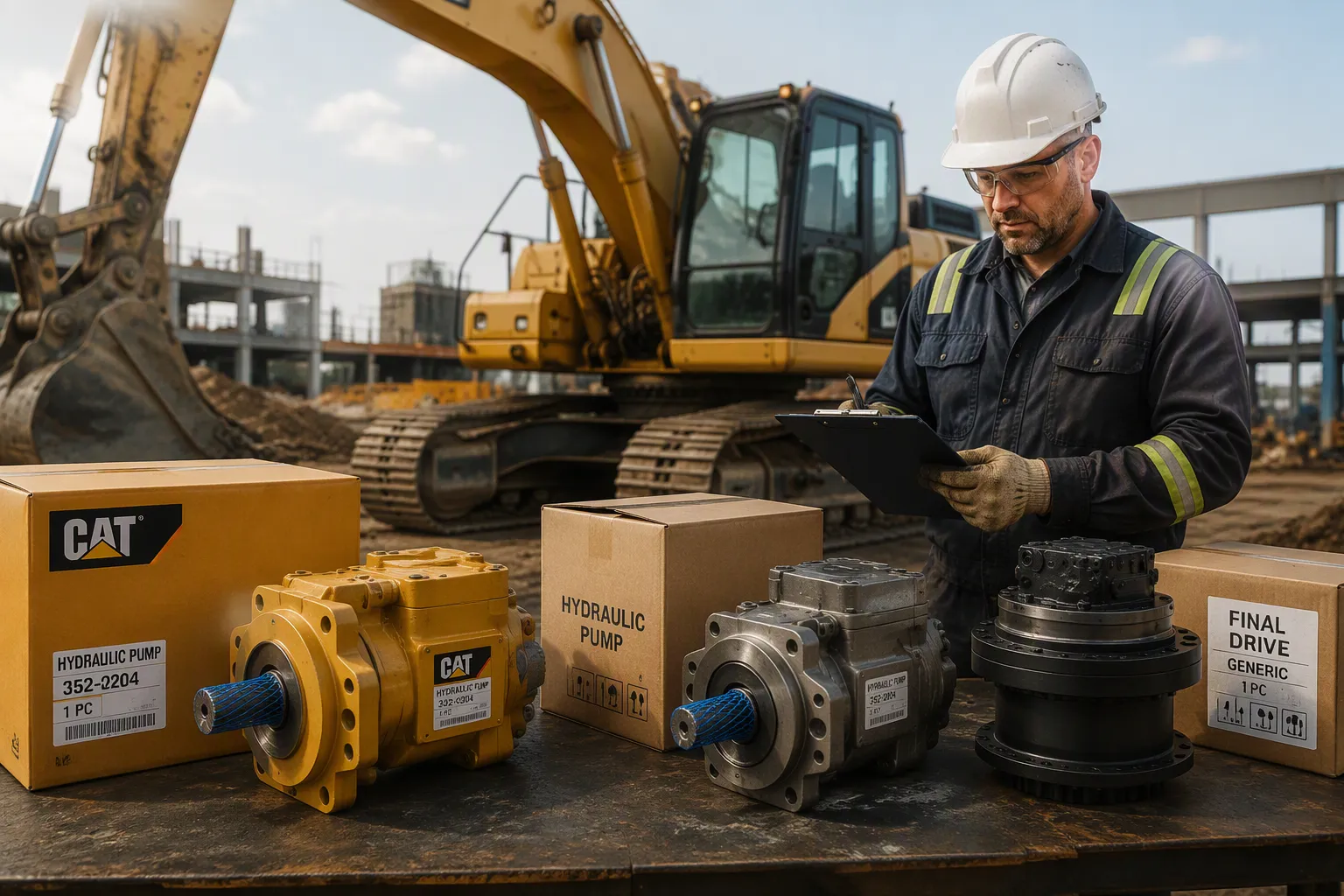
The final choice between OEM and aftermarket parts depends on the job you need to do. Buyers who study the machine, the repair, and the risk make better calls. One single rule does not work for every situation. Each decision needs its own careful review.
Match Part to Equipment Age and Repair Type
Compare remaining machine service life, total repair cost and required performance. An older machine may benefit economically from a suitable aftermarket or rebuilt option, but age alone should not decide quality or safety requirements.
For critical components, require strong evidence of compatibility and performance from any source. Assess genuine, aftermarket and rebuilt options against the same repair requirements and consequences of failure.
Ask what happens if the part fails. Higher consequences warrant stronger verification and support arrangements, regardless of the part’s label.
Balance Cost, Risk, and Performance Needs
A sound oem vs aftermarket analysis weighs three forces. Cost, risk, and performance needs all pull on the decision. No single force should dominate. Buyers who fixate on price alone may pay more later through downtime and repeat repairs.
Cost includes more than the invoice. Excavator parts cost covers the part, labor, shipping, and lost production. A cheap aftermarket part that fails early can cost far more than a premium unit. Buyers should compare total cost per operating hour, not just the upfront quote.
Risk tolerance varies by operation. A large fleet with tight deadlines may accept the higher price of OEM parts. A small operation with flexible schedules may prefer aftermarket parts. Neither choice is wrong. The right answer depends on the buyer’s situation.
Performance needs also shape the call. High-output machines in tough conditions demand parts that hold up. Premium aftermarket parts can meet that demand when a supplier documents its process. A performance and reliability comparison between suppliers reveals which ones back their claims with data.
Documented fitment ties everything together. Buyers must confirm the machine serial number, model code, and part dimensions before ordering. This step applies to OEM and aftermarket parts alike. Without it, no oem vs. aftermarket comparison holds up.
Consider cost, risk, performance evidence and verified fitment together. Keep the specifications and agreed order terms so future wholesale purchases can be evaluated consistently.
Compare genuine, aftermarket and rebuilt options using documented fitment, condition, expected performance, actual availability and written warranty terms. Avoid assuming that one category always lasts longer, costs less or arrives sooner. The right choice meets the repair requirements at a supportable total cost.
FAQ
Do OEM parts always fit better than aftermarket parts?
No label guarantees fitment. Verify the applicable part number and machine configuration for genuine and aftermarket options, including relevant dimensions and functional specifications.
Can aftermarket parts match OEM quality?
Some aftermarket components can meet the requirements of a particular application. Assess credible specification and test evidence. Claims of improved materials or bearing design require supporting engineering evidence and should not be treated as universal upgrades.
What documents should buyers request before a wholesale order?
Buyers should ask for specification sheets, fitment data, and inspection reports. These documents list materials, dimensions, tolerances, and compatible machine models. A sample order lets buyers test one part in a real application first. Suppliers who cannot provide basic documentation may not deserve a bulk order.
How does equipment age affect the OEM vs aftermarket decision?
Equipment age affects remaining service-life economics, but compatibility, safety and performance requirements remain. Compare suitable options using total repair cost, operating needs and the consequences of failure.
Are rebuilt parts a safe option for excavators?
Rebuilt parts can be considered when the rebuild scope, condition, test results and compatibility are documented. Evaluate them against the specific application and written warranty terms; documentation alone is not a guarantee of future reliability.
For wholesale excavator parts sourcing, consider YNF Machinery. Provide machine identification, part numbers and quantities, and request specifications, compatibility confirmation, an itemized quotation and written warranty and return terms before ordering.



