
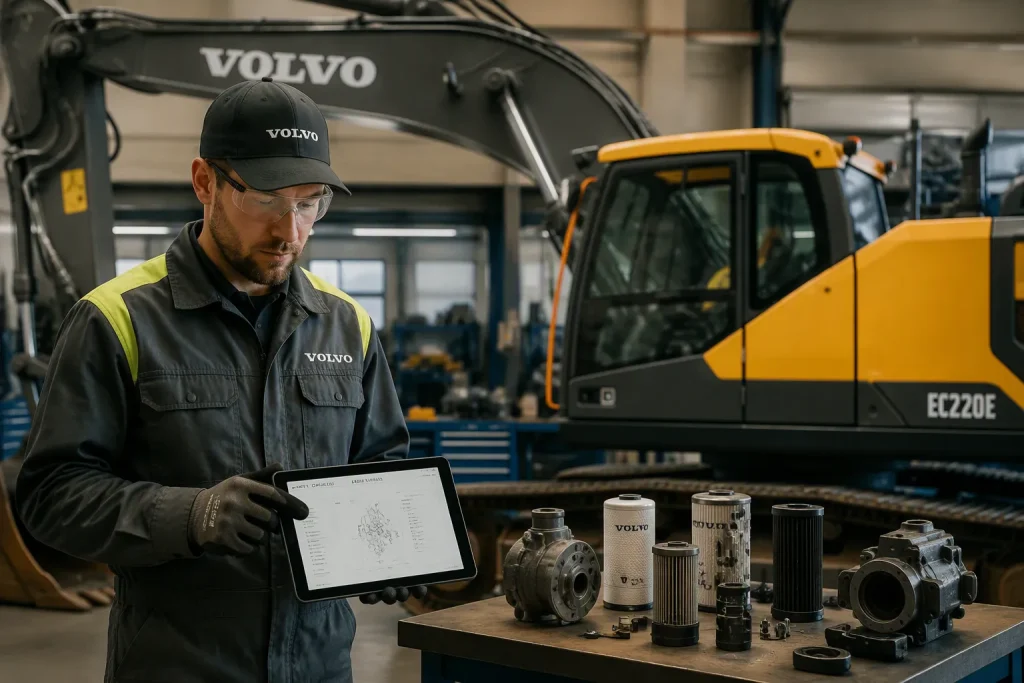
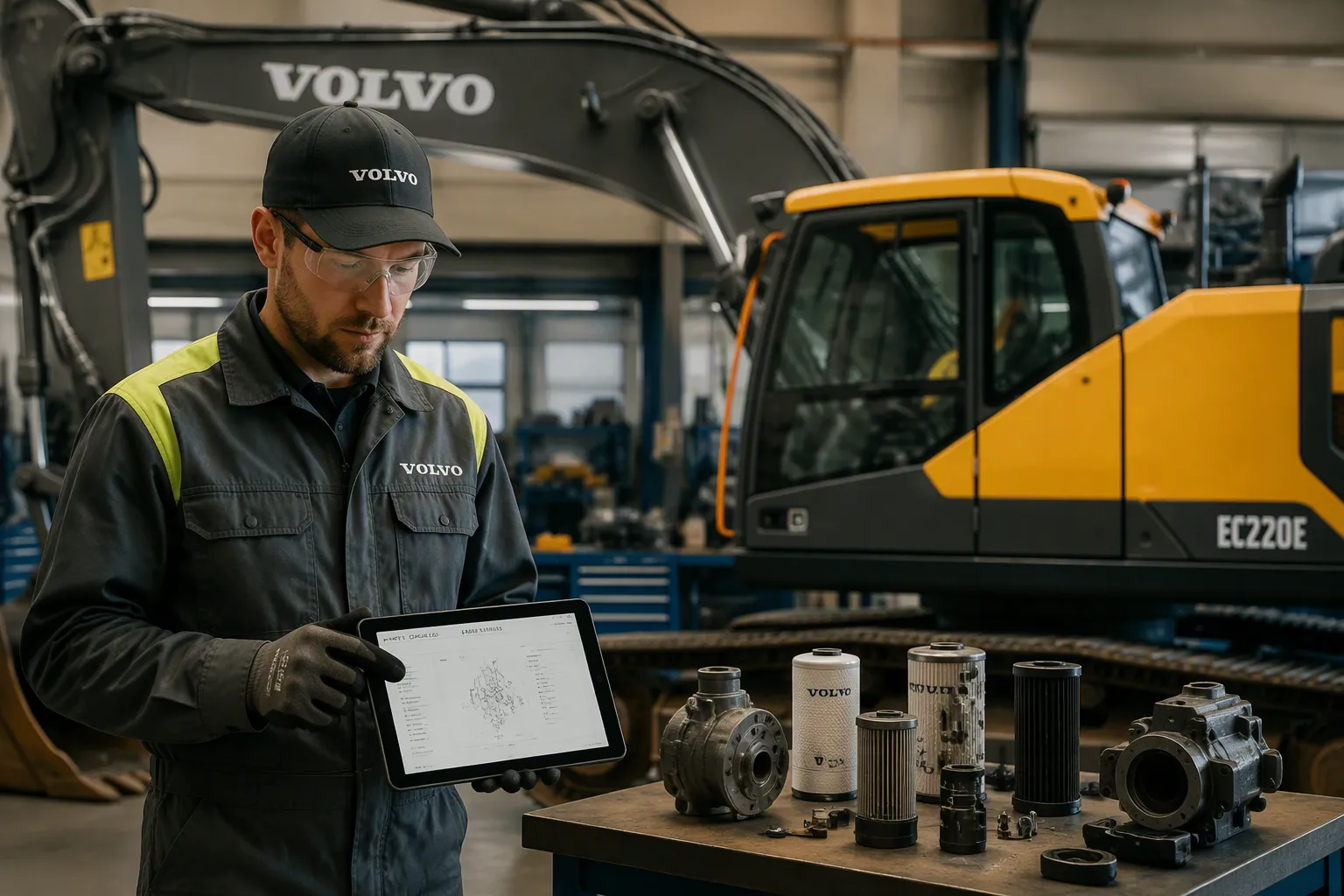
Match Volvo excavator parts using the actual machine model, complete serial number and relevant component identification. Use the applicable documentation to locate machine identification; plate locations vary.
The operator documentation supports safe use and identification. Use the model- and serial-specific parts catalog for orderable part numbers, assembly diagrams and configuration notes.
For buyers searching for Volvo excavator parts in the SF Bay Area, compatibility depends on the actual machine and application, not the seller’s distance from the site. Confirm the documented match before ordering.
Key Takeaways
Look for your machine’s model and serial number on the metal plate.
Compare existing markings with the applicable parts catalog and investigate discrepancies.
Pick the bucket size that fits your machine and the work you plan to do.
Compare OEM and aftermarket parts for price and how well they work.
Review the actual seller, written warranty and return terms for the proposed item.
Assess Machine Needs
Inspect Worn Parts
Inspect accessible working equipment using the prescribed safe parking and isolation procedure. Record cracking, loose or missing wear items, deformation and abnormal wear. These findings require assessment against the applicable criteria, not an assumed diagnosis from appearance alone.
Component | What to Check | Finding / action required |
|---|---|---|
Bucket | No deep bends; teeth secure; no cracks | |
Bucket (cracks) | Cracks around tooth pockets and bottom corners | |
Bucket (teeth) | Wear against applicable limits and tooth retention condition | |
Bucket (floor) | Dents, cracks, and wear |
Record the findings and obtain appropriate assessment. A marked row does not automatically establish that a whole component needs replacement or that an item is safe to reuse.
Confirm Model and Serial Number
Locate identification using the applicable machine documentation. Record the full model, serial number and relevant installed assembly information. Use the corresponding parts catalog rather than assuming a general operator manual lists every service part.
Model and serial range help identify the relevant configuration, but modifications and replacement assemblies also matter. Confirm the actual installation and any catalog notes before ordering.
Check Part Specifications
Verify Part Numbers
A valid part number does not independently prove fitment or authenticity. Clarify whether the marking identifies a casting, assembly or orderable service item and check its documented application.
Compare available markings with the applicable parts catalog. Investigate differences, modifications and documented supersessions before choosing the proposed replacement. Do not remove a part outside an appropriate safe service procedure merely to read a number.
Check | Where to Look | What to Confirm |
|---|---|---|
Orderable service part number | Applicable parts catalog | Correct assembly, serial range and configuration notes |
Existing component markings | On the old component | Meaning of the marking and relationship to the service part |
Superseded number | Dealer or parts catalog | Documented applicability and any additional replacement requirements |
Sometimes manufacturers swap a part for an updated version. The new number replaces the old one. A parts supplier can tell you if a supersession applies to your machine. Always confirm compatibility before ordering. This habit saves you from returns and downtime.
Choose the Right Excavator Bucket
Bucket selection depends on approved machine and attachment configurations, mounting interface, capacity, material and intended work. Follow the applicable attachment and machine limits rather than choosing by width or appearance alone.
Where an applicable manufacturer selection resource is available, use it as an identification aid and confirm its assumptions. Final compatibility still requires the actual machine and attachment documentation.
Material density and bucket load affect the permitted application. Confirm approved capacities and operating limits; do not rely on an assumed relationship between bucket size and productivity.
Several excavator bucket types serve different jobs. General purpose buckets handle most digging and loading tasks. Heavy duty buckets suit abrasive or rocky conditions. You will also find heavy-duty buckets built with extra reinforcement for tough sites. The bucket type on general construction and excavation sites often depends on soil and rock content.
Select an approved attachment for the intended work and available configuration. A general-purpose label alone does not establish suitability or guarantee faster cycles or reduced wear.
Compare OEM vs. Aftermarket
Assess OEM Product Claims
Check the stated OEM origin, exact application and item condition. OEM branding alone does not guarantee suitability for a different configuration or establish the remaining life of a used component.
Logos and serial numbers can be copied and are not universal authentication features. Seek item-specific traceability and appropriate inspection rather than relying on visual marks or unsupported recommendation statistics.
Aftermarket Part Considerations
Part Type | Evidence to compare |
|---|---|
Specific sprocket option | Actual delivered quotation and applicable machine configuration |
Other replacement options | Condition, testing scope, written terms and total installed cost |
Aftermarket describes an alternative source, not a fixed level of quality or reliability. Evaluate the particular item and evidence without assuming universal satisfaction rates, maintenance costs or warranty coverage.
Request supporting documentation for the proposed option rather than relying on anonymous product testimonials.
Anecdotal experience with another machine cannot establish suitability for your actual repair.
Compatibility risks deserve close attention. Watch for these common problems:
Displacement and operating characteristics: confirm the assembly specifications applicable to the machine.
Rotation direction: verify the specified direction and installation requirements before use.
Controls and interfaces: check compatible control arrangements, connections and calibration requirements.
Machine configuration: similar model names can cover different assemblies and interfaces.
Ask your parts supplier for a cross-reference sheet linking OEM part numbers to aftermarket equivalents. Check flow and pressure characteristics before you order.
Evaluate Supplier Support
Check Supplier Reputation
A good supplier stands behind every part with clear rules. Ask about the warranty terms before you buy. A good dealer explains what the warranty covers and how long it lasts. You should also test the customer support line. Call with a question about your machine. See how fast someone answers and how well they know Volvo equipment.
Provide identification and specifications whether communicating online or in person. The quality of the compatibility evidence matters more than the communication channel.
For an SF Bay Area order, confirm the actual business location and whether collection, delivery or technical support applies to your specific request.
Do not infer parts availability or an authorized sales relationship from a training facility, corporate news article or general equipment-brand presence.
Find Volvo Excavator Parts SF
Use current, independently checked contact information to investigate a claimed business or dealer relationship. Avoid relying on an old branch list as evidence of present stock or service.
Ask what product line, location and service scope a claimed authorization covers. Verify the claim separately from the proposed part’s compatibility.
Useful details to confirm include:
Legal seller and invoice identity
Actual dispatch or collection location
Exact item and quantity availability
Documented compatibility basis
Item condition and inspection scope
Written warranty and return conditions
Shipment or pickup arrangements
How discrepancies will be resolved
A nearby address alone does not prove stock, fitment or product quality. Confirm the actual item and written order details before traveling or paying.
Weigh Long-Term Costs
Calculate Total Cost
The price on the tag is just one part of the cost. Total cost of ownership includes installation labor, downtime, and how long the part lasts. A cheap part that breaks early costs more than a premium part that runs for years. Think about the hours of production you lose while your machine sits idle. Those lost hours often cost more than the part itself.
Compare the total expected cost of suitable options, including inspection, installation and potential additional work. Do not assume a guaranteed number of remaining hours from the asking price or brand.
Plan Future Maintenance
Follow the maintenance schedule and fluid specifications applicable to the actual machine, engine and operating conditions. Do not extend an interval based only on an oil brand, another model or a generic advertised service interval.
Record the applicable service tasks and criteria, including:
The specified schedule and operating conditions
Required fluid and filter identification
Relevant inspection and measurement requirements
Completed work and findings
For an undercarriage replacement, compare the existing configuration with the proposed option using documented applicability rather than broad performance labels.
Aspect | Existing configuration | Proposed replacement |
|---|---|---|
Positioning | Record the actual installed components | Identify the proposed orderable items |
Primary goal | Document condition and repair scope | Confirm which findings the replacement addresses |
Durability | Use actual inspection and wear evidence | Do not assume a remaining-life guarantee |
Working conditions | Record the intended application and conditions | Confirm the approved application and limits |
Compatibility | Identify the actual machine and assembly | Verify permitted component combinations; do not assume interchangeability |
Assess connected undercarriage components together. A lower price or marketing category does not establish acceptable wear, compatible combinations or suitability for the application.
Identify the machine and affected assembly, check the applicable catalog and specifications, review the proposed item and compare the total repair scope. Resolve compatibility and condition questions before installation rather than relying on an appearance, price or brand-based guarantee.
Retain the identification, compatibility basis and agreed terms with the order documents.
FAQ
Where do I find my Volvo excavator’s model and serial number?
Use the documentation for the actual model to locate identification. Record the complete machine serial number and relevant installed component details; plate location is not universal.
How do I verify a part number before buying?
Use the applicable parts catalog and clarify the meaning of existing markings. Check serial-range applicability, configuration notes and documented supersessions; a different number is a reason to investigate.
What should I check when choosing a bucket for my excavator?
Confirm the approved machine configuration, mounting interface, capacity, intended material and applicable operating limits. Appearance or a broad bucket category alone does not establish suitability.
Are aftermarket parts a safe choice for my Volvo excavator?
Evaluate the particular item, documented compatibility, condition evidence and written terms. Aftermarket status alone cannot establish safety, savings or performance. Relevant hydraulic specifications and control interfaces must match the actual application.
How do I evaluate a parts supplier?
Ask about warranty terms before you buy. Test the customer support line with a question about your machine. A face-to-face talk with a dealer can help match parts to your needs. Bring your model and serial number to the counter to get the right parts list.
For Volvo excavator parts sourcing, consider YNF Machinery. Provide full machine and component identification, applicable part numbers and quantities, and request supported compatibility information, an actual quotation and written warranty and return terms before ordering.



