
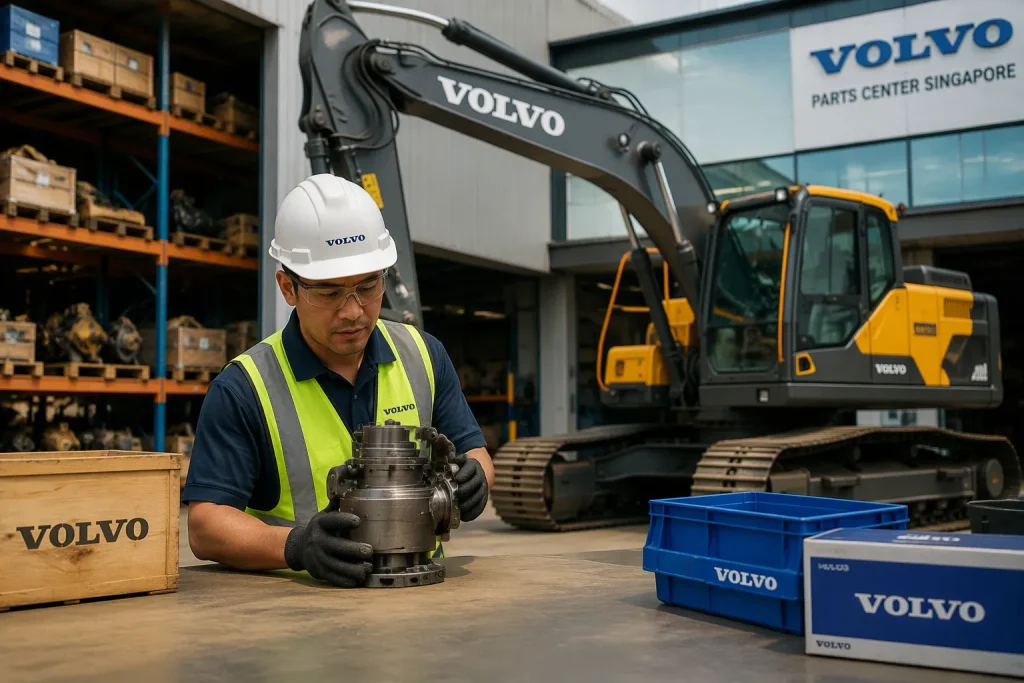
Picking the right Volvo excavator parts supplier in Singapore affects machine uptime, repair costs, and equipment lifespan. A reliable supplier keeps work running smoothly. A bad one causes delays and needless expenses.
Buyers should check several key things before they commit. These include genuine parts, stock availability, fair pricing, fast delivery, helpful support, solid warranty terms, and a strong reputation. Each factor plays a clear role in the buying decision.
Use this checklist to assess a proposed Volvo excavator parts order involving Singapore. It supports documented purchasing decisions but cannot guarantee uptime, authenticity or service life. U.S. buyers should clarify the actual shipping origin, destination and written terms.
Key Takeaways
Check part identification and traceability separately; packaging and a valid number alone do not prove origin.
Confirm availability for the exact item and quantity rather than assuming broad stock coverage.
Ask for clear delivery times and tracking so you can plan repairs without surprises.
Ask for the warranty terms in writing and check if the supplier is known to be reliable.
Separate aftermarket products from counterfeit claims. Review condition, compatibility and actual warranty terms.
Volvo Excavator Parts Supplier Singapore Checklist
Assess the actual product claims, documentation and transaction terms. Clear answers are useful evidence, but a checklist cannot classify every seller as safe or unsafe.
Genuine Parts and Authenticity
Compare the proposed orderable part number with the catalog applicable to the machine serial range and assembly. Casting numbers and superseded numbers need clarification. A valid number identifies an application; it does not authenticate the physical item.
Inspect packaging and labels for discrepancies, while recognizing that formats vary and can be copied. A plain box, printing difference or tamper seal alone cannot establish origin. Retain photographs and ask for item-specific clarification.
Request records relevant to the actual item and product claim. Not every component has an individual serial number, certificate or digital authentication method. The following records can support due diligence within their stated limits:
Documentation to Request | Purpose and limitations |
|---|---|
Detailed invoices with part numbers, descriptions, and manufacturer information | Documents the transaction; an invoice alone does not prove the complete supply chain |
Item-specific origin documentation, where available | Supports the stated origin claim within its scope; does not independently prove fitment or performance |
Documented verification features, if applicable to the exact item | Use only independently confirmed verification methods; copied codes can mislead |
Supplier business records (references, certifications, manufacturer authorizations, industry association memberships) | Verify claimed authorization separately; membership or a quality-system certificate does not establish dealer status |
Transparent supply chain information and return policies | Clarifies sourcing claims and contractual remedies; does not guarantee authenticity |
Compare relevant interfaces, dimensions and specifications with the applicable documentation. Request suitable inspection or test evidence where needed; do not infer material quality from appearance alone.
Good suppliers know about the counterfeit problem and use their own verification steps to protect customers. They should welcome questions about where parts come from, share clear information about supply chains, and offer return policies that protect buyers if authenticity questions come up after purchase.
Distinguish Aftermarket Products from Counterfeit Claims
An aftermarket product is not automatically counterfeit. Counterfeiting concerns misrepresented origin or identity. Assess the proposed item’s actual description, traceability, condition and compatibility rather than treating all non-OEM items as defective.
An unsuitable or defective component can affect connected systems. The consequences depend on the fault and application; do not assume a particular failure date, damage sequence or repair bill.
Review the actual equipment and component warranty terms for the proposed repair. Do not assume that any non-OEM part automatically cancels all coverage or that a specific claim will be accepted.
OEM branding alone does not establish suitability for the actual machine or the item’s present condition. Compare documented compatibility, condition evidence and written terms for all options.
Stock and Pricing
Inventory Depth and Coverage
Ask whether the exact part number and quantity are available, allocated or subject to production. Confirm dispatch location and readiness rather than treating catalog coverage as stock evidence.
A seller need not stock every component category to fulfill a particular order. Focus on the actual item and any connected repair components identified by the repair scope.
Pricing and Value
Price alone does not tell the whole story. Buyers should compare part quality, warranty terms, and total cost of ownership. A cheaper part that breaks early costs more in repairs and downtime than a higher-priced part that lasts. A supplier that offers fair prices without cutting corners on quality gives better long-term value.
Low minimum order amounts help buyers stock up on key parts without spending too much money at once. This approach lets maintenance teams keep important spares on hand and avoid emergency buys at higher prices. Buyers should ask about bulk pricing, return policies, and whether the supplier offers flexible order sizes. A supplier that balances fair pricing with reliable quality and practical order terms gives the best overall value.
Delivery and Support
Delivery Speed and Logistics
Request an estimated dispatch date and shipment-specific arrival window. Clarify dependencies and how changes will be communicated. An estimate does not guarantee availability or delivery.
Tracking information is just as important. A good supplier gives you a tracking number so you can follow the shipment from start to finish. This openness lowers worry and lets teams get ready for the part. Buyers should also ask about self pick-up or local delivery inside Singapore. Some suppliers offer both, which helps with urgent repairs. For more details on logistics support, visit this shipping and support page.
Expertise and Responsiveness
Ask what information supports a compatibility recommendation. The actual model, serial range, assembly identification and relevant interfaces are more useful than a general assurance.
Evaluate the completeness and basis of the response, not speed alone. Related repair components should follow diagnosis and the applicable repair scope rather than a generic list of engine parts.
Warranty and Reputation
Warranty and Returns
Warranty terms protect buyers from defective parts. A reliable volvo excavator parts supplier singapore businesses depend on will explain coverage clearly before purchase. Buyers should ask how long the warranty lasts and what problems it covers. Some suppliers cover manufacturing defects only. Others include broader protection. The warranty period often varies by part type. Engine components may carry different terms than hydraulic seals or electrical sensors.
Request written return conditions, deadlines, exclusions, freight responsibility and claim steps. Clear terms reduce ambiguity but cannot prevent every dispute.
Reputation and Track Record
Business longevity alone does not guarantee product quality or warranty performance. Obtain the terms that apply to the exact item, including any exclusions, instead of assuming all products carry coverage.
Review identification, origin claims, availability, total cost, delivery scope and written terms together. Record unanswered questions and resolve important discrepancies before accepting the item.
Retain the quotation, compatibility information and agreed condition description with the order records.
FAQ
How can a buyer confirm that a part is genuine?
Use item-specific traceability evidence and independently verified methods where available. A catalog number, package, invoice or certificate alone cannot authenticate every component.
Does aftermarket always mean counterfeit or higher cost?
No. Aftermarket describes an alternative source, while counterfeit concerns misrepresented identity or origin. Compare the actual item’s compatibility, condition, evidence and written terms; do not assume a universal cost or warranty outcome.
What should buyers ask about stock and pricing?
Ask whether the supplier stocks parts for the exact excavator model and series. Confirm the range of part types on hand. Compare quality, warranty terms, and total cost of ownership instead of the lowest price alone. Flexible order sizes help teams keep essential spares ready.
Which delivery details matter most?
Request a clear shipping window before ordering. Ask for a tracking number so the team can follow the shipment. Confirm whether the supplier offers self pick-up or local delivery. These details let repair crews plan work without guessing.
How can buyers judge warranty and reputation?
Read the actual coverage, exclusions, return procedure and claim terms. References and operating history are contextual signals, not guarantees. Resolve unclear product or service claims before committing.
For Volvo excavator parts sourcing, consider YNF Machinery. Provide full machine and component identification, applicable part numbers and quantities, and request supported compatibility information, an actual quotation and written warranty and return terms before ordering.



