Buying used Daewoo excavator parts safely starts with verifying the exact machine and component. Do not rely on appearance, a broad model name, or a general condition claim. Gather identifiers, compare fitment details, review evidence for the item, and confirm the transaction terms in writing before deciding.
Identify the machine and part
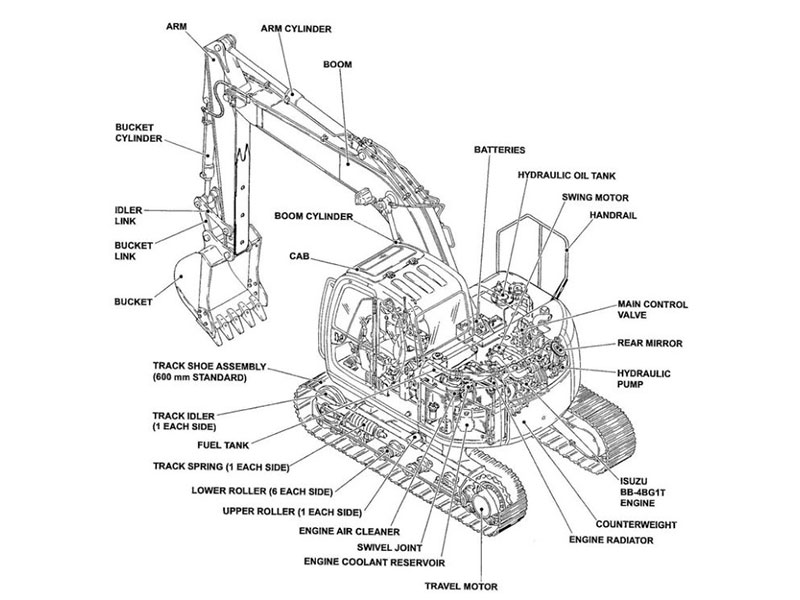
Record the machine model, serial number or product identification number, and configuration details from the equipment records. Photograph the identification plate and check the characters carefully. Use the applicable parts documentation to verify the correct component for the machine’s serial range. Record the existing part number, casting marks, labels, location, and orientation. If identifiers are missing or unclear, request additional photos and records. Avoid guessing a part number from a similar machine; a qualified technician can help resolve uncertain identification.
Confirm part number and fitment
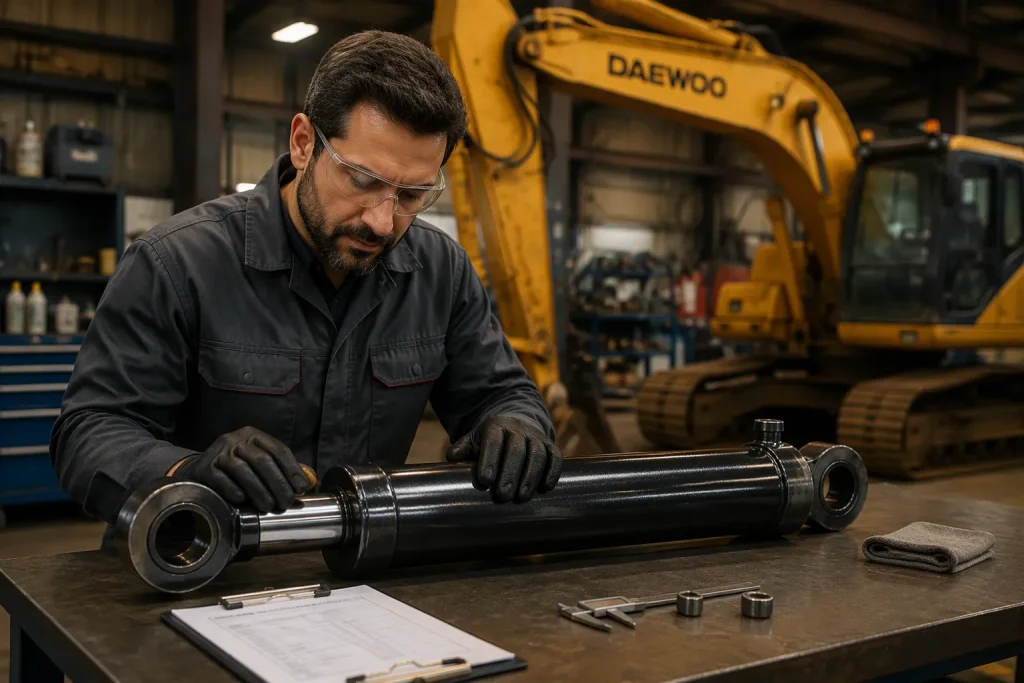
Compare the used part with the component being replaced. Depending on the part, check dimensions, mounting-hole spacing, pin or shaft size, connector shape and pin count, port location, rotation direction, and bracket orientation. Measure with suitable tools and record the units. Match the component number against the machine’s serial range in the relevant documentation. A familiar brand or model family does not by itself prove compatibility. Confirm whether seals, fasteners, brackets, spacers, or other pieces are included and which parts must be reused.
Review condition evidence
Ask for clear photos of the exact item from several angles. Include mounting surfaces, wear areas, threads, connectors, and any visible repairs. Look for cracks, distortion, corrosion, scoring, contamination, missing pieces, and uneven wear. For parts that can be tested, request item-specific records and ask what method, date, and conditions apply. Make sure the records identify the component being offered. If the item cannot be inspected or tested, note that limitation and account for the uncertainty before ordering.
Check history and transaction terms
When available, request details about the machine the part came from, how it was removed, and how it was stored. Confirm that identifying marks and photos match the actual item. For an assembly, clarify whether it is complete or includes selected components only. For electronic parts, compare connector and configuration details with the applicable documentation; do not assume that a visual match establishes readiness for installation.
Ask for an itemized total that identifies the part, condition, included hardware, packaging, freight, and applicable charges. Confirm shipping origin, delivery method, estimated dispatch, and responsibility for damage in transit. Read the written inspection period, any warranty offered, and the return process, including conditions and costs. Ensure that the terms refer to the specific part and fitment information discussed.
Frequently asked questions
How do I know if a used Daewoo part fits my machine?
Check the machine’s model and serial range against the applicable parts documentation, then compare the part number and relevant measurements or connections.
What if the part number is missing?
Collect clear photos, remaining casting marks, machine identifiers, and measurements. Verify those details with the parts documentation or a qualified technician before ordering.
What should a test record include?
It should identify the exact component and state the method, date, and test conditions. If the record cannot be connected to the offered item, treat the claim as unverified.
Keeping machine and component identifiers, condition evidence, included items, and written terms together makes it easier to evaluate used Daewoo excavator parts. For additional excavator parts information, contact YNF Machinery through its website.