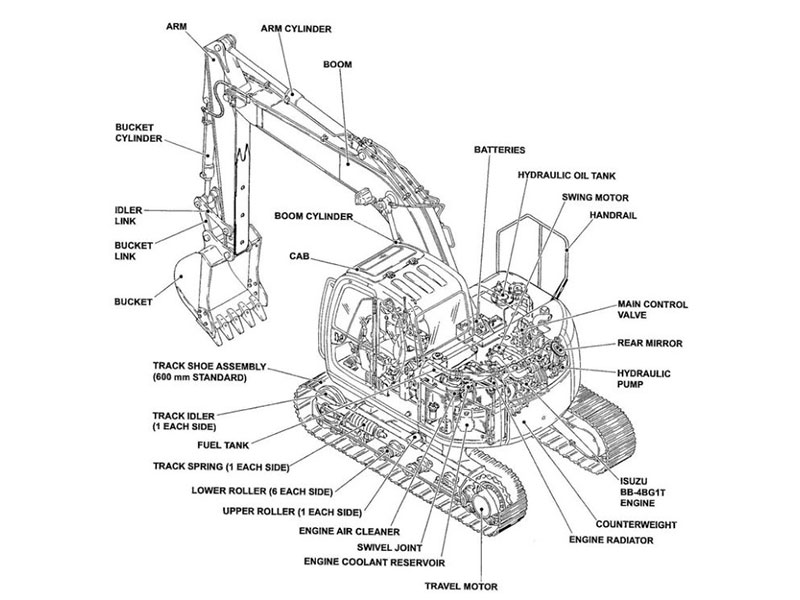
Finding the correct CAT 303.5 mini excavator part number starts with identifying the machine’s exact configuration and serial range. Parts can differ between versions even when the model name is the same. Record the machine and component identifiers, compare them with the applicable parts documentation, and verify fitment details before ordering.
Key takeaways
Use the complete machine PIN or serial number and model information.
Check the documentation that applies to the machine’s serial range.
Record labels, casting marks, part numbers, location, and orientation.
Compare physical fitment details; a number or appearance alone may not resolve every variation.
Ask a qualified technician to review conflicting or incomplete identifiers.
Locate the machine and component identifiers
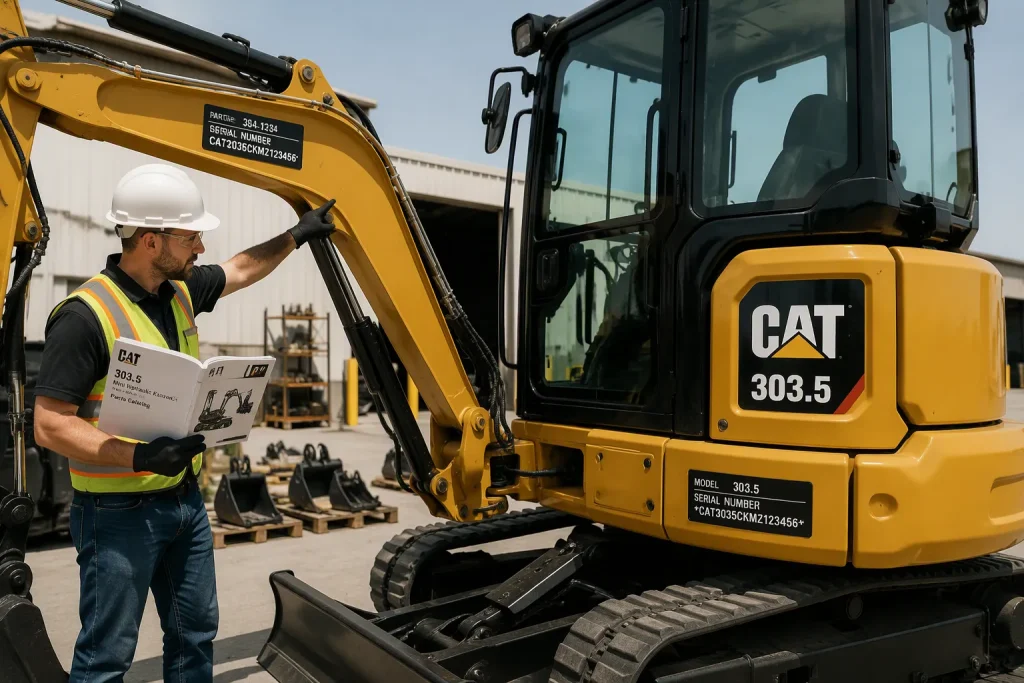
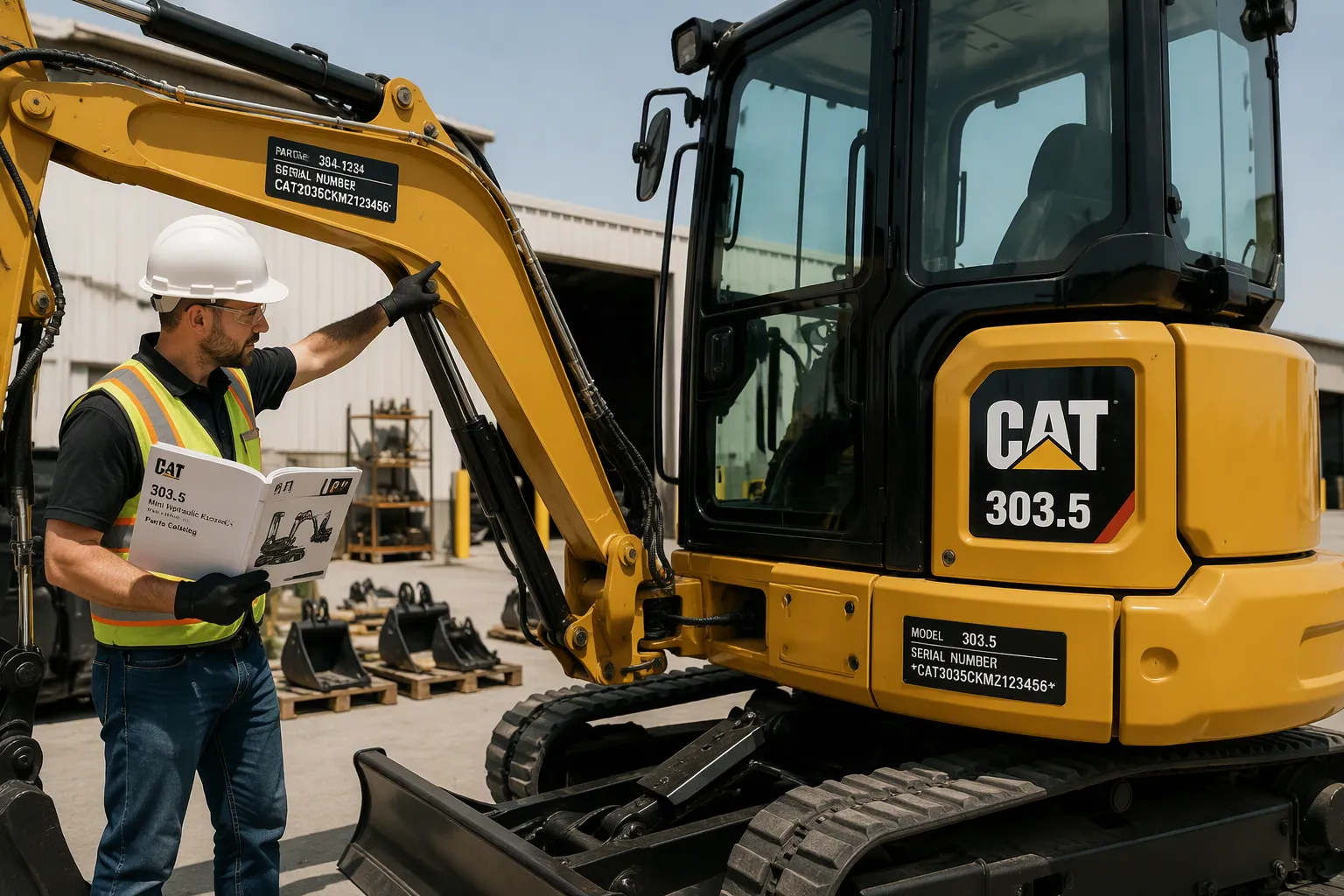
Find the machine identification plate and record the model, PIN or serial number, and configuration. Photograph the plate so the characters can be reviewed later. Note the component’s part number, casting marks, labels, and where it is installed. If a label is damaged or missing, collect clear photos of the component and its mounting points instead of guessing from its shape.
Use the part number from the component being replaced as a starting point, not the only check. Components may have been changed, repaired, or modified during the machine’s service life. Compare the machine records, component markings, and available documentation, and note any mismatch.
Check model and serial-range variations
Look up the machine in the parts documentation for the correct model and serial range. Confirm that the source covers the 303.5 version and configuration in front of you. When a parts catalog lists a serial break or a different configuration, follow the details that match the machine rather than choosing by model name alone.
If the number has been superseded or the documentation shows several alternatives, confirm how the replacement relates to the original part number and serial range. Do not assume that similar descriptions indicate identical fitment. Keep a record of the source and identifiers used in the lookup so the selection can be checked again.
Verify physical fitment
Compare the listed component with the part being replaced. Depending on the component, check dimensions, mounting-hole positions, shaft or pin size, connector type, port locations, bracket orientation, and included hardware. Confirm whether seals, fasteners, spacers, or brackets are part of the assembly or need to be reused.
For undercarriage or track components, use the machine documentation and physical measurements relevant to that exact configuration. Do not rely on a general size or another machine’s setup. If the number, dimensions, or mounting details do not agree, pause and get qualified technical confirmation before ordering.
Frequently asked questions
Why is the machine serial number important?
It can identify a specific production range or configuration used in the applicable parts documentation. A model name alone may not distinguish all variations.
What if the component has no readable part number?
Record the machine identifiers and gather photos of casting marks, labels, and mounting features. Compare those details with the parts information or ask a qualified technician to identify the component.
Can a part number by itself confirm fitment?
It is an important reference, but verify that it matches the machine’s serial range and configuration. Compare relevant dimensions and interfaces, especially if the machine or component has been modified.
A careful check of machine identifiers, serial-range documentation, component markings, and physical fitment can reduce errors when identifying CAT 303.5 mini excavator parts. For additional excavator parts information, contact YNF Machinery through its website.