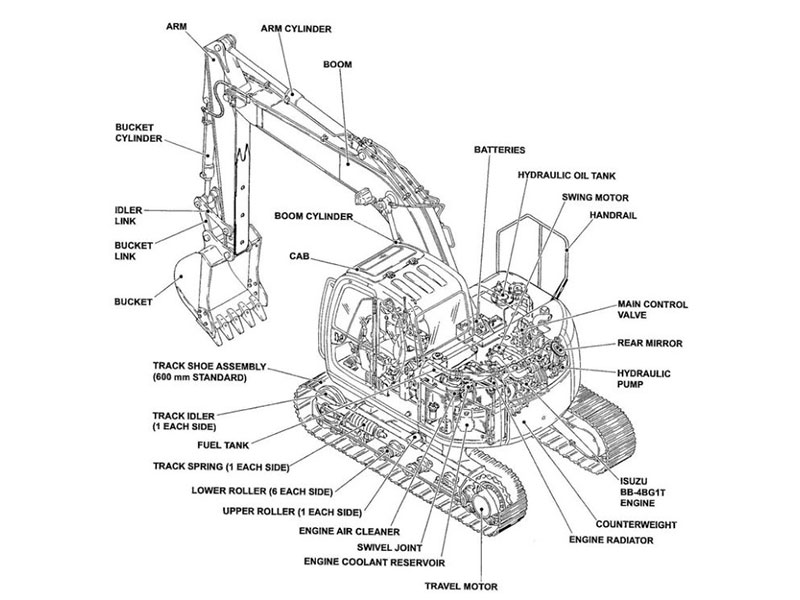
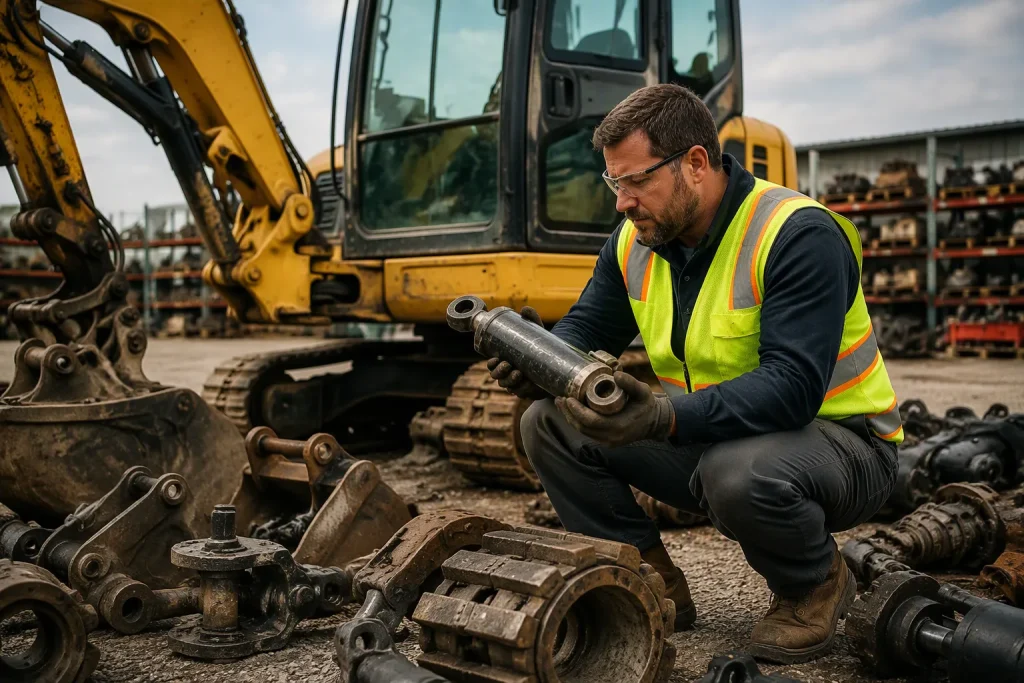
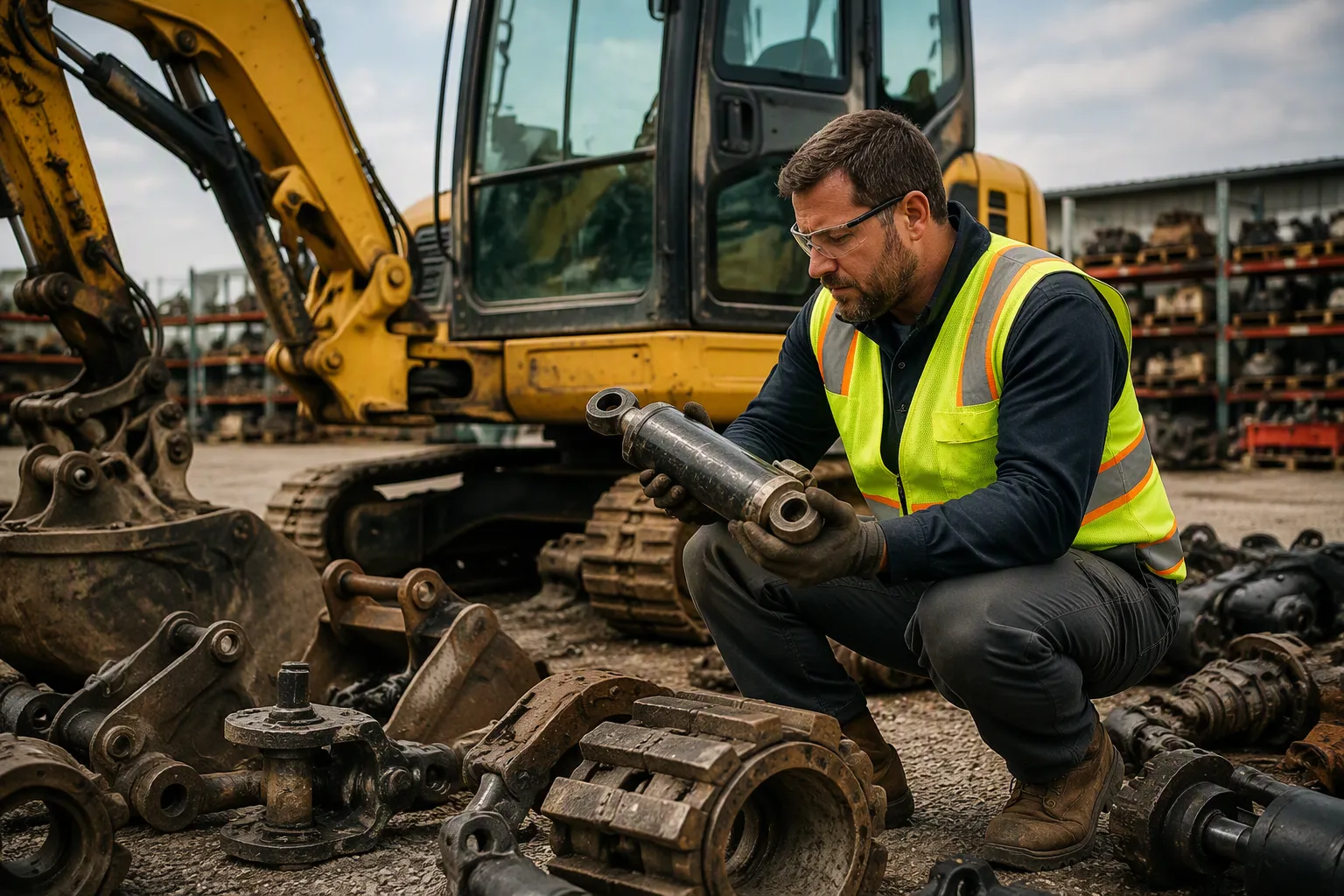
Wrecked mini excavator parts for sale can be useful when a new component is difficult to obtain or when you need to control repair costs. Before buying, confirm the part’s identity, compatibility, condition, and sales terms. A low price is only valuable if the component fits and works for your machine.
Points clés à retenir
- Record your machine’s make, model, serial number, and original part number.
- Check whether the listed part number is an exact match or a confirmed replacement.
- Request photos of the actual component, its identification markings, and any visible wear.
- Ask what was tested and obtain the result when available.
- Review the written warranty or return terms before payment.
- Compare used, rebuilt, and new aftermarket options by total cost and risk.
Rassemblez les détails de votre machine
Find the Make, Model, and Serial Number
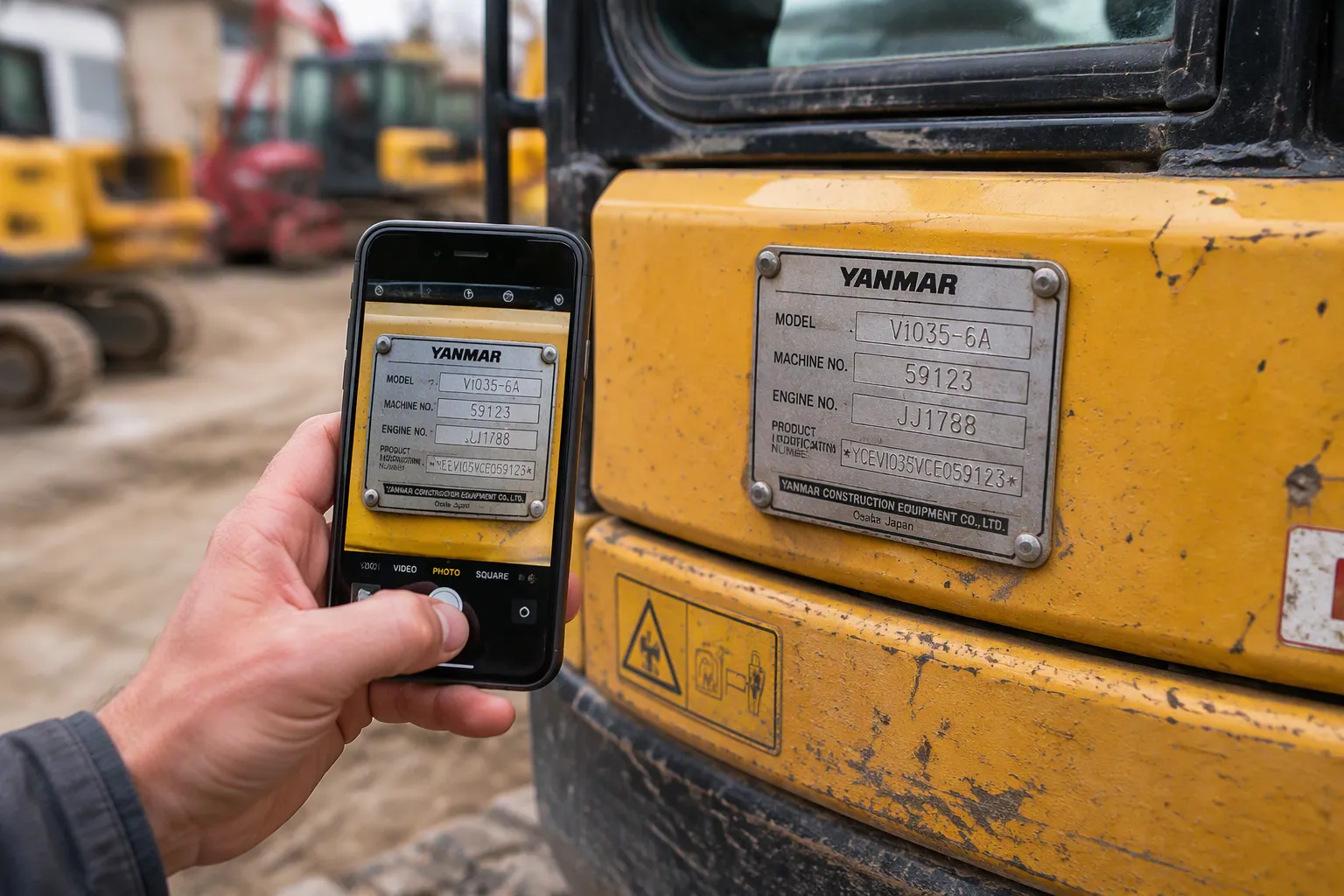
Start with the identification plate on your mini excavator. Record the full model and serial number, and take a clear photo of the plate. Its location varies by machine, so check the operator’s manual if you cannot find it.
The serial number matters because manufacturers may change components during a model’s production run. Two machines with the same model name or production year may use different mounting patterns, connections, or internal specifications. A serial-number match narrows the possibilities, but you should still verify the part number and physical details.
For an engine or hydraulic pump component, record the engine or pump model and serial number as well. Those assemblies may have their own identification plates. Machine weight class can help narrow a search, but it cannot establish part compatibility by itself.
Use Parts Information to Identify the Component
Consult the parts manual or other reliable parts information for your machine and serial range. Availability of an online lookup tool varies by manufacturer and model. Find the original part number and note any documented replacement or superseded number.
When a part number is unavailable or unreadable, compare the removed component with the proposed replacement. Depending on the part, check dimensions, bolt spacing, shaft or bore size, spline count, hydraulic ports, and electrical connectors. Send the supplier clear photos from several angles.
Attachments require additional checks. Confirm the coupler and pin dimensions, machine operating weight, hydraulic flow and pressure requirements, and the attachment manufacturer’s application guidance.
Know Where Wrecked Mini Excavator Parts Come From
Sources courantes de pièces d'occasion
Used components may come from dismantled machines, repair workshops, auctions, or private sellers. The source does not by itself establish quality. Ask for the donor machine’s model and serial number, operating hours if known, and the reason it was dismantled.
Some parts are removed from machines damaged in an accident, while others come from machines retired because of age or mechanical failure. Damage to one area of a machine does not automatically make every component unusable, but the history helps you decide what additional inspection is needed.
Used vs. Rebuilt Parts
A used part is generally removed and resold in its existing condition. A rebuilt or refurbished component may have been disassembled, inspected, repaired, and fitted with replacement wear items. The work performed varies by seller, so request a written description rather than relying on the label alone.
Ask which seals, bearings, or other parts were replaced and whether the assembly was tested afterward. A service record can be helpful when available, but many dismantled machines do not have a complete history. In that case, condition photos and relevant test results become more important.
Storage also matters. Exposure to weather, dirt, and moisture may affect rubber components, seals, electrical connectors, and exposed metal surfaces. Ask how the component has been stored since removal.
Vérifier la compatibilité et l'état
Verify Compatibility Before Buying
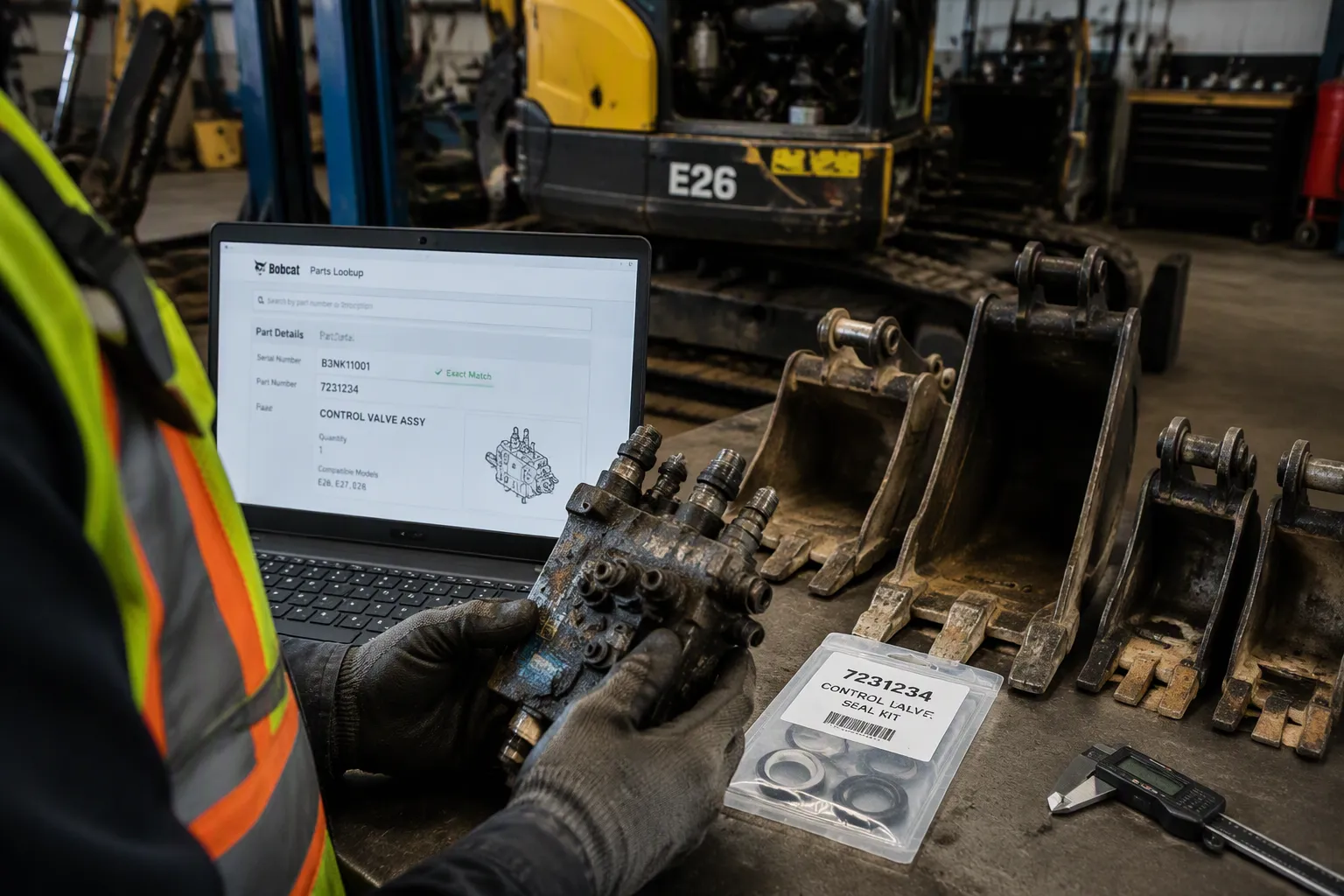
Compare the original part number with the number on the used component. If they differ, ask whether the manufacturer documents one as a replacement for the other. A different number does not always mean the part is incompatible, but it requires further verification.
Check the machine serial range and relevant physical specifications. For a hydraulic component, confirm ports, shaft, mounting pattern, and operating requirements. For a seal kit, confirm the cylinder identification and seal dimensions. For an attachment, confirm the coupler, pin dimensions, weight class, and hydraulic requirements.
A visual resemblance or matching model year is not enough to approve the purchase. If critical information is missing, request measurements or additional photos before ordering.
Inspecter les pièces d'usure et les composants soumis à une forte usure
Inspect the actual component rather than relying only on catalog images. Look for cracks, corrosion, oil leaks, bent mounting points, damaged threads, excessive wear, and signs of previous repair. Some internal problems cannot be identified from photographs.
- Cylindres hydrauliques: Check the rod for scoring, pitting, or corrosion. Look for external leaks and damage at the mounting eyes.
- Axes et bagues : Check dimensions and visible wear. Ask for measurements if the photos do not show their condition clearly.
- Rubber tracks: Inspect for cuts, exposed cords, separation, and wear. Confirm width, pitch, and link count.
- Sprockets and rollers: Look for uneven wear, cracks, leaks, and damaged mounting surfaces.
- Hydraulic pumps and motors: Confirm the nameplate and connections, and ask whether operating or bench-test results are available.
Plan for replacement of consumable seals or other wear items when their condition cannot be confirmed. Include that work in your cost comparison.
Evaluate the Seller and Sales Terms
Questions à poser au vendeur
A clear description and prompt answers help you assess the offer. Ask the seller to confirm these details in writing:
- What machine did the component come from?
- Are the listing photos of the exact part being sold?
- What is the visible part number or identification marking?
- Was the component tested? If so, how and when?
- Are any defects, repairs, or missing fittings known?
- What items and mounting hardware are included?
- What are the return and warranty terms?
A bench test or smooth movement can provide useful information, but neither guarantees that every internal component is in good condition. Match the level of testing to the part’s value and the consequences of a failure.
Understand the Warranty and Return Policy
Warranty and return terms vary widely for used parts. Some are sold as-is. Others include a limited testing or return period. Do not assume that a warranty covers fitment, installation labor, consequential damage, or return freight.
Before payment, confirm the claim period, covered defects, exclusions, evidence required, and who pays shipping if a return is approved. If a part is sold without a warranty, consider that added risk in your buying decision.
Comparez les prix et décidez
Used, Rebuilt, or New?
A used part may have a lower initial price, but savings vary by component, condition, and market. Compare the total delivered cost and the level of confidence you have in the part’s condition. Installation labor and downtime can outweigh a small price difference.
| Option | Questions a poser | Considération principale |
|---|---|---|
| Nouvel OEM | Is the exact part available, and what are the applicable warranty terms? | Confirm price, dispatch time, and serial-number fit. |
| Nouveau marché secondaire | What are the maker, specifications, cross-reference, and warranty terms? | Verify fit and quality for the specific application. |
| Reconstruit par des professionnels | What work was completed, which items were replaced, and how was it tested? | Evaluate the rebuild record and written support terms. |
| Occasion | What is its history, condition, test status, and return policy? | Allow for uncertain remaining service life. |
For a hydraulic pump, obtain quotations for available options using the same machine and part details. Compare freight, installation, warranty, and dispatch time as well as the purchase price. No option is automatically best for every repair.
Liste de contrôle d'achat finale
- Machine model and serial number recorded
- Original part number or confirmed replacement number checked
- Key dimensions, connections, and mounting points verified
- Actual-part photos and condition details reviewed
- Available test information reviewed
- Price, freight, included items, and dispatch time confirmed
- Warranty and return terms obtained in writing
Careful identification and inspection reduce the chance of ordering a part that does not fit or needs immediate repair. When a used component’s condition cannot be verified, compare it with a new aftermarket option before deciding. For help checking a mini excavator part by machine model, original number, photos, and dimensions, contact Machines YNF.
QFP
Can I use an attachment from a different brand?
Possibly, if the coupler and pin dimensions, machine weight class, hydraulic flow and pressure, and attachment application requirements are compatible. Confirm these details before installation.
How do I assess a used hydraulic cylinder?
Inspect the rod for pitting, scoring, or corrosion and look for external leaks and mounting damage. Ask for test information if available. Smooth movement alone cannot confirm the condition of the internal seals or barrel.
What if the listing part number differs from mine?
Do not assume it fits or reject it based on the number alone. Check for a documented supersession or cross-reference, then confirm the serial range and physical specifications. If compatibility cannot be established, do not order it.
Is a warranty necessary for a used part?
A written warranty or return period can reduce your risk, but some used parts are sold as-is. Check the exact coverage and factor any lack of protection into the total cost and risk of the purchase.