Buying used excavator parts in Baton Rouge calls for more than a quick look at a listing. Before committing, connect the exact component to your machine, verify its condition, define what is included, and put delivery and return terms in writing. A location label alone does not confirm that a part is on hand, ready to ship, or compatible with your excavator.
Use this guide to organize the checks for an in-person inspection or a remote purchase. The right measurements and tests depend on the part, so use the service information for your machine and ask a qualified technician when a result is unclear. Do not treat a photo, a seller statement, or a matching model name as proof by itself.
KEY TAKEAWAYS
Record the machine make, full model, serial number, configuration, and old part number before searching.
Tie current photos, measurements, and condition notes to the specific component being offered.
Confirm the included pieces, dispatch location, delivery scope, total cost, inspection period, and return process in writing.
Compare dimensions and interfaces with reliable machine information; a part number is one check, not a universal fit guarantee.
CONFIRM PART IDENTITY AND MACHINE FIT
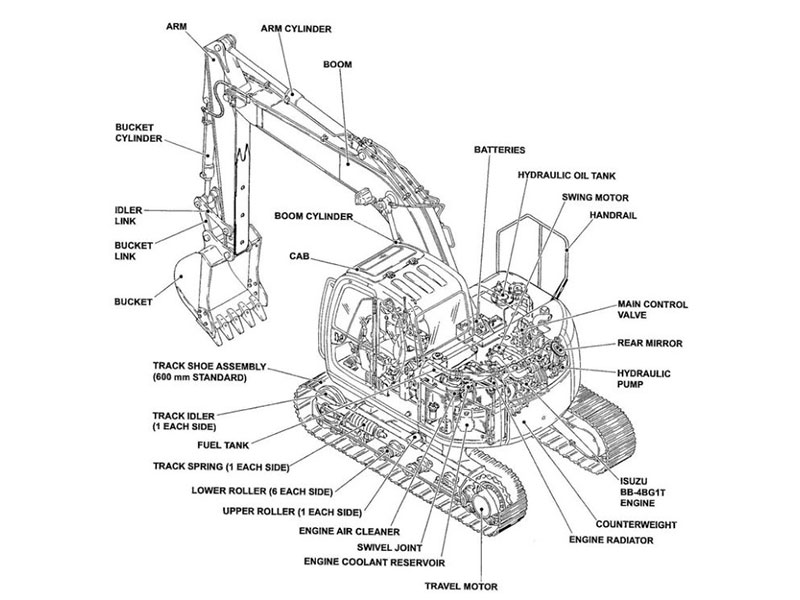
Start with the machine identification plate and the component that needs replacement. Record the make, complete model designation, serial or product identification number, and any configuration details that affect the part. Depending on the application, this may include engine arrangement, hydraulic connections, attachment interface, boom or stick configuration, or undercarriage type. Keep the old component’s label and photographs if it is available.
Ask for the number shown on the actual used component, not only a number copied into a listing. Compare it with parts information that applies to your machine’s serial range. If a replacement or superseded number is mentioned, confirm the relationship with a qualified source. Also compare the relevant dimensions, mounting points, ports, connectors, and included hardware. A shared model name may cover multiple revisions, so resolve differences before payment or shipment.
For a remote inspection, request clear images of the item’s labels and connection points, with enough context to identify the same component across views. Ask the seller to confirm which unit is available and where it is held. If photos are representative rather than item-specific, get photographs of the actual part before making a decision.
EXAMINE CONDITION AND INCLUDED COMPONENTS
Build a condition record around the part type. Photograph visible wear, corrosion, cracks, repairs, leaks, damaged threads, missing covers, or other concerns that matter to that component. Record the location of each finding and ask whether it was present before storage or handling. A clean exterior does not establish internal condition, and a used part should not be described as tested unless the test and its result are documented for that item.
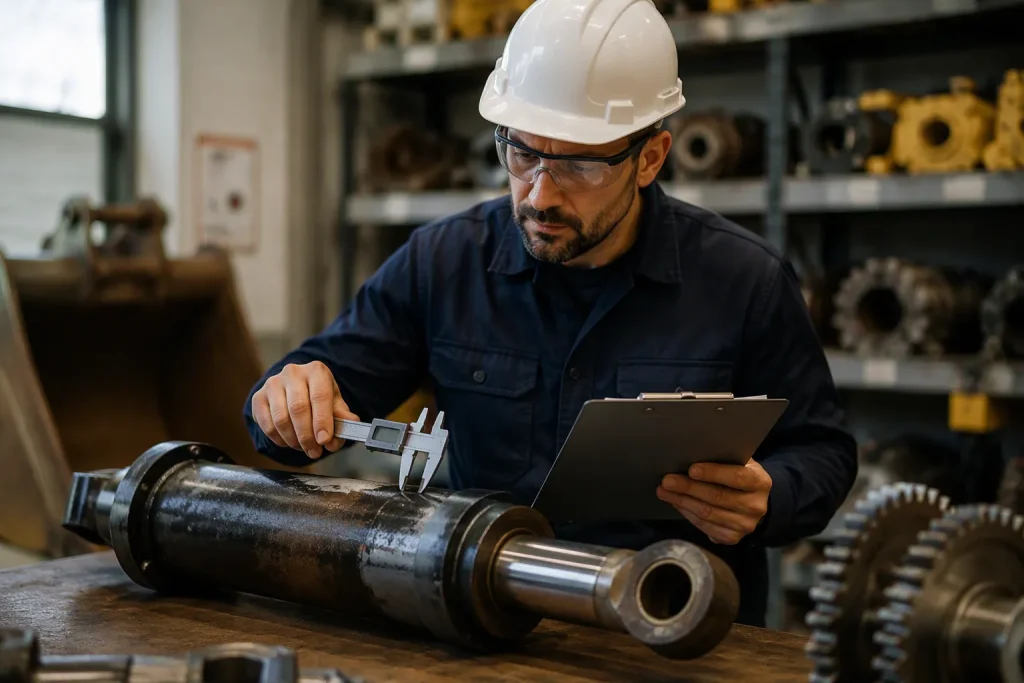
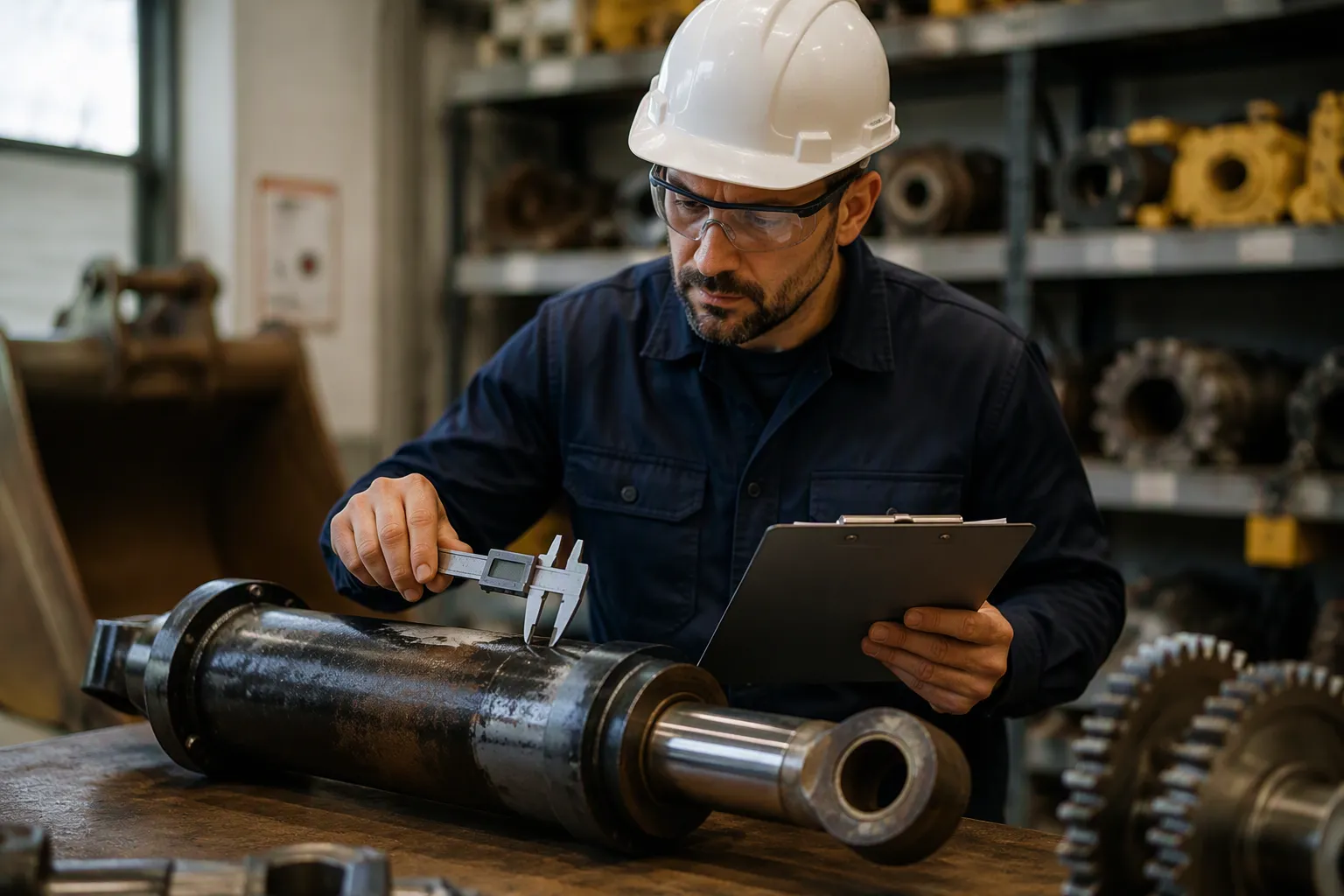
Ask what inspection or test was performed, when it was done, and what equipment or conditions were used. For a hydraulic component, request the relevant test record and operating specifications rather than a broad claim that it works. For an electrical component, clarify the test setup and result. For wear components, identify the measurement points and compare the readings with the maintenance criteria for your machine. Do not apply a single generic wear limit to different parts. If no test record exists, treat the condition as unverified and account for that uncertainty in your decision.
Write down every included piece: brackets, seals, fasteners, sensors, harnesses, covers, or other items needed for installation. Separate items included in the price from items shown only for illustration. If the component is incomplete, list what is missing and verify whether the remaining parts are available and appropriate for your machine.
ARRANGE A PRACTICAL INSPECTION IN BATON ROUGE
Before traveling, confirm the exact city and dispatch point for the component, whether it is physically available, and whether an inspection appointment is possible. Ask for the business contact and access arrangements needed to inspect the item; avoid relying on an approximate regional label. If the location changes, request updated item-specific photos and a revised transport quote.
For an on-site check, bring the machine and part identification details, a flashlight, a camera, and measuring tools suited to the component. Use safe access and do not operate equipment or remove covers without permission and appropriate training. A technician can help interpret measurements or test results that require model-specific service information. Note what could not be checked, rather than treating an incomplete inspection as a pass.
For delivery, agree on packaging, pickup or carrier handoff, destination, tracking or proof of delivery, and who is responsible at each stage. Ask how fragile surfaces, ports, and exposed connections will be protected. Write down the expected dispatch date and the steps to follow if the package is delayed, damaged, or incomplete.
SET PRICE, ACCEPTANCE, AND RETURN TERMS
Request an itemized quote for the exact part, included components, packaging, and delivery. Confirm the currency, destination, and any additional charges before approval. Compare the full delivered cost and the documented condition, not just the initial price. Keep the quote and the agreed scope together so you can check them against the shipment.
Before payment, agree on the inspection period after arrival and how to report a mismatch, damage, missing item, or undisclosed defect. Clarify what evidence is required, who reviews it, and whether installation or disassembly changes the process. Do not assume that a warranty or return is available unless the written terms state its scope, deadlines, and responsibilities. If a return is accepted, record who arranges and pays for transport, what packaging is required, and when the decision will be made.
At receipt, compare the part number, visible condition, measurements, and included pieces with the written record. Photograph the package and item before modification or installation. Report any difference within the agreed period and preserve the quote, messages, inspection notes, images, and delivery record.
FREQUENTLY ASKED QUESTIONS
What information should I provide to check fitment?
Provide the machine make, full model, complete serial number, configuration, and the number on the old part when available. Add clear photos and relevant dimensions, then compare them with information for the correct serial range.
Does a matching part number guarantee compatibility?
No. Confirm serial range, revision, configuration, interfaces, dimensions, and included hardware. Ask a qualified source to resolve any mismatch before ordering.
What should I request for a remote inspection?
Ask for current photos of the exact item, its labels and connection points, measurements that matter, a list of included pieces, known defects, and any test record tied to that unit.
What should be agreed before shipment?
Confirm the dispatch location, packaging, destination, delivery responsibilities, itemized total, inspection period, damage reporting process, and written return terms.
When the machine match, part identity, condition evidence, included pieces, and delivery terms are documented, you can assess a used component with a clearer record. For additional excavator parts information, contact YNF Machinery through its website.