
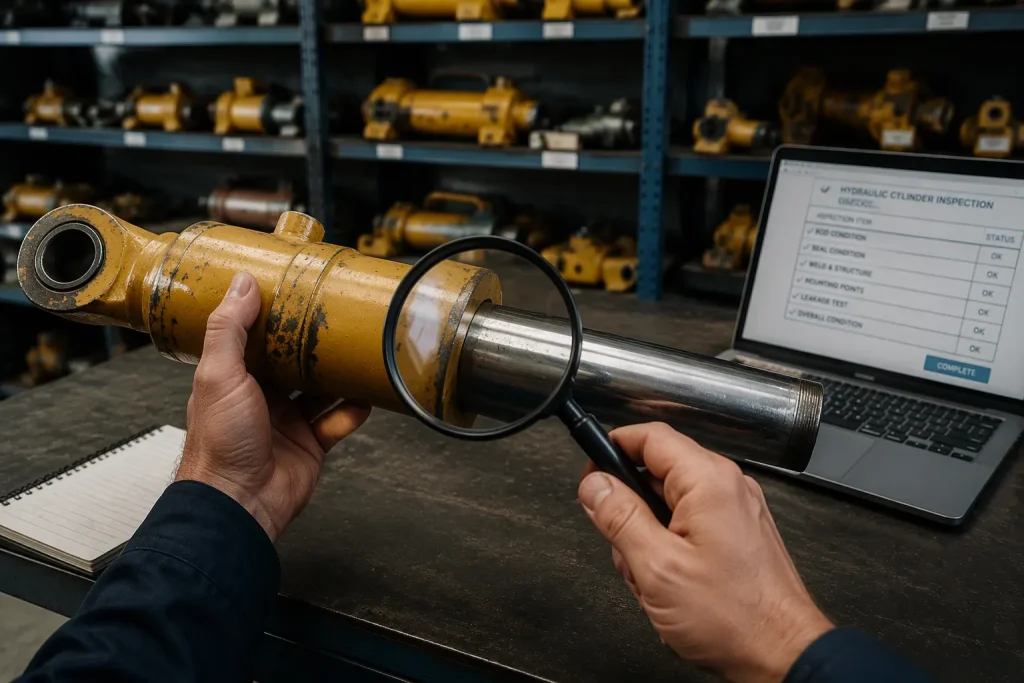
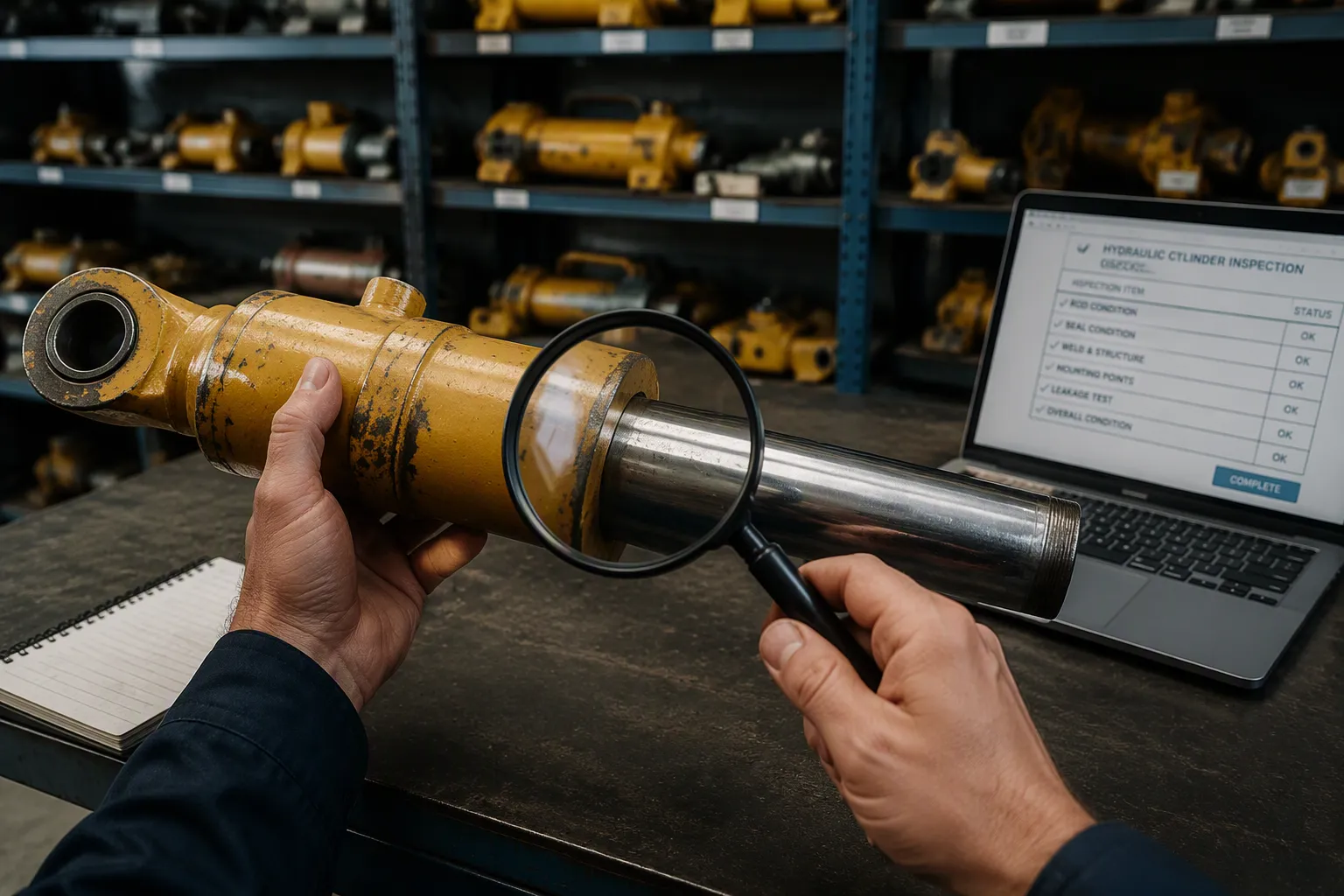
Buying used excavator parts for sale calls for more than a quick price comparison. A part can appear to match and still differ in its number, connections, included pieces, or condition. Before making a decision, identify the exact machine and component, ask for evidence about the actual item, and put the fitment and purchase terms in writing.
KEY TAKEAWAYS
Record the machine make, model, full serial number, and configuration before asking about a part.
Compare the component number and relevant dimensions or connections with the part being offered.
Request current photos and a clear description of known condition and included items.
Treat test results, hours, and service history as claims that need records and context.
Compare total pickup or delivery cost and written return terms before paying.
DEFINE WHAT YOU NEED
Start with the machine’s identification plate and your maintenance records. Write down the make, model, complete serial number, and any relevant configuration details. Include all letters and suffixes exactly. A broad model name may cover multiple versions, so avoid using a shortened number as the sole basis for a parts decision.
Describe the component in plain language. Note its location, function, and whether you need a complete assembly or a service item. If the old part is available, photograph its label, mounting points, ports, connectors, and visible markings. Record what is confirmed and what is uncertain; for example, a part number may be partly worn or the serial number may still need checking. Clear questions help you get information that applies to your machine.
Before contacting a source, prepare a short list of details to share: machine identity, component name, known part number, photos, and the reason for replacement. Do not assume an issue symptom identifies one specific failed component. Several parts can create similar symptoms, and a technician may need to diagnose the machine before you choose a replacement.
MATCH THE PART TO THE MACHINE
Compare the number on the existing component with the number shown for the used part. Ask how the number was identified and whether it applies to the full machine serial range you provided. If the number has been superseded or cross-referenced, ask for that relationship in writing and confirm that relevant specifications still match.
Check physical and connection details that affect installation. Depending on the component, that may include mounting dimensions, bolt pattern, shaft, port locations, electrical connector, and hardware supplied. The relevant checks differ for a pump, controller, travel motor, cylinder, or undercarriage piece. Use machine documentation or qualified technical support where the fitment details are not clear.
A label match is useful, but it does not establish that the part is complete or in suitable condition. Compare photographs of the actual part with the old component and note any differences. If a key interface or dimension cannot be confirmed, pause and request additional evidence rather than assuming that the part will fit.
CHECK CONDITION EVIDENCE
Ask for recent photographs of the actual component from several angles. Request close views of identification marks, wear surfaces, cracks, corrosion, repairs, mounting areas, and connectors that matter for the part. A stock photo or image of an excavator does not show the condition of the specific item offered. For a larger assembly, a short video may help show movement or operation, but ask what the clip demonstrates and what it leaves untested.
Request a written description of known defects, how the component was removed, and what is included. If hours, inspection results, or testing are mentioned, ask what record supports them and what was checked. Treat missing information as unknown. A test result only covers the component and procedure described in the record; it does not automatically establish fit or long-term performance.
Compare the description with the photos and your request. Clarify whether brackets, seals, sensors, fasteners, or other pictured parts are included. Ask how the component was stored if that could matter to its condition. If the evidence is incomplete, contradictory, or not specific to the actual item, pause the purchase and ask for clarification. A qualified technician can help assess a complex or safety-critical component before you commit.
COMPARE TOTAL COST AND TERMS
For pickup, confirm the location, collection time, loading arrangements, and whether you can inspect the component before it is released. For delivery, ask how the part will be packaged, who arranges freight, the expected dispatch window, and how transit damage will be documented. Heavy or irregular components may require special handling. Compare the total cost to your location rather than the listed price alone.
Read the purchase terms before payment. Confirm the return window, any restocking charge, who pays return freight, and what condition the part must be in if returned. If a warranty is offered, check its duration, covered defects, exclusions, and claim process. Do not assume labor, installation, removal, or downtime is covered. Keep the part description, fitment confirmation, photographs, messages, and invoice with the machine records.
A PRE-PURCHASE CHECKLIST
Before ordering, confirm that you have recorded the exact machine identity; identified the component and number; checked relevant dimensions and connections; seen current photos of the actual part; documented known defects and included items; and understood pickup or delivery cost and written terms. If an important fitment or condition question remains unanswered, resolve it or wait before paying.
FREQUENTLY ASKED QUESTIONS
What information should I provide when asking about a used excavator part?
Share the machine make, full model and serial number, component name, known part number, and clear photos of the old part and its connections. Separate confirmed details from assumptions.
Does a matching part number prove that the part will fit?
No. Check the number against the machine’s serial range and confirm relevant dimensions, connections, and included pieces. A number is one part of the fitment check.
What should I ask about the condition?
Request recent photos of the actual item, a written description of known defects, any available service or test records, and a clear list of what is included.
How do I compare pickup with delivery?
Compare inspection access, timing, loading, packaging, freight, and damage responsibility. Use the total cost and written terms for your location.
For help checking excavator parts against your machine details, consider YNF Machinery. Share the model, serial number, and part number, and request written fitment confirmation and relevant condition information before ordering.



