A used part can look clean and still have the wrong configuration, hidden wear, or an unknown service history. Evaluating used John Deere excavator parts means checking identity, condition, evidence, and purchase terms separately. The John Deere name helps identify the machine family; it does not by itself establish that a component fits a particular model or serial range.
Use the checks below for the component in front of you. Requirements differ for hydraulic assemblies, undercarriage parts, electrical components, castings, and attachments. When a detail cannot be verified, record it as unknown rather than treating it as a pass.
Kluczowe dania na wynos
• Match the exact part number and machine serial information before discussing fitment.
• Inspect the actual component and request current, clear photos when you cannot see it in person.
• Use component-specific inspection procedures and documented limits; there is no single wear threshold for every part.
• Get the condition, fitment basis, included items, warranty, and return terms in writing.
1. Confirm the Part and Machine Identity
Start with the identification on the machine and the component. Record the full machine model, serial number, any configuration or arrangement information shown in the parts documentation, and the complete number from the existing part. Photograph the component label or casting marks where they are legible.
Compare those details with current parts documentation for the machine’s serial range. A similar appearance or a matching brand name is not enough: revisions, connector types, mounting patterns, and production changes can affect interchange. If the number differs, ask for the documented reason, such as a verified replacement or superseding number, and confirm it against the applicable parts record before ordering.
Write down exactly what is being offered. A complete assembly may include sensors, fittings, brackets, seals, or hardware that a bare component does not. Confirm quantities and included items individually so the quotation and the expected installation scope match.
2. Inspect the Actual Condition
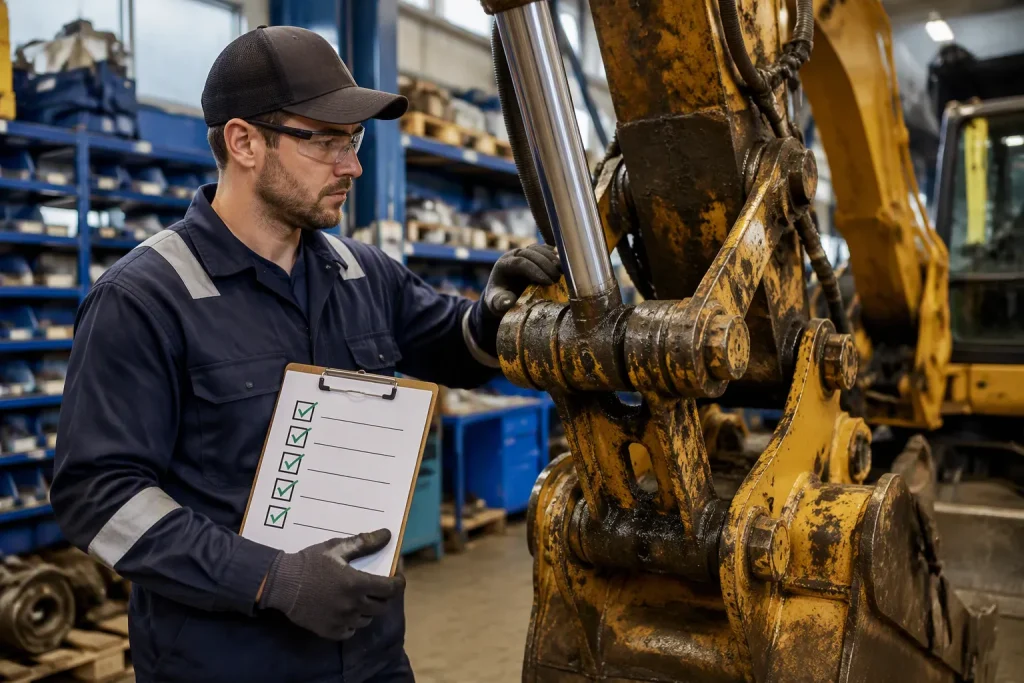
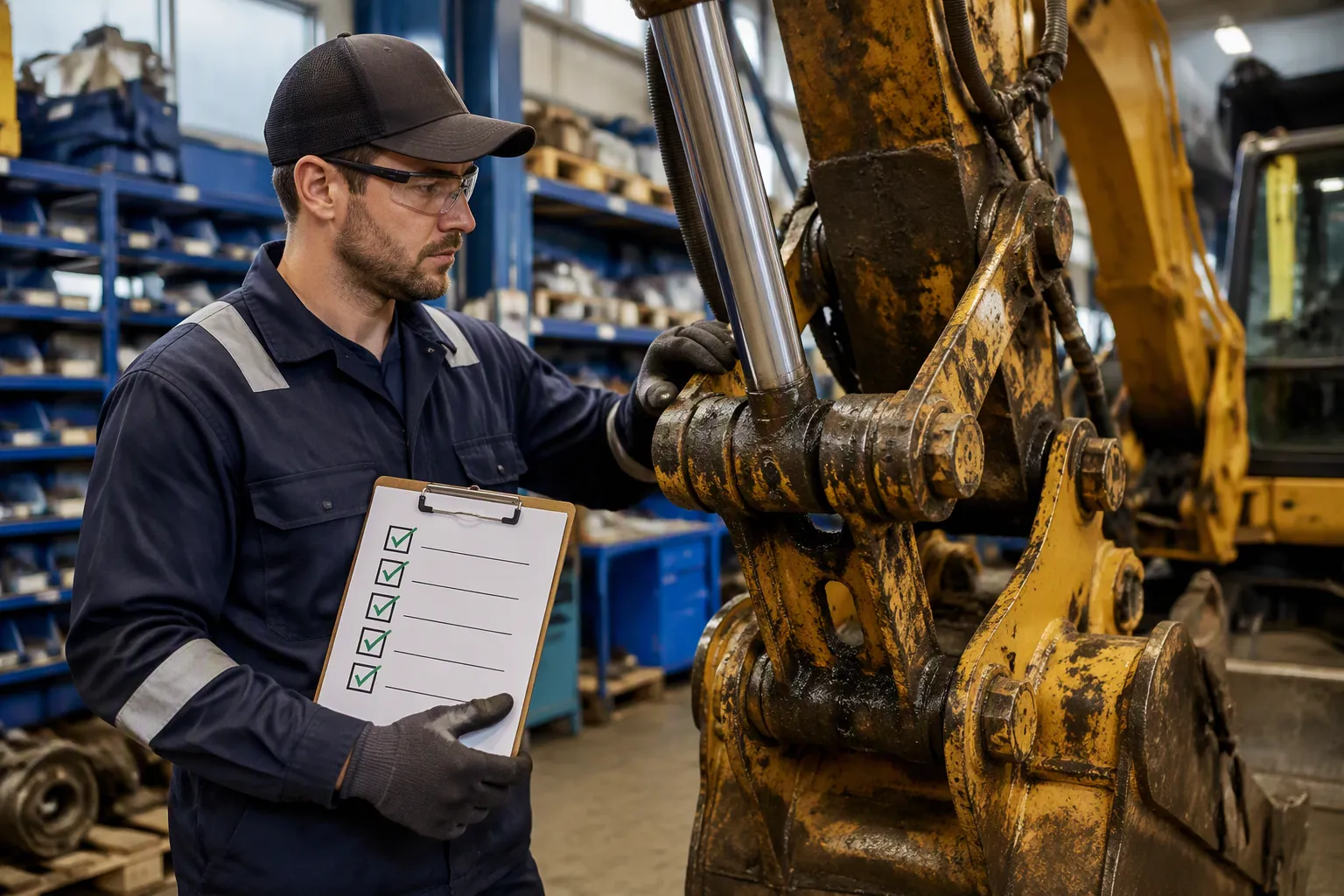
Clean the area enough to see the surfaces, then inspect the component under good lighting. Look for cracks, deformation, deep corrosion, impact marks, stripped threads, damaged mounting faces, missing fasteners, and signs of repair. On hydraulic components, check visible hoses, ports, fittings, and sealing surfaces for damage or leakage. On gears, bearings, pins, and bushings, use the inspection method and measurement points specified for that component.
Do not infer internal condition from a freshly painted exterior. Ask whether paint or coating was applied and whether any repair was performed. A repair is not automatically acceptable or unacceptable; its location, method, documentation, and the component’s service requirements matter. Structural damage or an unverified repair should be assessed by a qualified technician before purchase or installation.
For a remote inspection, request recent photos of the exact item from multiple angles, including its identification marks, mating surfaces, ports, and any worn area. Ask for a short video only when movement or operation can be shown safely. Generic catalogue photos do not document the condition of the individual part.
3. Review Available History and Test Evidence
Ask what is known about the part’s removal, prior application, operating environment, maintenance, storage, and any repair or rebuild. Records may be incomplete, especially for used components. Missing paperwork does not prove that a part is defective, but it leaves more uncertainty to resolve before the transaction.
Machine hours describe the donor machine’s meter reading, not necessarily the operating time or condition of every removed component. Treat hours as context and compare them with service records, inspection findings, and the part’s own identification. Avoid relying on a single number as a condition guarantee.
If a functional test is appropriate, use a component-specific procedure and suitable equipment. The test should identify what was checked, the conditions, the observed results, and any limitations. Have qualified personnel perform tests that involve pressure, rotating parts, suspended loads, or other hazards. Do not run an uninstalled or damaged component simply to obtain a demonstration.
4. Check Compatibility Before Payment
Send the full model, serial number, exact part number, and relevant component details to the parts supplier. Ask them to state in writing which references they used to confirm compatibility and whether the offered item is new, used, rebuilt, or otherwise conditioned. The description should match the physical item and the documents provided.
Compare the proposed part number with the machine’s applicable parts record. If the offered number is different, verify the relationship through reliable parts documentation or qualified technical support. Do not assume that a cross-reference, brand, or broad model-family description covers every production variant.
Keep a copy of the messages, photographs, quotation, and any fitment confirmation. These records make it easier to resolve a mismatch and help the installation team identify what was ordered.
5. Agree on the Purchase Terms
Before paying, review the itemized scope, condition description, quantity, price, shipping responsibility, expected dispatch and delivery dates, warranty coverage, exclusions, and return process. Confirm what evidence is needed if the delivered component differs from the description or does not match the agreed fitment scope. Ask who authorizes a return and how the part must be handled while a claim is reviewed.
Compare quotations only when they cover the same component, condition, included items, delivery scope, and written terms. A lower price alone does not show that two offers are equivalent. If an important identity, condition, or term remains unclear, pause the order and resolve that point first.
FAQ
What information should I provide to identify a used John Deere excavator part?
Provide the machine model and serial number, the full part number from the existing component, and clear photos of identification marks and mounting or connection points. Include the component type and any relevant configuration information from the parts documentation.
Do matching model names guarantee that a used part will fit?
No. Serial range, component revision, connectors, mounting details, and superseding numbers can matter. Verify the exact part against applicable parts documentation before ordering.
What should I request when I cannot inspect the component in person?
Request recent photos of the exact item, its identification marks, mating surfaces, ports, and visible wear or repairs. Ask for available service history and component-specific test evidence, with the test conditions and limits clearly described.
Can machine hours alone show whether a used part is in good condition?
No. The meter reading is context about the donor machine and does not establish the history or condition of an individual component. Review it alongside identification, inspection findings, maintenance records, and any relevant test results.
For help with replacement excavator components, consider Maszyny YNF. Share the machine model, serial number, and exact part number so the requested fitment can be reviewed against the information you provide.